Open Circuits, Closed Circuits & Short Circuits - Basic Introduction
TL;DR
This tutorial explains the difference between open, closed, and short circuits, and introduces devices like fuses and circuit breakers used to protect circuits.
Transcript
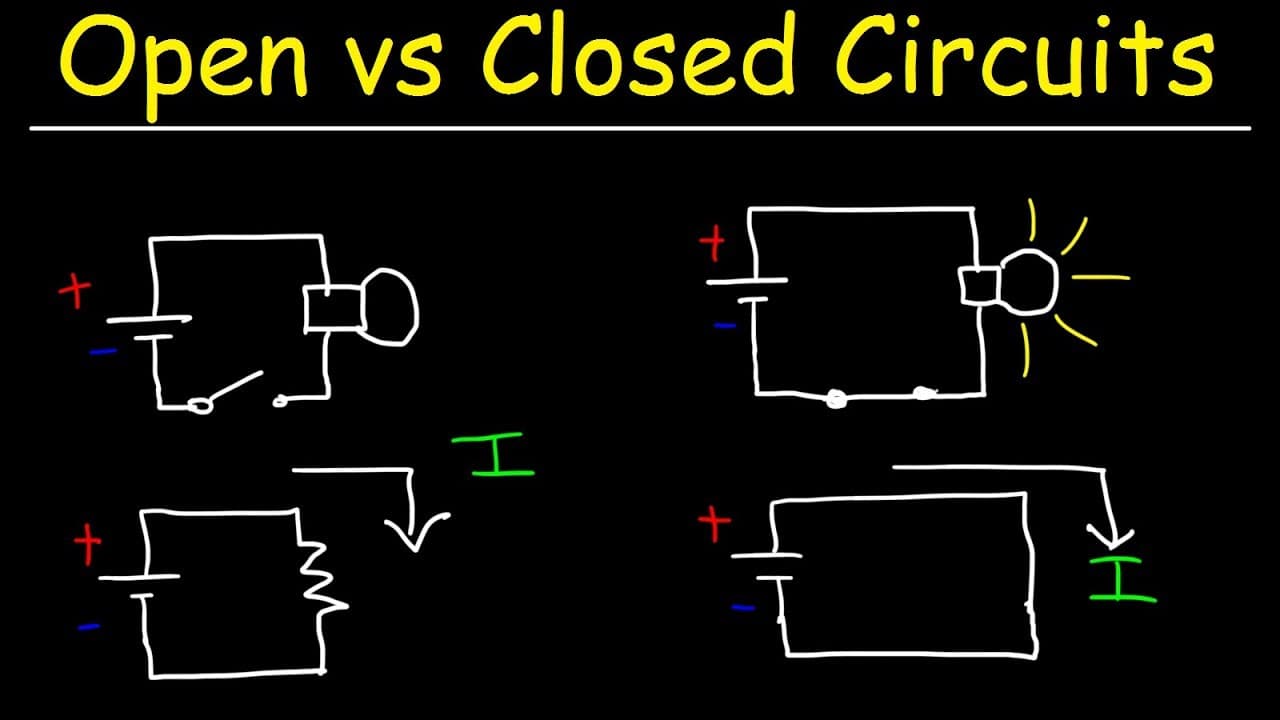
now in this tutorial we're going to talk about the difference between an open circuit a closed circuit and a short circuit so let's connect the battery to a light bulb and we're going to have a switch and in this circuit i'm going to connect a battery to a light bulb with another switch and in this circuit the battery is going to be connected to a ... Read More
Key Insights
- 🤗 An open circuit has a break in the path, resulting in no current flow and the device not working.
- 😚 A closed circuit provides a complete path for current flow, allowing the device to function properly.
- 💐 A short circuit has very low resistance, leading to dangerously high current flow and the risk of fire.
- 😕 Fuses and circuit breakers are used to protect circuits from excessive current and prevent damage to devices.
- 😕 Fuses break the circuit when the current exceeds their rating, while circuit breakers automatically turn off the circuit and can be reset.
- 💡 Devices like light bulbs, speakers, and motors have internal resistance that limits current flow.
- 👻 Wire with minimal resistance can allow a large amount of current to flow, making it dangerous.
Install to Summarize YouTube Videos and Get Transcripts
Explore YouTube Video Summarizer or Get YouTube Transcript Extractor
Questions & Answers
Q: What is the difference between an open circuit and a closed circuit?
An open circuit has a break in the path, preventing current flow, while a closed circuit has a complete path that allows current to flow.
Q: Why is a short circuit dangerous?
A short circuit has very little resistance, leading to high current flow, which can overheat wires and potentially cause a fire.
Q: How does a fuse protect a circuit?
A fuse has a thin metal filament that breaks when the current exceeds its rating, creating an open circuit and preventing damage to other devices.
Q: How is a circuit breaker different from a fuse?
A circuit breaker acts similarly to a fuse by automatically turning off the circuit when current is too high, but it can be reset without replacement.
Summary & Key Takeaways
-
The open circuit has a break in the circuit, causing no current flow and the light bulb not turning on.
-
The closed circuit has a complete path for current flow, with the switch closed, allowing the light bulb to turn on.
-
The short circuit has almost no resistance, resulting in dangerously high current flow, which can cause a fire.
Read in Other Languages (beta)
Share This Summary 📚
Summarize YouTube Videos and Get Video Transcripts with 1-Click
Try YouTube Summary with ChatGPT & Claude or YouTube Transcript Generator
Explore More Summaries from The Organic Chemistry Tutor 📚



Summarize YouTube Videos and Get Video Transcripts with 1-Click
Try YouTube Summary with ChatGPT & Claude or YouTube Transcript Generator