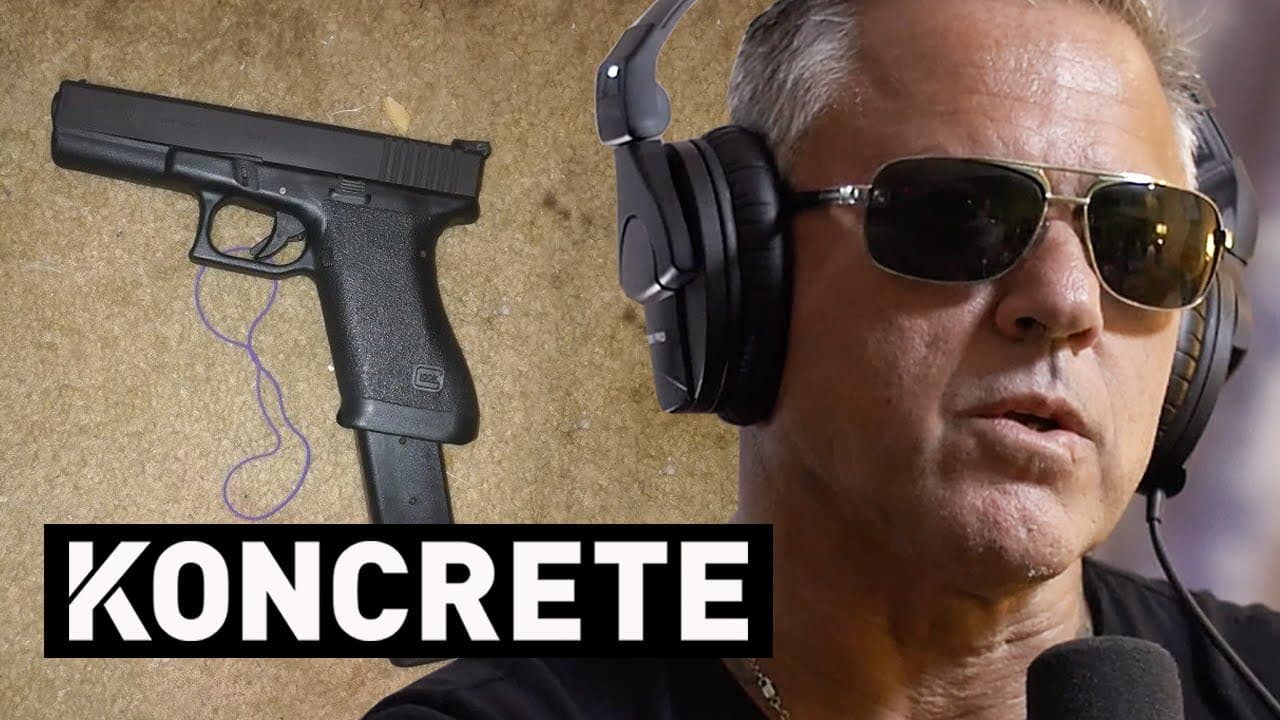
What it's Actually Like Working for the Mafia - John Alite
TL;DR
The speaker discusses his tumultuous relationship with John Gotti Jr. and the realities of street credibility.
Transcript
can you kind of give me the gist or extort the relationship was between you and John Gotti Jr well you know I was a guy that was put in position to you know take care of him protect him and we had fallen out sover the years his father was in a position whether you like him as a boss or not became a boss and although I disagreed on his leadership in... Read More
Key Insights
- 🔇 The speaker's relationship with John Gotti Jr. highlights a divide between expectations of legacy and personal accountability.
- 🔉 Media portrayals can distort public perceptions, influencing how figures like Gotti Jr. are received in popular culture.
- 🉐 Loyalty in organized crime is often conditional and can easily dissolve in favor of personal gain or greed.
- 🥶 Reflection and personal responsibility are vital for those seeking to break free from destructive lifestyles.
- 🛟 The speaker’s harsh experiences serve as a warning about the potential outcomes of life in crime.
- 🔇 Cultural myths about the honor and loyalty among criminals are challenged through the speaker’s experiences and observations.
- 🇨🇫 The narrative around crime and familial legacy can complicate individual identity and public personas.
Install to Summarize YouTube Videos and Get Transcripts
Explore YouTube Video Summarizer or Get YouTube Transcript Extractor
Questions & Answers
Q: What are the key reasons for the speaker's fallout with John Gotti Jr.?
The speaker believes that his fallout with Gotti Jr. stemmed from differing values and perceived traits. While he viewed Gotti Sr. through a lens of respect as a notorious gangster, he described Gotti Jr. as a spoiled brat lacking authentic leadership qualities, which ultimately affected their working relationship.
Q: How does the speaker perceive John Gotti Jr.'s public persona?
The speaker describes Gotti Jr. as seeking to control his public image, which has led to misrepresentation and negative perceptions. He suggests that Gotti Jr.'s efforts to portray himself positively, especially in film, were misguided and contributed to a poor reception of media adaptations about his father.
Q: What does the speaker say about the concept of loyalty in organized crime?
The speaker argues that the notion of loyalty in organized crime is largely an illusion, with many individuals ready to betray each other for personal gain. He discusses how money often supersedes loyalty, leading to a culture where betrayal is common, and ethical codes are disregarded.
Q: How does the speaker view the consequences of a life in crime?
The speaker candidly shares the brutal realities of his past experiences, including spending years in solitary confinement and suffering violence. He urges others contemplating a life of crime to reconsider their choices, emphasizing that such paths often lead to dire consequences and regret.
Q: What is the significance of the speaker’s analogy involving a barking dog?
The speaker uses the analogy of a barking dog to convey his view of Gotti Jr. as someone who fails to take responsibility for his actions. By comparing Gotti Jr. to a small, incessantly barking dog, he conveys a sense of disdain and suggests that Gotti Jr. is better off ignored rather than engaged.
Q: What does the speaker suggest about the importance of personal responsibility?
The speaker stresses that individuals must own their past actions and not blame others, such as family members, for their life choices. He calls for Gotti Jr. to acknowledge his upbringing and take steps toward positively influencing others, particularly the youth, instead of continuing to wallow in self-pity.
Q: How does the speaker reconcile his past in crime with his current perspective?
The speaker acknowledges his own misguided choices and the consequences that ensued, expressing a desire for others to learn from his experiences. He reflects on the violence and costs of street life, positioning himself as a cautionary voice urging young people to avoid similar paths.
Q: What is the speaker's stance on the portrayal of money in street culture?
The speaker views money as a corrupting force that complicates relationships and undermines ethical standards. He believes that the relentless pursuit of wealth often leads to betrayal and moral decay, overshadowing any semblance of loyalty or integrity within organized crime dynamics.
Summary & Key Takeaways
-
The speaker reflects on his past relationship with John Gotti Jr., describing it as complicated, citing Gotti Jr.’s spoiled demeanor and lack of authenticity in dealing with his father's legacy.
-
He discusses the negative perception of Gotti Jr. in media portrayals, indicating that attempts to control narratives have backfired, especially in a poorly received film about his father.
-
The speaker emphasizes the harsh realities of street life, illustrating the idea that loyalty is often sacrificed for greed and survival, asserting that the notion of honor in organized crime is largely a myth.
Read in Other Languages (beta)
Share This Summary 📚
Summarize YouTube Videos and Get Video Transcripts with 1-Click
Try YouTube Summary with ChatGPT & Claude or YouTube Transcript Generator
Explore More Summaries from True Crime Stories 📚

Summarize YouTube Videos and Get Video Transcripts with 1-Click
Try YouTube Summary with ChatGPT & Claude or YouTube Transcript Generator