Binary adder and sub tractor | Block Diagram | Digital Systems Design | Lec-37
TL;DR
This video explains how a binary adder can also function as a subtractor using an XOR gate.
Transcript
hi everyone in this video I'm going to explain about the binary adder and subtractor binary adder and subtractor so here we are having a reple car Adder which can perform both addition and as well as subtraction which can perform both addition and subtraction so how a single circuit can be acting as a subtractor and as well as ADD we are going to s... Read More
Key Insights
- 🎭 A binary adder-subtractor circuit can perform addition and subtraction using the same architecture by altering its mode signal.
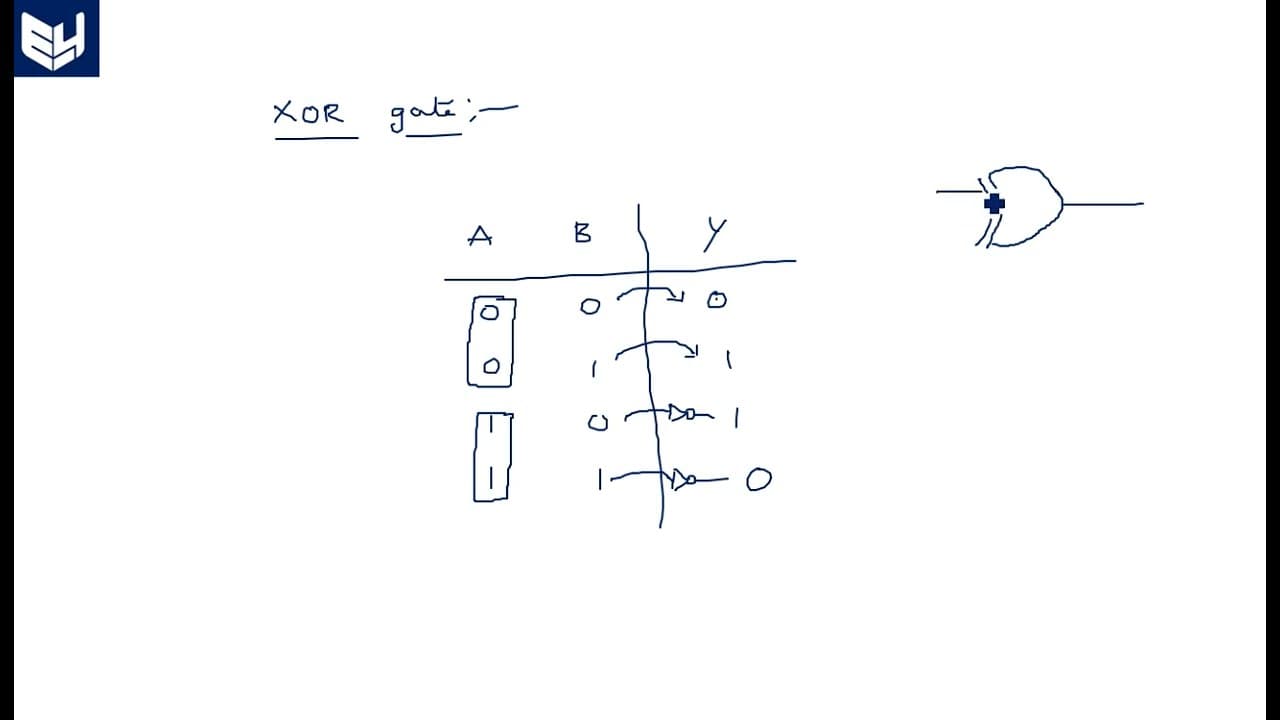
- 🔬 The XOR gate is integral to switching functionality between addition and subtraction, determining how inputs are processed.
- 👻 Two's complement is a pivotal mathematical concept for executing binary subtraction within the circuit, allowing negative number representation.
- 🎨 The design emphasizes the importance of understanding logic gates and their interactions in digital circuit applications.
- 🎨 Previous knowledge of VHDL and digital design principles is essential for grasping circuit operations effectively.
- 🎮 The video illustrates practical applications of binary arithmetic in everyday digital electronics and computing systems.
- 🥺 Efficient design strategies in digital circuits can lead to reduced complexity and enhanced performance in electronic devices.
Install to Summarize YouTube Videos and Get Transcripts
Explore YouTube Video Summarizer or Get YouTube Transcript Extractor
Questions & Answers
Q: What is the main function of a binary adder and subtractor circuit?
A binary adder and subtractor circuit is designed to perform both addition and subtraction of binary numbers. The circuit utilizes components such as full adders and an XOR gate. By altering the mode signal, the circuit can switch between addition and subtraction operations without needing separate circuits for each function.
Q: How does the XOR gate contribute to the operation of the adder-subtractor circuit?
The XOR gate is crucial for enabling the circuit to switch between addition and subtraction. When one input of the XOR gate is fixed, it can either pass the second input unmodified (for addition) or invert the second input (for subtraction). This dual functionality is achieved by controlling the mode signal applied to the XOR gates.
Q: What is the significance of the mode signal in the binary adder-subtractor design?
The mode signal determines the operation of the circuit—whether it performs addition or subtraction. When the mode is set to zero, the circuit functions as a standard adder; when set to one, it converts the input to its two's complement for subtraction. This flexibility allows a single circuit to serve dual purposes effectively.
Q: Can you explain the concept of two's complement in binary subtraction?
Two's complement is a method used to represent negative binary numbers and is essential for performing subtraction. It involves taking the one’s complement of a binary number (flipping bits) and then adding one to it. In the context of the adder-subtractor, subtracting B can be rewritten as adding the two's complement of B, facilitating subtraction using addition circuitry.
Q: What components are involved in the binary adder-subtractor circuit described in the video?
The circuit consists primarily of full adders and XOR gates. Full adders facilitate the addition of binary digits, while the XOR gates are used to control the switching of inputs for subtraction processes. This combination enables seamless transitions between addition and subtraction in the operation of the circuit.
Q: How does the carry input function in the binary addition and subtraction?
The carry input is utilized during both addition and subtraction processes. In addition, it facilitates carrying over when the sum exceeds the maximum binary digit representation. In subtraction, particularly under two's complement, this carry incorporates the additional one needed for the two's complement calculation, effectively allowing proper subtraction of binary numbers.
Q: Why is it important to understand how the binary adder and subtractor operate together?
Understanding the combined operation of the binary adder and subtractor is essential for designing efficient digital systems. This dual functionality can simplify circuit designs, reduce component usage, and contribute to more compact electronic devices. Mastery of these concepts is critical for engineers working with digital signal processing and computing.
Q: What previous topics does the video build upon, and why are they relevant?
The video builds upon previous explanations of creating a replica adder and writing VHDL code. These foundational topics are relevant as they provide the necessary background for understanding how to implement and manipulate the adder-subtractor circuit effectively, demonstrating practical applications of digital logic design.
Summary & Key Takeaways
-
The video provides an overview of a binary adder and subtractor, showing how a single circuit can perform both operations using an XOR gate.
-
It explains the configuration of the circuit, emphasizing how the XOR gate allows for addition and subtraction by changing the mode input.
-
The concept of two's complement is discussed, highlighting its role in binary subtraction, and how it connects to the adder-subtractor functionality.
Read in Other Languages (beta)
Share This Summary 📚
Summarize YouTube Videos and Get Video Transcripts with 1-Click
Try YouTube Summary with ChatGPT & Claude or YouTube Transcript Generator