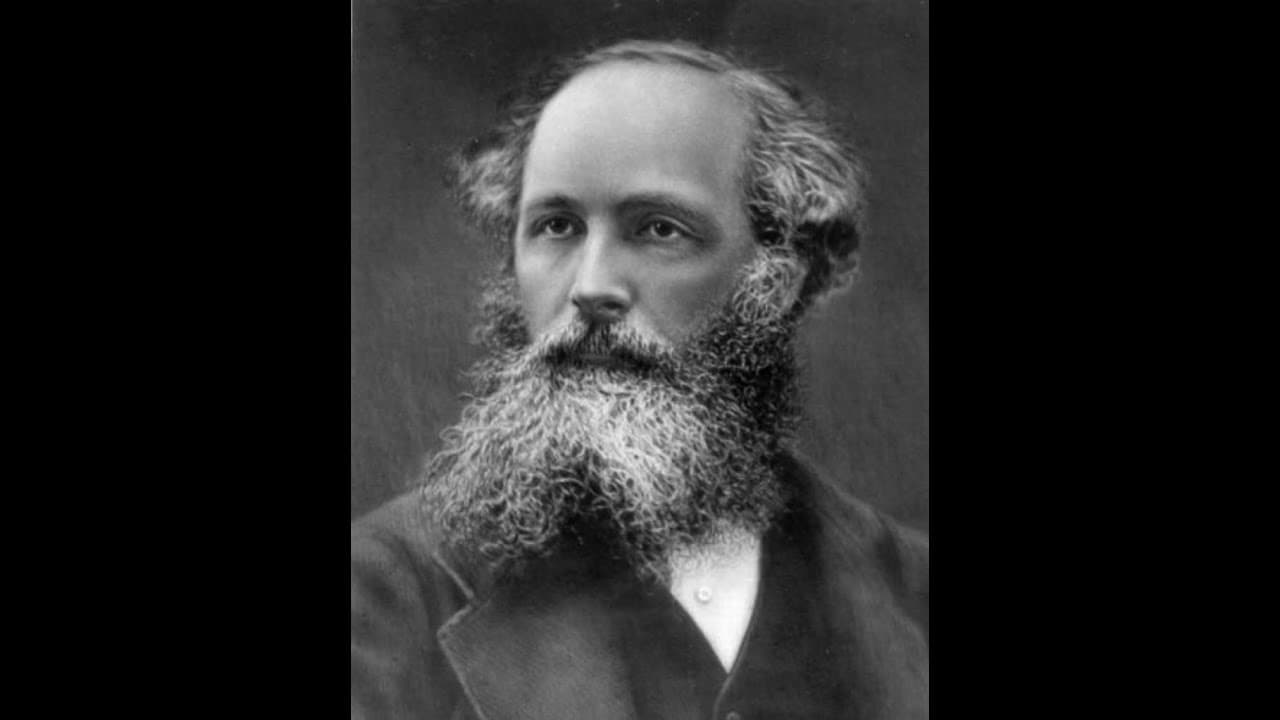
James Clerk Maxwell: The Greatest Victorian Mathematical Physicists - Professor Raymond Flood
TL;DR
James Clerk Maxwell's groundbreaking contributions to science revolutionized electromagnetic theory, color vision, and kinetic theory.
Transcript
Gresham College presents 19th century mathematical physics James Clark Maxwell by professor Raymond flood so James Clark Maxwell was one of the most important mathematical physicists of all time coming only after Newton and Einstein within a relatively short lifetime he made enormous contributions to science foremost amongst these was the formulati... Read More
Key Insights
- 📺 Maxwell's contributions to electromagnetism, color vision, and kinetic theory solidified his legacy as a pioneer in mathematical physics.
- 💨 His early academic success and publications showcased his exceptional talent and paved the way for groundbreaking scientific discoveries.
- 😋 Maxwell's work on the dynamics of Saturn's rings and his experimental and theoretical approach to physics set him apart as a leading figure in the field.
- 💋 The evolution of Maxwell's electromagnetic theory from mechanical models to abstract mathematical descriptions marked a transformative shift in the conception of reality in physics.
Install to Summarize YouTube Videos and Get Transcripts
Explore YouTube Video Summarizer or Get YouTube Transcript Extractor
Questions & Answers
Q: What were James Clerk Maxwell's major contributions to science?
James Clerk Maxwell made significant contributions to science, particularly in the fields of electromagnetism, color vision, and kinetic theory. His formulation of Maxwell's equations revolutionized the understanding of electromagnetic phenomena.
Q: How did Maxwell's early academic achievements shape his future career in mathematical physics?
Maxwell's early publications and academic success demonstrated his exceptional talent from a young age, setting the stage for his groundbreaking work in electromagnetism and other areas of physics.
Q: What was the significance of Maxwell's work on the dynamics and stability of Saturn's rings?
Maxwell's investigations into the dynamics and stability of Saturn's rings garnered him international recognition and offered insights into the behaviors of celestial objects, showcasing his diverse interests in physics.
Q: How did Maxwell's mathematical description of electromagnetic phenomena transform the field of physics?
Maxwell's transition from a mechanical interpretation involving vortices to a mathematical model led to the development of Maxwell's equations. This shift revolutionized physics, paving the way for relativity and quantum theory.
Summary & Key Takeaways
-
James Clerk Maxwell was a pioneer in mathematical physics, making significant contributions to electromagnetism, color vision, and kinetic theory.
-
Born in 1831, Maxwell's early academic achievements and publications displayed his extraordinary talent from a young age.
-
Maxwell's work on electromagnetism and the development of Maxwell's equations revolutionized the field of physics and laid the groundwork for modern physics.
Read in Other Languages (beta)
Share This Summary 📚
Summarize YouTube Videos and Get Video Transcripts with 1-Click
Try YouTube Summary with ChatGPT & Claude or YouTube Transcript Generator
Explore More Summaries from Gresham College 📚


Summarize YouTube Videos and Get Video Transcripts with 1-Click
Try YouTube Summary with ChatGPT & Claude or YouTube Transcript Generator