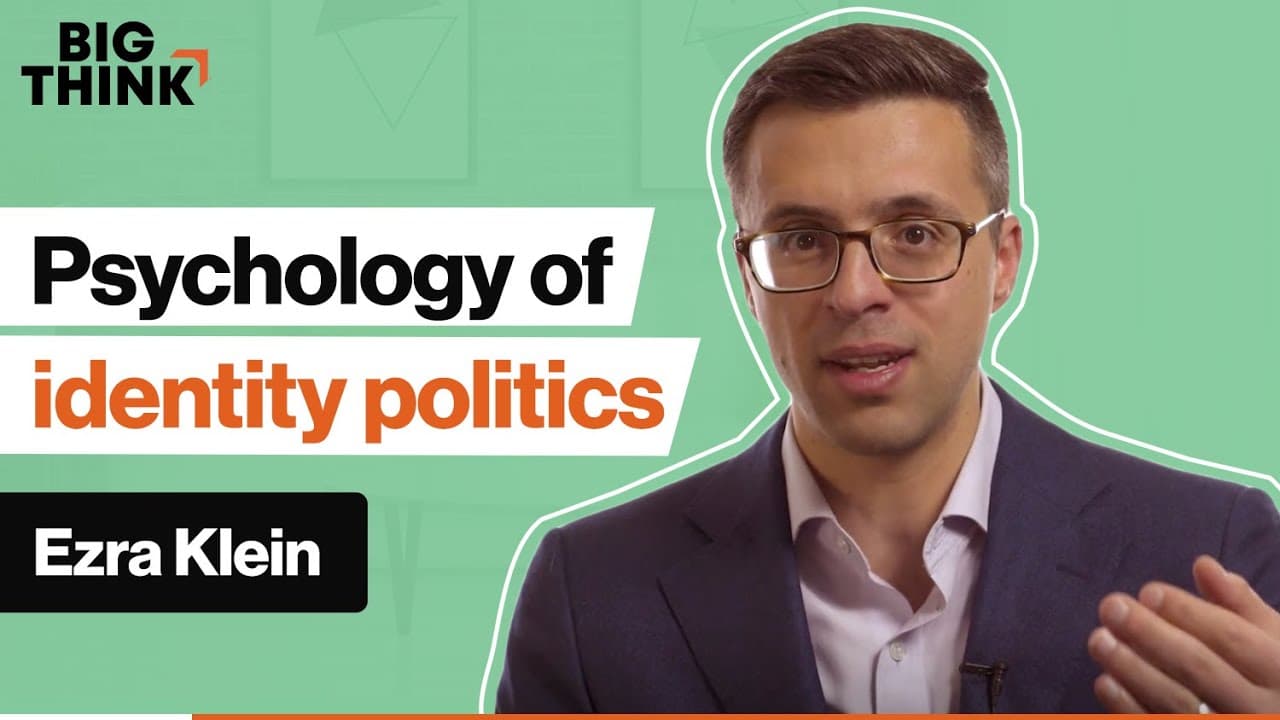
Sports and politics: How strong is group identity? | Ezra Klein | Big Think
TL;DR
Group identity shapes political behavior more than policy beliefs, driving divisions and tribalism in society.
Transcript
I think it’s important that people’s theories of politics are built on a foundation of a theory about human nature or some rigorous empirics about human nature. And something that I think we do a bad job understanding is the way the psychology of identity and group affiliation function in politics. We tend to suggest that identity politics is somet... Read More
Key Insights
- 👥 Human nature and group affiliation are foundational to understanding political behavior.
- 🥺 Group identity can lead to favoritism and discrimination within society.
- 🖐️ Group identity plays a crucial role in shaping political affiliations and behavior.
- 👥 Tribalism driven by group identity contributes to the polarization of political discourse.
- ❓ Group identities in politics can become overwhelming, influencing decision-making and behavior.
- 👥 Group identity is a driving force in political behavior, overshadowing policy beliefs.
- 👥 Understanding group psychology is essential for comprehending political divisions.
Install to Summarize YouTube Videos and Get Transcripts
Explore YouTube Video Summarizer or Get YouTube Transcript Extractor
Questions & Answers
Q: How does group identity influence political behavior?
Group identity shapes political behavior by encouraging favoritism towards in-group members and discrimination against out-groups. Individuals prioritize group affiliation over individual beliefs.
Q: Why is group identity significant in politics?
Group identity in politics creates divisions between different groups, shaping political affiliations and behavior. It influences how individuals perceive themselves in relation to larger societal groups.
Q: How does group identity impact decision-making in politics?
Group identity influences decision-making in politics by driving individuals to prioritize group interests over personal beliefs. It leads to tribalism, favoritism, and hostility towards out-groups.
Q: What role does group identity play in shaping political discourse?
Group identity shapes political discourse by influencing how individuals align with specific groups, leading to polarization, conflict, and the formation of mega identities in politics.
Summary & Key Takeaways
-
Human nature and group affiliation heavily influence politics.
-
An experiment by Henri Tajfel shows how easily group identity forms and leads to favoritism and discrimination.
-
Group identity plays a significant role in political behavior and is a fundamental aspect of politics.
Read in Other Languages (beta)
Share This Summary 📚
Summarize YouTube Videos and Get Video Transcripts with 1-Click
Try YouTube Summary with ChatGPT & Claude or YouTube Transcript Generator
Explore More Summaries from Big Think 📚



Summarize YouTube Videos and Get Video Transcripts with 1-Click
Try YouTube Summary with ChatGPT & Claude or YouTube Transcript Generator