What Is the Ethics of Belief in Philosophy?
TL;DR
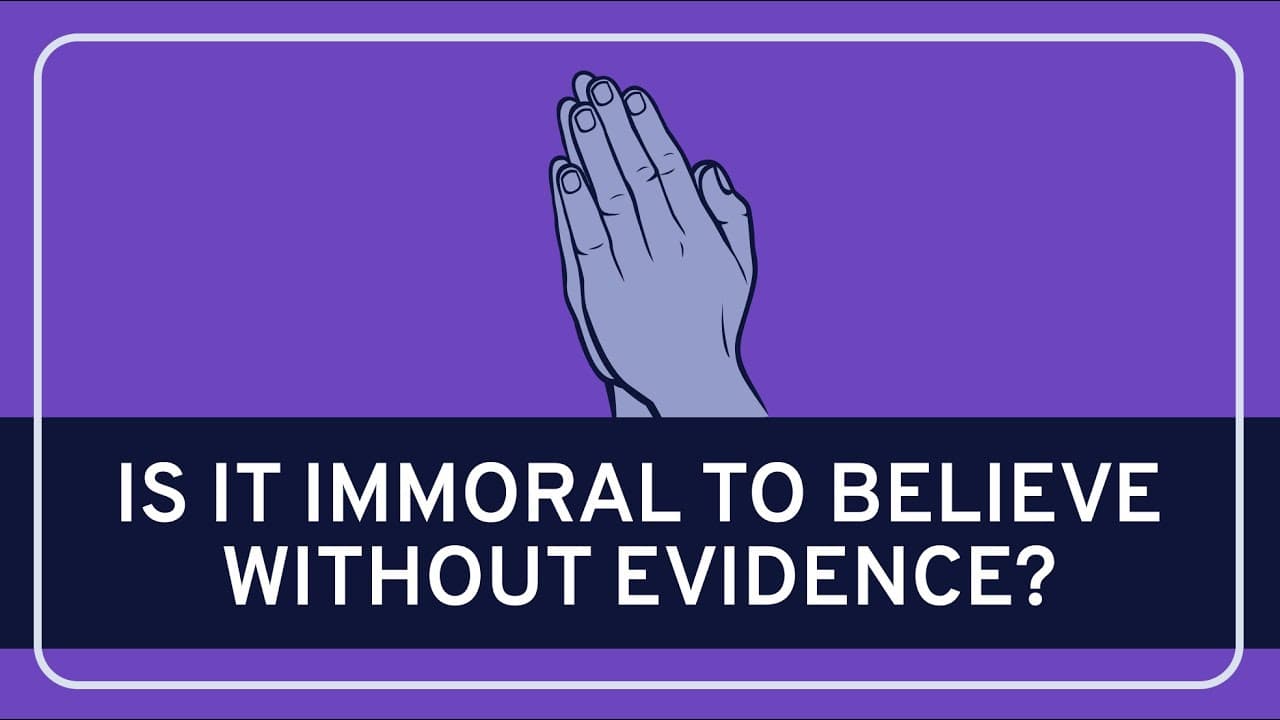
The ethics of belief debate centers around whether it's wrong to believe without evidence. William Clifford argues that it's always immoral to hold beliefs without sufficient evidence, while William James contends that in certain situations, such as personal or existential crises, believing without proof can be justifiable due to the potential benefits. This discussion highlights the risk management involved in forming beliefs.
Transcript
(Intro music) Hi, I'm Tom Donaldson[br]and I'm a junior Fellow at the Harvard Society of Fellows. Today I'm going to talk[br]about the will to believe. I'd like to talk about a simple argument[br]for the conclusion that it's wrong. to believe that God[br]exists. It goes like this. First premise: There is no[br]evidence that God exists. Second premi... Read More
Key Insights
- William Clifford argued that it is always wrong to believe anything without sufficient evidence, using a story about a negligent shipowner to illustrate his point.
- William James countered Clifford's view by suggesting that there are situations where believing without evidence is justified, especially when the potential benefits outweigh the risks.
- James introduced the idea of weighing the risks of believing a falsehood against missing out on a truth, particularly in matters of personal belief like religion.
- Clifford's story emphasized the moral responsibility of ensuring beliefs are evidence-based, likening unjustified belief to a moral failing.
- James's perspective was shaped by his personal struggles with depression and the role of religious belief in providing psychological relief.
- The debate between Clifford and James highlights the broader philosophical question of the ethics of belief and the conditions under which belief without evidence might be acceptable.
- James argued that belief in God could be justified without evidence due to the potential personal and existential benefits such belief might bring.
- The discussion reflects ongoing debates in epistemology regarding the balance between skepticism and faith, and the implications of belief for moral and practical life.
Install to Summarize YouTube Videos and Get Transcripts
Explore YouTube Video Summarizer or Get YouTube Transcript Extractor
Questions & Answers
Q: What is the main argument presented by William Clifford?
William Clifford's main argument is that it is always wrong to believe anything without sufficient evidence. He illustrates this point with a story about a shipowner who negligently convinces himself that his old ferry is seaworthy without evidence, resulting in a tragic sinking. Clifford argues that such unjustified belief is morally irresponsible.
Q: How does William James counter Clifford's argument?
William James counters Clifford by suggesting that there are situations where it is acceptable to believe without evidence. He argues that in certain cases, particularly those involving personal beliefs like religion, the potential benefits of holding a belief can outweigh the risks of believing something false. James emphasizes a risk management approach, weighing the potential gains against the risks.
Q: What personal experiences influenced William James's perspective?
William James's perspective was influenced by his personal experiences with severe depression. He found solace in religious belief, which helped him cope with his mental health struggles. This experience led him to value the psychological and existential benefits of belief, even without evidence, and to argue that such belief can be justified if it provides significant personal benefits.
Q: What story does Clifford use to illustrate his point?
Clifford uses the story of a shipowner who owns an old ferry. Despite having doubts about the ferry's seaworthiness, the owner convinces himself without evidence that it is safe to avoid repair costs. The ferry eventually sinks, leading to the deaths of its passengers and crew. Clifford uses this story to argue that the shipowner is morally responsible for the tragedy due to his unjustified belief.
Q: What alternative approach to belief does James propose?
James proposes an alternative approach to belief that involves managing the risks associated with belief. He suggests that when evidence is inconclusive, individuals should weigh the risks of believing a falsehood against the potential loss of truth. In cases where the potential benefits of belief are significant, such as in religious faith, belief without evidence can be justified.
Q: How does James's story about Rupert illustrate his argument?
James's story about Rupert illustrates his argument by depicting a shy man who believes his date likes him despite having no evidence. This belief helps Rupert overcome his shyness and have a pleasant evening. James uses this story to show that belief without evidence can be beneficial, highlighting situations where the positive outcomes of belief justify the lack of evidence.
Q: What is the central philosophical question in the debate?
The central philosophical question in the debate is whether it is moral to believe something without evidence. Clifford argues that it is always wrong, while James suggests that there are circumstances where belief without evidence is justified. This question touches on broader themes in epistemology, such as the ethics of belief, skepticism, and the balance between faith and evidence.
Q: What does the debate reveal about the ethics of belief?
The debate reveals that the ethics of belief is a complex issue involving the balance between evidence-based skepticism and the potential benefits of faith. Clifford's strict adherence to evidence highlights the moral responsibility of ensuring justified beliefs, while James's more flexible approach acknowledges the existential and psychological benefits that belief can provide, even in the absence of evidence.
Summary & Key Takeaways
-
The video discusses the philosophical debate between William Clifford and William James on the morality of believing without evidence. Clifford argues that such belief is always wrong, using a story about a negligent shipowner to illustrate the dangers of unfounded belief.
-
William James counters Clifford's argument by suggesting that there are circumstances where belief without evidence is not only permissible but necessary, particularly when the potential benefits of belief outweigh the risks of believing something false.
-
James introduces a risk management approach to belief, advocating for weighing the risks of false belief against the potential loss of truth, using personal and existential benefits as justification for belief without evidence, especially in religious contexts.
Read in Other Languages (beta)
Share This Summary 📚
Summarize YouTube Videos and Get Video Transcripts with 1-Click
Try YouTube Summary with ChatGPT & Claude or YouTube Transcript Generator
Explore More Summaries from Wireless Philosophy 📚
Summarize YouTube Videos and Get Video Transcripts with 1-Click
Try YouTube Summary with ChatGPT & Claude or YouTube Transcript Generator