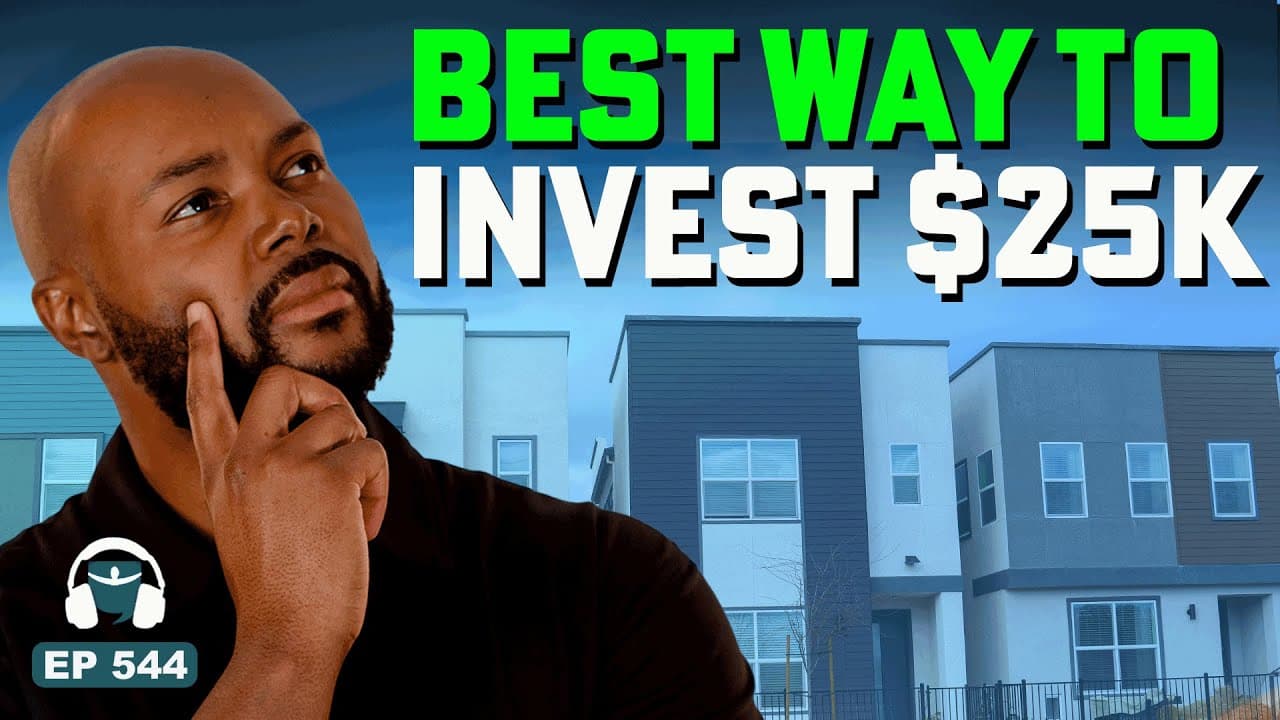
How to Invest in Real Estate with Just $25,000 (or Less!)
TL;DR
Learn strategies to invest $25K in real estate effectively.
Transcript
what's the best way to invest 25,000 and scale your portfolio It's a question many new investors face but what's really the best move in today's market And once you figure out your strategy on how to invest at 25,000 how do you pick the right market For instance investing out of state can be a little tricky when you can't just drive to the property... Read More
Key Insights
- Investing in multiple markets can diversify risk but focusing on one market allows for deeper knowledge and expertise.
- House hacking is a recommended strategy for new investors with limited capital, maximizing profit while minimizing living expenses.
- The volume of available properties in a market can dictate how strict or flexible an investor's buy box should be.
- Using tools like BiggerPockets Market Finder can help investors analyze markets down to specific neighborhoods or zip codes.
- Co-signers can help tenants with insufficient credit or income qualify for leases, but they should undergo the same application process as tenants.
- Different real estate strategies carry varying levels of risk, and investors should choose strategies that align with their skills and comfort levels.
- Creative financing options, like USDA loans, can help investors with limited capital enter the real estate market.
- Understanding personal skills and tendencies is crucial for selecting the right investment strategy and managing risk effectively.
Install to Summarize YouTube Videos and Get Transcripts
Explore YouTube Video Summarizer or Get YouTube Transcript Extractor
Questions & Answers
Q: What is the advantage of focusing on one market versus multiple markets?
Focusing on one market allows investors to gain in-depth knowledge and expertise, potentially leading to better decision-making and investment outcomes. It also reduces the complexity of managing multiple properties in different locations, which can require building separate teams and relationships with local agents. However, investing in multiple markets can diversify risk and increase the chances of finding deals.
Q: Why is house hacking recommended for new investors with limited capital?
House hacking is recommended because it allows investors to reduce their living expenses by renting out part of their property, generating cash flow. This strategy enables investors to live in their investment property, often qualifying for better financing terms as it is considered a primary residence. It provides a practical way to enter the real estate market with limited funds while building equity and experience.
Q: How can investors assess the volume of properties in a market?
Investors can assess market volume by using tools like BiggerPockets Market Finder, which provides data on available properties down to specific neighborhoods or zip codes. Analyzing the number of listings, sales, and the time properties spend on the market can indicate volume. A higher volume allows for a more targeted buy box, while a lower volume may require flexibility in strategy.
Q: What is the role of a co-signer in a lease agreement?
A co-signer in a lease agreement pledges to be financially responsible for the rent if the primary tenant fails to pay. This can help tenants with insufficient credit or income qualify for leases. Co-signers should undergo the same application process as tenants, including background and credit checks, to ensure they can fulfill their financial obligations if necessary.
Q: What are some creative financing options for real estate investors with limited capital?
Creative financing options include USDA loans, which offer 0% down payments for properties in rural areas, and NACA loans, which provide favorable terms for primary residences. These options can reduce the initial capital required, enabling investors to enter the market. Additionally, strategies like house hacking can further minimize living expenses and increase cash flow.
Q: How can investors manage risk when choosing a real estate investment strategy?
Investors can manage risk by selecting strategies that align with their skills and comfort levels. Understanding personal strengths, such as project management or conflict resolution, can guide strategy choice. Additionally, conducting a self-assessment to identify areas of risk tolerance and seeking strategies that mitigate those risks can help ensure long-term success.
Q: What factors should be considered when vetting a co-signer?
When vetting a co-signer, factors such as credit score, income verification, and financial history should be considered. A thorough application process, including background and credit checks, is essential to ensure the co-signer can fulfill their financial obligations. It's also important to clarify whether the co-signer will reside in the property or solely provide financial backing.
Q: How does market volume affect an investor's buy box?
Market volume affects an investor's buy box by dictating how strict or flexible it can be. In a high-volume market, investors can maintain a narrow buy box, focusing on specific property types or criteria. In a low-volume market, investors may need to broaden their buy box or explore additional markets to find suitable deals, balancing volume with investment goals.
Summary & Key Takeaways
-
Investing $25,000 in real estate requires strategic planning, whether focusing on a single market or exploring multiple ones. Understanding market volume and using tools like BiggerPockets Market Finder can aid in decision-making.
-
House hacking emerges as a top strategy for new investors, allowing them to reduce living expenses while generating cash flow. Creative financing options like USDA loans can also provide opportunities for those with limited capital.
-
Co-signers can be a valuable asset for tenants with insufficient credit or income, but they must undergo a thorough application process. Investors should choose strategies that align with their skills to manage risk effectively.
Read in Other Languages (beta)
Share This Summary 📚
Summarize YouTube Videos and Get Video Transcripts with 1-Click
Try YouTube Summary with ChatGPT & Claude or YouTube Transcript Generator
Explore More Summaries from Real Estate Rookie 📚






Summarize YouTube Videos and Get Video Transcripts with 1-Click
Try YouTube Summary with ChatGPT & Claude or YouTube Transcript Generator