How to Use Systems Thinking and Design Thinking for Daily Problems

TL;DR
To solve daily problems effectively, combine systems thinking and design thinking. Systems thinking fosters a holistic view to identify root causes, while design thinking emphasizes empathy and iterative prototyping. This dual approach enables better problem definition, rapid iteration, and ultimately leads to innovative solutions in both professional and personal contexts.
Transcript
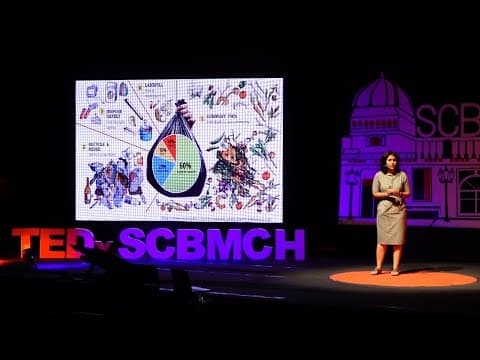
hi everyone I'm progress Abu I work as a product manager at a health care company in New York and I also run my nonprofit called Project 21 in India which focuses on providing holistic education to the youth I graduated from Georgia Tech in 2017 with a degree industrial and systems engineering today I'd like to speak about adopting principles of sy... Read More
Key Insights
- 🤔 Systems thinking involves understanding the entire system and its interdependencies to solve problems effectively.
- 🤔 Design thinking focuses on empathizing with users, challenging assumptions, and creating prototypes to solve problems iteratively.
- 🤔 Integrating systems thinking and design thinking can enhance problem-solving in professional and personal life.
- 🗯️ Accurate problem definition is crucial to finding the right solutions for optimal results.
- 👻 Prototyping and testing MVPs allow for quick iteration and improvement based on user feedback.
- ❓ Failure is an essential part of innovation and resilience is necessary to bounce back and learn from failures.
- 🤩 Grit and resilience are key qualities that set successful individuals apart.
Install to Summarize YouTube Videos and Get Transcripts
Explore YouTube Video Summarizer or Get YouTube Transcript Extractor
Questions & Answers
Q: What is systems thinking and how does it help solve problems?
Systems thinking involves understanding the interdependencies and relationships within a system to identify the root cause of a problem. By analyzing events, patterns, structures, and mental models, one can gain a holistic perspective and effectively solve problems affecting the entire system.
Q: How does design thinking approach problem-solving?
Design thinking involves empathizing with users, challenging assumptions, and using lateral thinking strategies to define and ideate on problems. It emphasizes creating prototypes and establishing a feedback loop to iterate and improve solutions based on user feedback.
Q: How can systems thinking be applied to personal problem-solving?
In personal life, understanding oneself as a system can help identify root causes of problems. One can reflect on their needs, ask new and difficult questions, and analyze behavioral patterns to gain a deeper understanding of oneself and solve daily problems effectively.
Q: How can defining the problem accurately improve the solution?
Accurate problem definition is crucial for finding the right solutions. By challenging assumptions and asking different types of questions, one can break down barriers and devise innovative solutions. Thinking about the inverse of the problem can also lead to unique perspectives and potential solutions.
Q: How can prototyping and testing MVPs benefit problem-solving?
Prototyping and testing Minimum Viable Products (MVPs) allow for solving defined problems with the highest impact and lowest effort. Through user tests and feedback loops, one can gather valuable insights to iterate and improve the solution. A/B testing can also help determine which solution has the most impact.
Summary & Key Takeaways
-
Systems thinking involves understanding the holistic perspective of a system and identifying the root cause of a problem.
-
Design thinking is an iterative process that focuses on empathizing with users, challenging assumptions, and creating prototypes to solve problems.
-
By integrating systems thinking and design thinking, engineers, designers, and product managers can better solve complex problems in both professional and personal settings.
Read in Other Languages (beta)
Share This Summary 📚
Summarize YouTube Videos and Get Video Transcripts with 1-Click
Try YouTube Summary with ChatGPT & Claude or YouTube Transcript Generator
Explore More Summaries from TEDx Talks 📚





Summarize YouTube Videos and Get Video Transcripts with 1-Click
Try YouTube Summary with ChatGPT & Claude or YouTube Transcript Generator