Energy, Sources of Energy, Forms of Energy
TL;DR
Energy sources include renewable (solar, wind, hydro, geothermal, ocean, biomass) and non-renewable (coal, oil, natural gas), with energy existing in forms like thermal, kinetic, potential, and more.
Transcript
hello friends so in this video i'm going to discuss about energy sources of energy and forms of energy the basic definition of energy is capacity to do work energy is very important in most all aspects of daily life the quality of life depends on the availability of energy so it is very important to know the conversion of energy from one form to an... Read More
Key Insights
- 🛟 Energy is vital for daily life and quality of life, with sources categorized into renewable and non-renewable categories.
- 💟 Renewable energy sources like solar, wind, hydro, geothermal, ocean, and biomass are sustainable and eco-friendly.
- 🫢 Non-renewable sources such as coal, oil, and natural gas are finite and contribute to environmental issues.
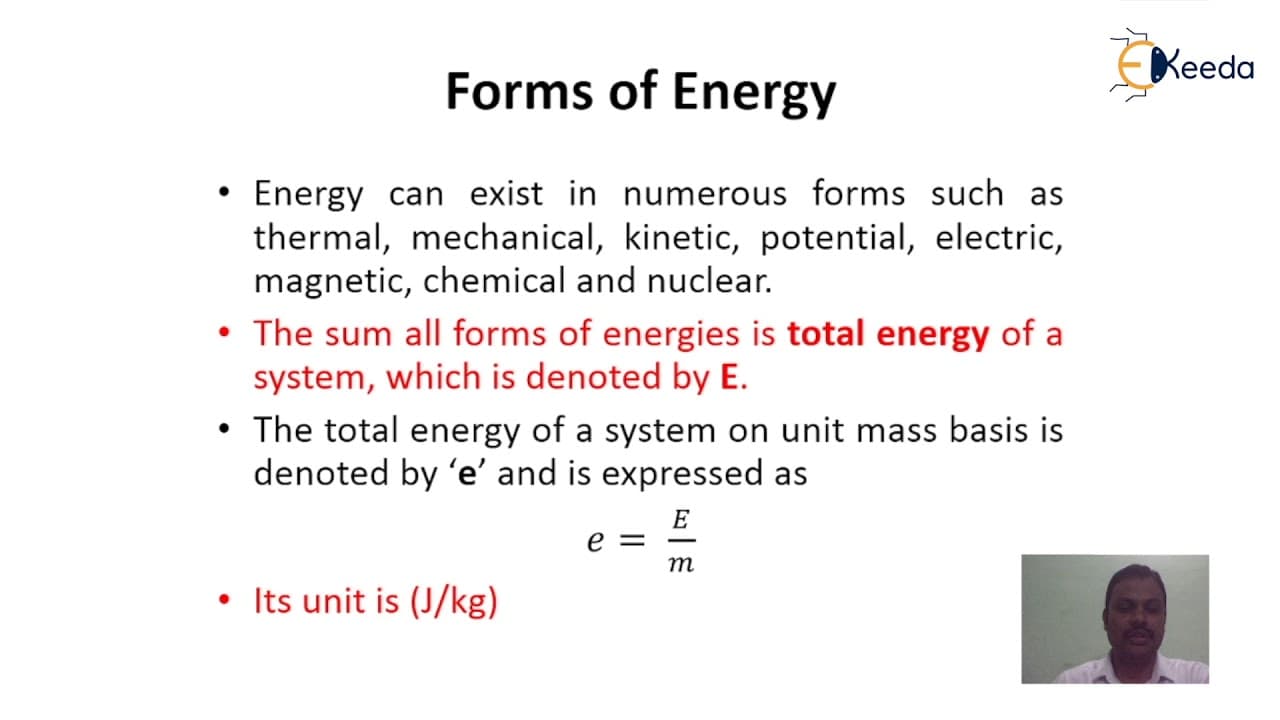
- 🦾 Energy can exist in various forms including thermal, mechanical, kinetic, potential, electric, magnetic, chemical, and nuclear.
- 💁 The total energy of a system comprises microscopic (internal energy) and macroscopic (kinetic, potential) forms.
- 💁 Energy conversion from one form to another is essential for meeting the diverse energy needs of different systems.
- 😒 Understanding the different forms of energy can help in optimizing energy use and conservation efforts.
Install to Summarize YouTube Videos and Get Transcripts
Explore YouTube Video Summarizer or Get YouTube Transcript Extractor
Questions & Answers
Q: What are some examples of renewable energy sources mentioned in the content?
Some examples of renewable energy sources are solar energy, wind energy, hydro energy, geothermal energy, ocean energy, and biomass energy.
Q: How is energy conversion from one form to another described in the content?
Energy can be converted from one form to another, such as thermal, mechanical, kinetic, potential, electric, magnetic, chemical, and nuclear forms, depending on the system and its requirements.
Q: How is total energy of a system defined in the content?
The total energy of a system is the sum of internal energy, kinetic energy, and potential energy, expressed as E = U + 1/2mv^2 + mgz, where U is internal energy, m is mass, v is velocity, g is acceleration due to gravity, and z is elevation.
Q: What is the significance of renewable energy sources over non-renewable sources?
Renewable energy sources are considered inexhaustible and sustainable, unlike non-renewable sources like coal, oil, and natural gas, which are finite and lead to environmental degradation.
Summary & Key Takeaways
-
Energy is crucial for daily life, with sources categorized into renewable (solar, wind, hydro, geothermal, ocean, biomass) and non-renewable (coal, oil, natural gas).
-
Energy can exist in various forms like thermal, mechanical, kinetic, potential, electric, magnetic, chemical, and nuclear.
-
The total energy of a system includes microscopic (internal energy) and macroscopic (kinetic, potential) forms.
Read in Other Languages (beta)
Share This Summary 📚
Summarize YouTube Videos and Get Video Transcripts with 1-Click
Try YouTube Summary with ChatGPT & Claude or YouTube Transcript Generator
Explore More Summaries from Ekeeda 📚






Summarize YouTube Videos and Get Video Transcripts with 1-Click
Try YouTube Summary with ChatGPT & Claude or YouTube Transcript Generator