Why Are Some People More Altruistic Than Others?
TL;DR
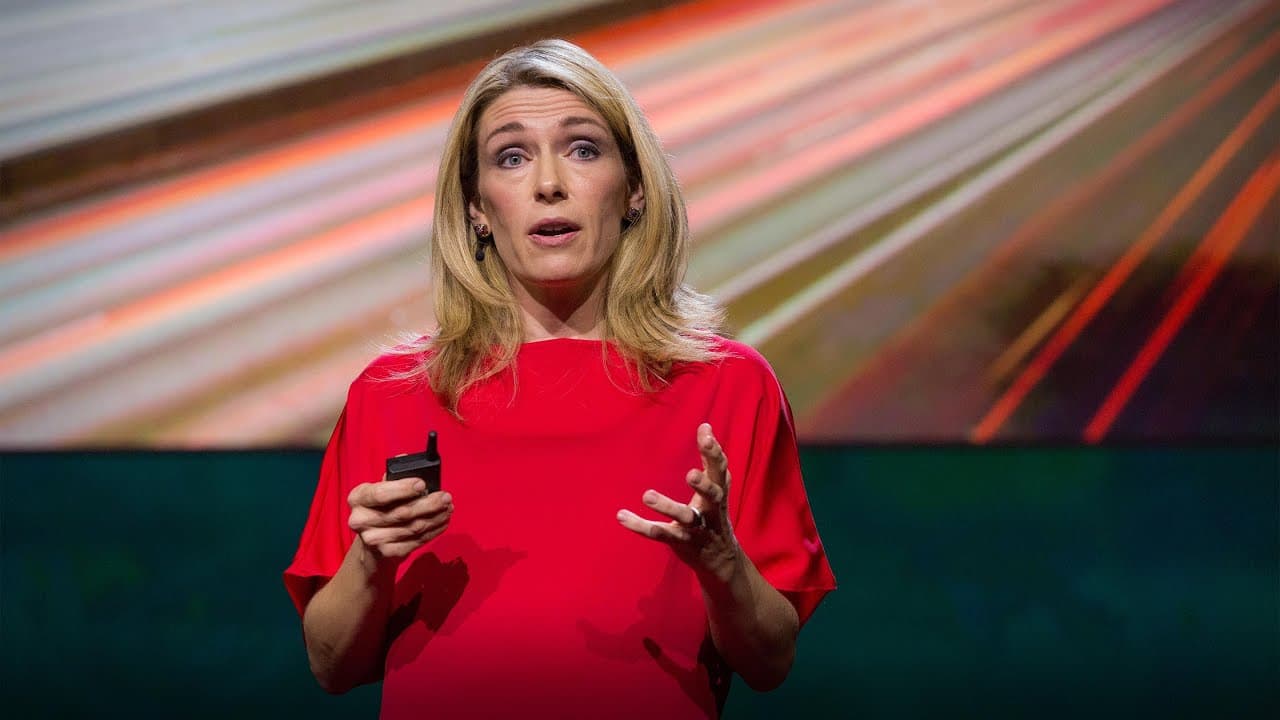
Some people are more altruistic due to brain differences that enhance their capacity for compassion. Research shows that extraordinary altruists, like kidney donors, have larger and more reactive amygdalas, enabling them to better recognize others' fear and distress. This suggests that the ability to care for others, even strangers, is a trait that can potentially develop in many people.
Transcript
Read and summarize the transcript of this video on Glasp Reader (beta).
Key Insights
- 👤 The speaker recounts a personal experience of being saved by a stranger, igniting a curiosity about the causes of altruism.
- 🚗 The speaker reflects on a car accident that led to the stranger's act of bravery and the impact it had on their life.
- 🧠 Psychopathy is explored as an opposite behavior to altruism, characterized by insensitivity to others' emotions and distress.
- 😟 Psychopaths have a smaller and less reactive amygdala, the part of the brain responsible for recognizing fearful expressions, compared to highly altruistic individuals.
- 💪 Extraordinary altruists, such as kidney donors, have brains with special characteristics, including enhanced recognition of others' fear and larger amygdalas.
- 🌍 Altruistic behavior extends beyond one's inner circle to total strangers, indicating a lack of self-centeredness and an expansive circle of compassion.
- ⚖️ Expansions of altruism and compassion are occurring at a societal level, driven by increases in wealth and improvements in standards of living.
- 🌟 The roots of altruism and compassion are inherent to human nature, and while some individuals may be more naturally inclined, the ability to exhibit altruistic behavior towards strangers is attainable for almost everyone.
Install to Summarize YouTube Videos and Get Transcripts
Explore YouTube Video Summarizer or Get YouTube Transcript Extractor
Questions & Answers
Q: What caused the man to decide to save the narrator's life after a car accident?
The narrator believes that the man's decision to save their life was driven by their capacity for altruism. The narrator wonders what internal forces led him to risk his own life to save a stranger.
Q: Why do some people engage in selfless acts of altruism?
Many people believe that human nature is fundamentally selfish. However, the narrator questions this belief by examining the actions of individuals who engage in selfless acts like helping others even at great risk and cost to themselves. Understanding the causes of altruism is important to understanding human social nature.
Q: What is the definition of altruism?
Altruism is defined as a voluntary, costly behavior that is motivated by the desire to help another individual. It is a selfless act intended to benefit only the other person.
Q: What are the possible causes of altruism?
One possible cause of altruism is compassion, which is a key driver. The narrator speculates that highly altruistic individuals may have brains that are different from others, specifically in terms of their ability to recognize and respond to the fear and distress of others.
Q: How are psychopaths different from extraordinary altruists?
Psychopaths exhibit a lack of compassion and a tendency to engage in antisocial and violent behavior. They are insensitive to signs of distress in others, particularly fearful facial expressions. Psychopaths' brains show underreactivity in the amygdala, the part responsible for recognizing fear. In contrast, extraordinary altruists have brains that are more reactive to fear, suggesting that they have a higher capacity for compassion.
Q: What special characteristics do the brains of extraordinary altruists have?
Extraordinary altruists have brains that are better at recognizing other people's fear and distress. Their amygdalas, the region responsible for recognizing fear, are more reactive to fearful expressions. Additionally, their amygdalas are larger than average. These special characteristics may contribute to their ability to extend their compassion and altruism to strangers, just like the man who saved the narrator's life.
Q: How do extraordinary altruists view the world differently?
Extraordinary altruists do not consider themselves as being at the center of anything. They have no inner rings or outer rings of care and compassion. They do not see themselves as inherently more important than others, leading to a lack of self-centeredness. This humility allows them to extend their compassion beyond their innermost circle to strangers.
Q: Can the ability to be more altruistic and compassionate be attained by more people?
The narrator believes that the view of the world displayed by extraordinary altruists, one without a center and with compassion extending to strangers, is attainable by many and possibly most people. Societal changes, such as increases in wealth, have already led to expansions of altruism and compassion. The narrator believes that as society becomes more compassionate, future generations may consider acts like donating a kidney to a stranger as normal and ordinary as blood donation is today.
Summary & Key Takeaways
-
The speaker recounts a time when a stranger risked his own life to save them after a car accident, prompting them to explore the causes of altruism.
-
The speaker explains that psychopaths lack compassion and have underreactive amygdalas, while highly altruistic individuals have larger, more reactive amygdalas.
-
Extraordinary altruists have a wide circle of compassion that extends beyond their immediate circle of friends and family, demonstrating humility and a lack of self-centeredness. Efforts to expand altruism and compassion in society have been successful.
Read in Other Languages (beta)
Share This Summary 📚
Summarize YouTube Videos and Get Video Transcripts with 1-Click
Try YouTube Summary with ChatGPT & Claude or YouTube Transcript Generator
Explore More Summaries from TED 📚






Summarize YouTube Videos and Get Video Transcripts with 1-Click
Try YouTube Summary with ChatGPT & Claude or YouTube Transcript Generator