Can You Identify Countries on a Map?
TL;DR
Many individuals across political lines struggle to name countries on a map, revealing widespread geographical ignorance. Ted Cruz inaccurately framed a video showcasing this lack of knowledge as a critique of Bernie supporters, despite participants' diverse affiliations. A follow-up investigation further illustrates that this issue is not confined to any specific political group.
Transcript
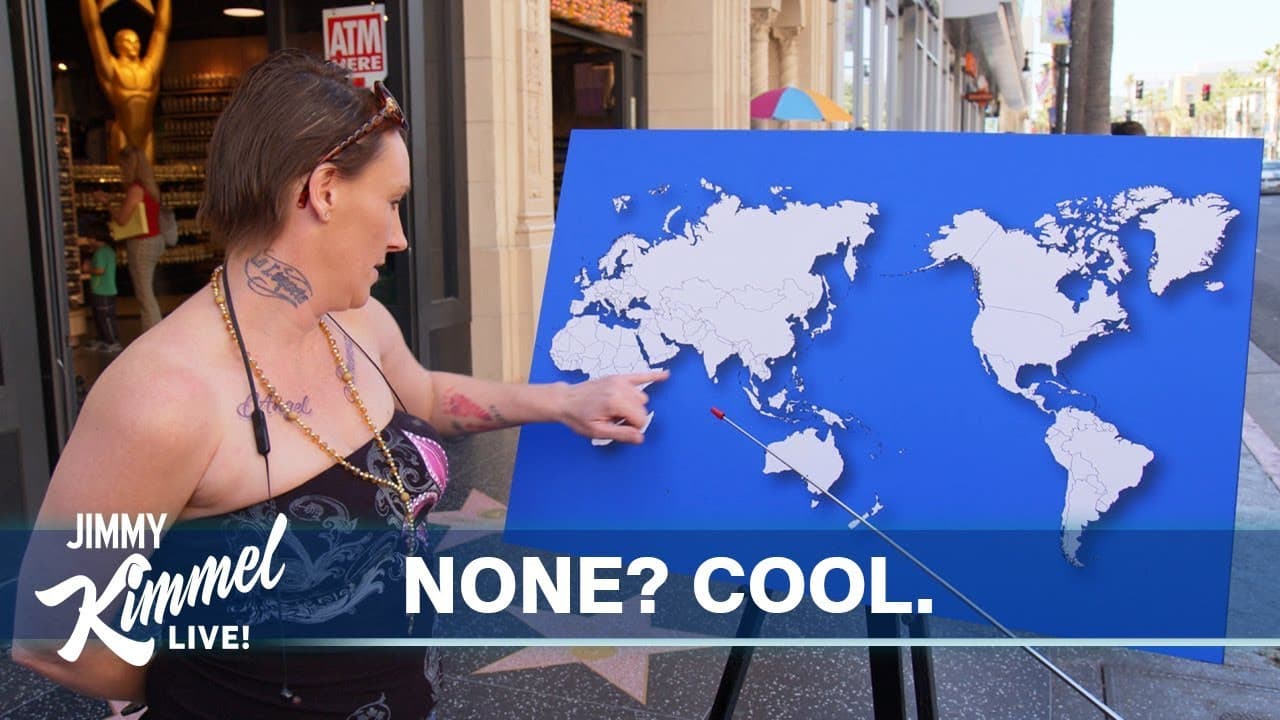
ted cruz tweeted a segment uh a video that he likely didn't realize was from our show about two years ago we went out and street we asked people we asked random people passing by if they could name a country on a map we set up and many of them could not name a country it had nothing to do with their political affiliation but ted cruz posted and wro... Read More
Key Insights
- 🎮 Ted Cruz's tweet mischaracterized the original video's intent, portraying it as a critique of Bernie supporters.
- 🖤 Both Republican and Democrat respondents showcased an alarming lack of geographical knowledge, challenging the assumption that ignorance aligns with political ideology.
- 🪡 The experiment highlighted broader educational shortcomings, suggesting a need for more emphasis on geography in schooling.
- 👥 Misleading portrayals in political discourse can distort perceptions of opposing groups and their knowledge.
- 🥺 Closing societal gaps in knowledge about geography may lead to a more informed electorate.
- 🧑🏭 The video serves as a reminder of the importance of critical media consumption and fact-checking political claims.
- 🌍 Public ignorance in geography may have ramifications for international understanding and cooperation.
Install to Summarize YouTube Videos and Get Transcripts
Explore YouTube Video Summarizer or Get YouTube Transcript Extractor
Questions & Answers
Q: What was Ted Cruz's main claim about the video he shared?
Ted Cruz claimed that the video he shared illustrated the ignorance of Bernie Sanders' base regarding geography. He suggested that those who supported socialism lacked the knowledge of countries, implying that their political beliefs were tied to their educational deficiencies.
Q: How did the original video depict people's ability to name countries?
The original video showcased various individuals on the street being asked to identify countries on a map. Many participants failed to name even basic countries, highlighting a general lack of geographical knowledge among the public, which did not correlate with their political beliefs.
Q: What did the follow-up investigation reveal about political supporters' knowledge?
The follow-up investigation involved questioning individuals identified as non-Bernie supporters, and they also displayed significant difficulty in naming countries on the map. This suggested that the ignorance demonstrated was not limited to any single political affiliation, but rather indicative of a wider trend among the general populace.
Q: What were the implications of the statements made regarding facts, truth, and substance?
The segment highlighted how claims around facts and truths may not reflect reality. The assertion that ignorance was confined to one political group was contradicted by the evidence presented, demonstrating how political narratives can be misleading and oversimplify complex issues of public knowledge.
Q: Why is understanding geography important in a political context?
Understanding geography is crucial as it informs voters about global issues, foreign policies, and international relations, which shape national debates. A well-informed electorate can better participate in discussions regarding immigration, trade, and global conflicts, ultimately leading to more democratic and reasoned decision-making.
Q: What does the overall content critique about public knowledge?
The content critiques the general public's awareness of geographic knowledge, suggesting that it transcends political affiliations. This lack of awareness poses questions about the educational systems and the media's role in informing citizens, as well as the implications for civic engagement and informed voting.
Summary & Key Takeaways
-
A segment from a show featured people being asked to identify countries on a map, revealing significant gaps in knowledge regardless of political affiliation.
-
Ted Cruz misrepresented the video's context, suggesting it reflected the ignorance of Bernie Sanders' supporters without realizing the participants weren't affiliated with any political group.
-
The follow-up visit showed individuals from varying political views still struggled to name countries, emphasizing a broader issue of geographical ignorance.
Read in Other Languages (beta)
Share This Summary 📚
Summarize YouTube Videos and Get Video Transcripts with 1-Click
Try YouTube Summary with ChatGPT & Claude or YouTube Transcript Generator
Explore More Summaries from Jimmy Kimmel Live 📚


Summarize YouTube Videos and Get Video Transcripts with 1-Click
Try YouTube Summary with ChatGPT & Claude or YouTube Transcript Generator