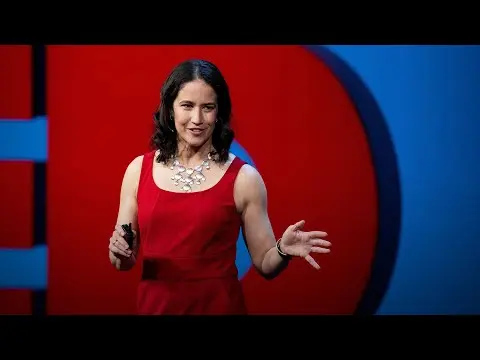
Deborah Gordon: The emergent genius of ant colonies

TL;DR
This talk explores how task allocation works in ant colonies, focusing on the interdependence of different tasks and the role of interaction patterns in decision-making.
Transcript
Read and summarize the transcript of this video on Glasp Reader (beta).
Key Insights
- 🐜 Ant colonies are a good example of how simple parts interact to create the behavior of the whole organization. Other examples include the web, biological systems like brains and cells, and developing embryos.
- 🏜️ The speaker has been studying seed-eating ants in southeastern Arizona for the past 20 years, focusing on their behavior changes as the colony gets older and larger.
- 💡 Ants never make more ants; colonies make more colonies. Each year, colonies send out reproductives (queens and males) on a mating flight, and the newly mated queens start new colonies by laying eggs.
- 🐜 The size and number of worker ants in a colony changes as the colony ages, growing to about 10-12 thousand workers when the colony is five years old. Reproduction starts when the colony reaches a stable size.
- 📊 The process of task allocation in ant colonies is fascinating and complex. Ants adjust the numbers of workers performing each task based on changing conditions, such as rain or the availability of food.
- 🔀 Ants can switch tasks, and the allocation of tasks changes as the colony ages. Older colonies show more stability and consistency in task allocation, while younger colonies are more variable.
- 🤝 Ants use a network of antennal contact to determine what tasks to perform. They can assess the rate at which they meet ants of certain tasks through chemical cues, such as differences in hydrocarbon odors on their bodies.
- 📝 The patterns of interaction between ants in the colony determine the overall behavior and task allocation. Despite being noisy and variable, these patterns are successful enough for ants to thrive for millions of years.
Install to Summarize YouTube Videos and Get Transcripts
Explore YouTube Video Summarizer or Get YouTube Transcript Extractor
Questions & Answers
Q: How do ant colonies function without central control?
Ant colonies function efficiently without central control because each ant fulfills a specific role based on a division of tasks within the colony. There is no management or direction from one ant to another. The queen lays eggs, and the rest of the ants autonomously perform their assigned tasks based on their position and age within the colony.
Q: What factors influence task allocation in ant colonies?
Task allocation in ant colonies is influenced by various factors, such as the availability of resources, environmental conditions, and the size and age of the colony. Ants adapt and switch tasks based on the needs of the colony, ensuring efficiency and flexibility in resource allocation.
Q: How do ants communicate and coordinate task allocation?
Ants primarily communicate and coordinate task allocation through antennal contact. They can detect specific task-related chemical signals on the surface of other ants, such as differences in hydrocarbons, to determine the rate at which they are meeting ants of certain tasks. This pattern of interactions serves as a message that helps ants decide their next task.
Q: What is the role of colony size in task allocation?
Colony size plays a crucial role in task allocation within ant colonies. As the colony grows older and larger, the behavior and task assignment become more stable and predictable. The larger the colony, the more consistent the allocation of tasks becomes, ensuring smooth functioning and adaptability to changing environmental conditions.
Q: How do ants decide to switch tasks?
Ants decide to switch tasks based on their immediate interactions and sensory information, rather than any central control or direction. If the colony requires more workers for a specific task, ants will switch from their current task to fulfill the new demand. The decision to switch tasks is influenced by the pattern of antennal contacts and the specific chemical signals detected during these interactions.
Q: What challenges or limitations exist in studying task allocation in ant colonies?
Studying task allocation in ant colonies faces challenges due to the complexity and variability of interactions. Ant behavior is influenced by a range of factors, making it difficult to isolate and understand the precise mechanisms behind task allocation. Additionally, ants' ability to assess and count interactions is limited, requiring researchers to rely on modeling and simulations to uncover underlying patterns and rules governing task allocation.
Q: Why is understanding task allocation in ant colonies important?
Understanding task allocation in ant colonies provides insights into the self-organizational capabilities of complex systems. It sheds light on how decentralized decision-making processes and interaction patterns can lead to efficient resource allocation and adaptive behavior. This knowledge can have implications in various fields, including biology, social science, and management of human organizations.
Summary & Key Takeaways
-
Ant colonies consist of queens, workers, and no central control, yet they function efficiently.
-
Task allocation in ant colonies involves the interdependence of different tasks, with ants switching roles as needed.
-
The organization of tasks and decision-making processes change as the colony grows in size and age.
Read in Other Languages (beta)
Share This Summary 📚
Summarize YouTube Videos and Get Video Transcripts with 1-Click
Try YouTube Summary with ChatGPT & Claude or YouTube Transcript Generator
Explore More Summaries from TED 📚
Summarize YouTube Videos and Get Video Transcripts with 1-Click
Try YouTube Summary with ChatGPT & Claude or YouTube Transcript Generator