Why hasn't human civilization destroyed itself yet? | Richard Wrangham and Lex Fridman
TL;DR
Despite the potential for conflicts to arise from unresolved dominance relationships, the use of nuclear weapons and the potential for advancements in technology offer hope for the survival of human civilization.
Transcript
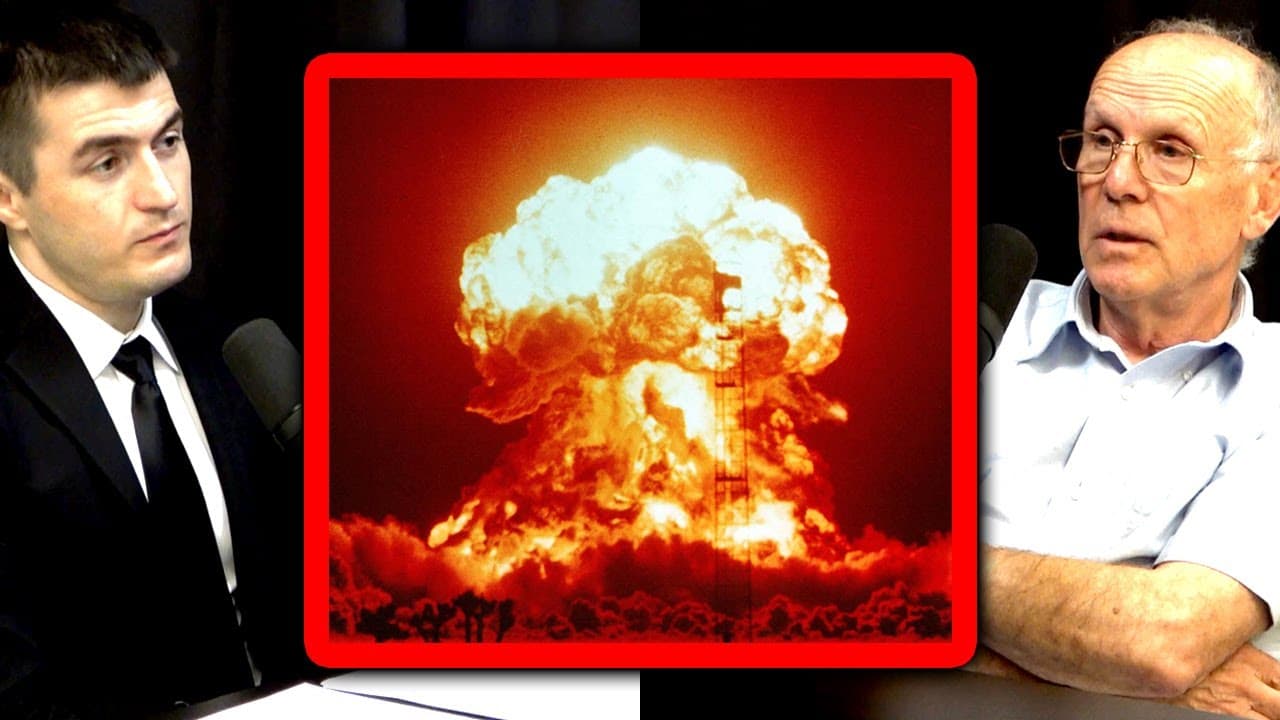
is it nevertheless surprising to you that we have not destroyed ourselves with nuclear weapons so the mutually assured destruction that we've had for many decades from somebody who studies violence how does that make sense to you well i mean i'm surprised only in the sense that um accidental the the the fact that we have not had an accident yet uh ... Read More
Key Insights
- 🧑🌾 Accidental nuclear launches have been avoided so far, but the risk remains.
- 🥺 Longer periods of peace may lead to more challenging conflicts due to unresolved dominance relationships.
- 😌 Nuclear weapons align with the psychology of avoiding harm, but the challenge lies in accidental launches.
- 💁 The advent of technology, such as robotics and information sharing, could potentially undermine motivations for conflict.
- 🛟 Human civilization must find a balance between resolving conflicts and preserving the richness of life.
- 👻 Reproductive technology may allow for a female-dominated future, potentially reducing conflict.
- 🌍 Empathy and kindness, regardless of gender, are crucial for building a better world and reducing violence.
Install to Summarize YouTube Videos and Get Transcripts
Explore YouTube Video Summarizer or Get YouTube Transcript Extractor
Questions & Answers
Q: Is it surprising that humanity has not destroyed itself with nuclear weapons?
It is surprising, considering the potential for accidents and serious conflicts that have been narrowly avoided. The psychology of avoiding harm aligns with the principle of mutually assured destruction (MAD) but accidental launches remain a challenge.
Q: Can the longer periods of peace following wars lead to more challenging conflicts?
Yes, as dominance relationships change and tensions of unresolved dominance relationships accumulate, conflicts become more difficult to resolve. This is observed in tribal groups and may apply to nations as well.
Q: What is the potential for conflicts between China and the US?
With China's desire to take back Taiwan and America shifting its focus on the Pacific, the potential for conflicts and something going wrong is high.
Q: How can a thriving human civilization survive amidst dangers?
While there is no exact answer, advancements in technology, such as robotics and information sharing, could potentially undermine the motivations for conflict. Finding a balance between resolving conflicts and preserving the richness and complexity of life is crucial.
Summary & Key Takeaways
-
Accidental nuclear launches have been successfully avoided so far, but the potential for serious accidents and conflicts persists.
-
The longer periods of peace following wars, the more tensions of unresolved dominance relationships build up, leading to potentially more challenging conflicts.
-
The advent of nuclear weapons has aligned with the psychology of avoiding fights that could cause harm, but accidental launches remain a threat.
Read in Other Languages (beta)
Share This Summary 📚
Summarize YouTube Videos and Get Video Transcripts with 1-Click
Try YouTube Summary with ChatGPT & Claude or YouTube Transcript Generator
Explore More Summaries from Lex Clips 📚




Summarize YouTube Videos and Get Video Transcripts with 1-Click
Try YouTube Summary with ChatGPT & Claude or YouTube Transcript Generator