This Worm-y Critter Is (Probably) Our Oldest Ancestor | SciShow News
TL;DR
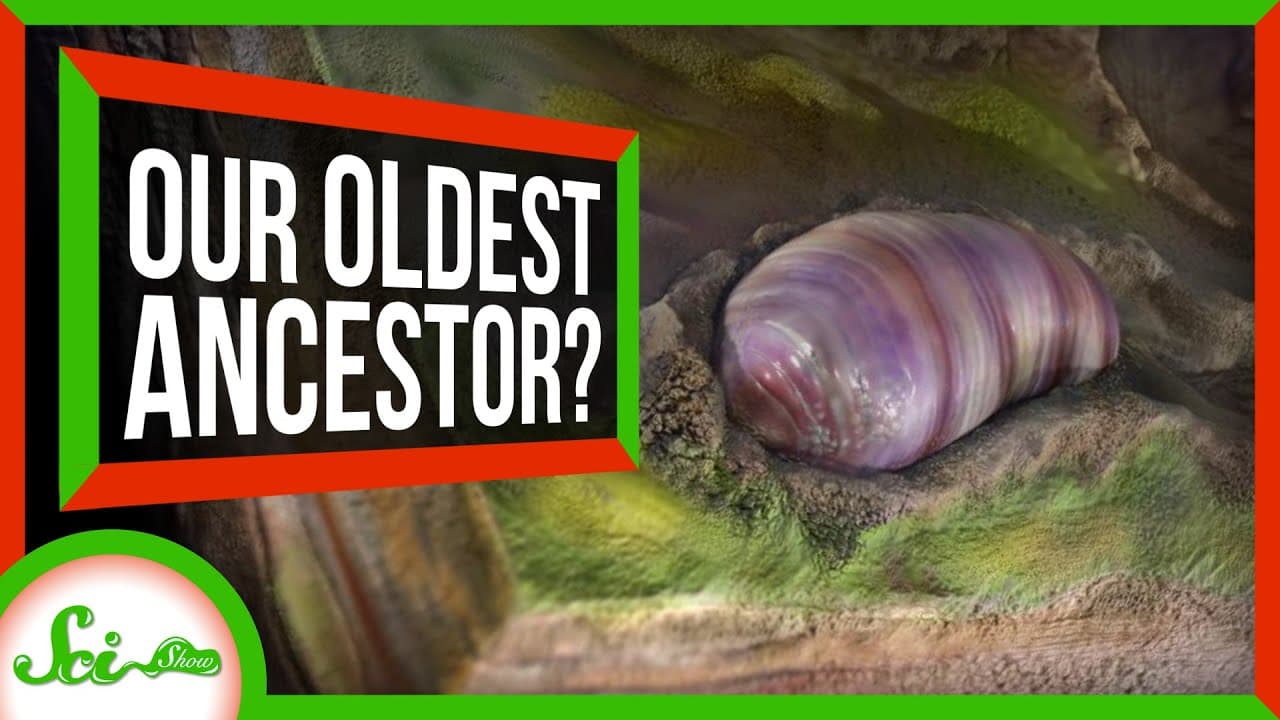
Researchers discover worm-like fossils dating back over 550 million years and map tongue microbial communities to understand their role in human health.
Transcript
humans belong to a large and proud lineage of animals known as bilaterians ila Tyrion because we are all bilaterally symmetrical you can draw a line down the middle of us and each half is basically a reflection of the other paleontologists have long suspected that our lineage arose more than 550 million years ago in the Ediacaran period just before... Read More
Key Insights
- 🫤 Worm-like fossils from over 550 million years ago suggest an earlier origin of bilaterians.
- 😋 Innovative imaging techniques like classy fish enable the visualization of tongue microbial communities.
- 😋 Tongue microbes may influence human health by regulating blood pressure through nitric oxide production.
- 😋 Understanding microbial interactions on the tongue can provide insights into improving human health.
- 😋 Tongue microbes may be cultivated by cells to optimize bacterial growth and benefit human health.
- 🦠 The study highlights the intricate relationship between microbes and human physiology.
- 😋 Research on tongue microbial communities contributes to the growing field of spatial ecology.
Install to Summarize YouTube Videos and Get Transcripts
Explore YouTube Video Summarizer or Get YouTube Transcript Extractor
Questions & Answers
Q: How do the newly discovered worm-like fossils impact our understanding of bilaterians' origin?
The discovery of worm-like fossils dating back over 550 million years suggests a potential shift in the origin of bilaterians, providing valuable insights into ancient organisms and evolutionary history.
Q: What techniques were used to map tongue microbial communities in the study?
Researchers utilized a technique called classy fish, which labels microbes with fluorescent pigments attached to genetic material, allowing for detailed imaging of tongue microbial communities.
Q: How do tongue microbes influence human health, particularly in relation to blood pressure regulation?
Tongue microbes may play a role in regulating blood pressure by producing nitric oxide, with higher microbial activity associated with lower blood pressure levels, highlighting the potential impact on human health.
Q: How can the study of tongue microbial communities contribute to improving people's lives?
The structured interactions observed in tongue microbial communities provide insights into how different species thrive, offering potential avenues to leverage this information for enhancing human health and well-being.
Summary & Key Takeaways
-
Fossils of worm-like creatures dating back over 550 million years were discovered, potentially pushing the origin of bilaterians back by millions of years.
-
Researchers mapped tongue microbial communities, revealing structured interactions that may influence human health by regulating blood pressure through nitric oxide production.
-
The study provides insights into ancient organisms and the role of microbes in human health through innovative imaging techniques.
Read in Other Languages (beta)
Share This Summary 📚
Summarize YouTube Videos and Get Video Transcripts with 1-Click
Try YouTube Summary with ChatGPT & Claude or YouTube Transcript Generator
Explore More Summaries from SciShow 📚


Summarize YouTube Videos and Get Video Transcripts with 1-Click
Try YouTube Summary with ChatGPT & Claude or YouTube Transcript Generator