Turkey and Syria earthquakes: BBC News Review
TL;DR
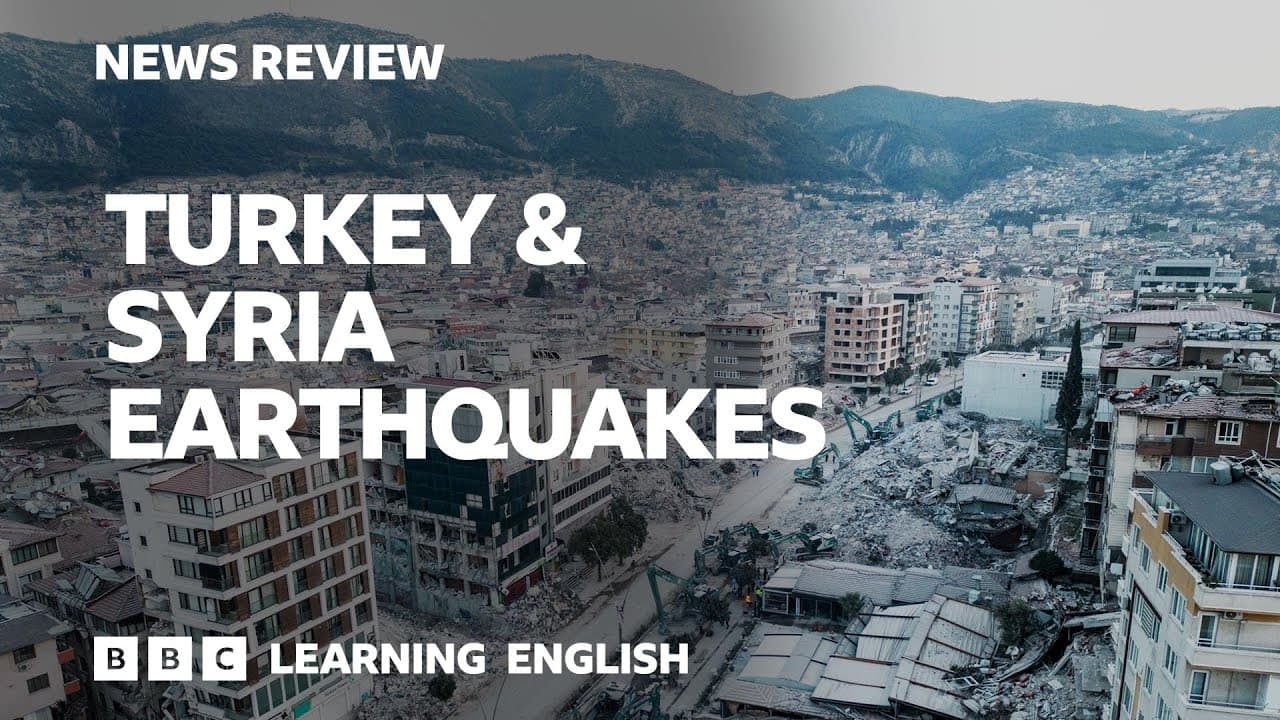
New quake hits Turkey, worsening devastation.
Transcript
Another earthquake has hit Turkey, near the border with Syria. This is News Review from BBC Learning English. I'm Neil and I'm Beth. Make sure you watch to the end to learn vocabulary to talk about this story. And there's a quiz on our website where you can test yourself on the vocabulary you've learnt from this news story. Now, let's hear more. Tu... Read More
Key Insights
- A new earthquake struck Turkey, exacerbating the destruction caused by previous tremors that had already killed over 44,000 people and displaced thousands.
- The term 'fresh' is used to describe new tremors, indicating the recurrence of earthquakes in the region, adding to the ongoing crisis.
- The word 'rattle' describes the violent shaking caused by the earthquake, highlighting the severity of the tremors and their impact on structures.
- Hospitals in affected areas were evacuated due to the dangerous conditions created by the new tremors, emphasizing the ongoing emergency response efforts.
- The expression 'wind down' is used to describe the gradual cessation of rescue operations as the immediate crisis subsides, though challenges remain.
- The earthquake has caused additional buildings, already weakened by previous tremors, to collapse, compounding the infrastructural damage.
- The vocabulary highlighted in the news review includes 'fresh', 'rattle', and 'wind down', which are crucial for understanding the context of the earthquake's impact.
- The BBC Learning English segment aims to educate viewers on relevant vocabulary while providing updates on the earthquake situation.
Install to Summarize YouTube Videos and Get Transcripts
Explore YouTube Video Summarizer or Get YouTube Transcript Extractor
Questions & Answers
Q: What is the significance of the word 'fresh' in the news context?
In the news context, 'fresh' refers to the new and recurring tremors that have hit Turkey. It emphasizes the ongoing nature of the earthquake crisis, with new tremors adding to the devastation caused by previous ones. The use of 'fresh' highlights the urgency and continuity of the situation.
Q: How does the word 'rattle' relate to the earthquake?
The word 'rattle' is used to describe the violent shaking motion caused by the earthquake. It conveys the intensity of the tremors and their ability to shake buildings and structures, leading to further damage and posing significant risks to safety and stability in the affected areas.
Q: What does 'wind down' mean in the context of rescue operations?
'Wind down' in the context of rescue operations means that the efforts are gradually coming to an end. As the immediate crisis subsides, the intensity and scale of rescue activities decrease, indicating a shift from emergency response to recovery and rebuilding phases in the affected regions.
Q: Why were hospitals evacuated following the new tremors?
Hospitals were evacuated following the new tremors due to the increased risk of structural collapse and safety hazards. The evacuation was a precautionary measure to protect patients and staff from potential harm, ensuring that medical services could continue in safer locations amidst the ongoing earthquake crisis.
Q: What impact did the new earthquake have on previously damaged structures?
The new earthquake caused additional buildings, already weakened by previous tremors, to collapse. This exacerbated the infrastructural damage in the region, complicating recovery efforts and increasing the challenges faced by emergency responders as they work to provide aid and support to affected communities.
Q: How does the news review aim to educate viewers?
The news review from BBC Learning English aims to educate viewers by introducing key vocabulary related to the earthquake, such as 'fresh', 'rattle', and 'wind down'. It provides context for these words within the news story, enhancing viewers' understanding of the situation and improving their English language skills.
Q: What resources does BBC Learning English offer for further learning?
BBC Learning English offers various resources for further learning, including quizzes to test vocabulary understanding, video content for language practice, and downloadable transcripts and audio files. These resources are designed to help learners improve their English proficiency while staying informed about current events.
Q: What role do language lessons play in the news review?
Language lessons in the news review play a crucial role in helping viewers understand and use relevant vocabulary in context. By focusing on specific words and phrases, the segment enhances language comprehension and equips viewers with the tools to discuss and analyze news stories more effectively.
Summary & Key Takeaways
-
A new earthquake has struck Turkey, near the Syrian border, causing further destruction in an already devastated region. The tremors have exacerbated the damage from previous earthquakes, which had resulted in over 44,000 deaths and left thousands homeless.
-
The news review from BBC Learning English highlights key vocabulary related to the earthquake, including 'fresh', 'rattle', and 'wind down', aiming to enhance viewers' understanding of the ongoing crisis.
-
Emergency responses continue as hospitals are evacuated and rescue operations gradually wind down. The segment also provides educational insights into the language used to describe the earthquake's impact.
Read in Other Languages (beta)
Share This Summary 📚
Summarize YouTube Videos and Get Video Transcripts with 1-Click
Try YouTube Summary with ChatGPT & Claude or YouTube Transcript Generator
Explore More Summaries from BBC Learning English 📚
Summarize YouTube Videos and Get Video Transcripts with 1-Click
Try YouTube Summary with ChatGPT & Claude or YouTube Transcript Generator