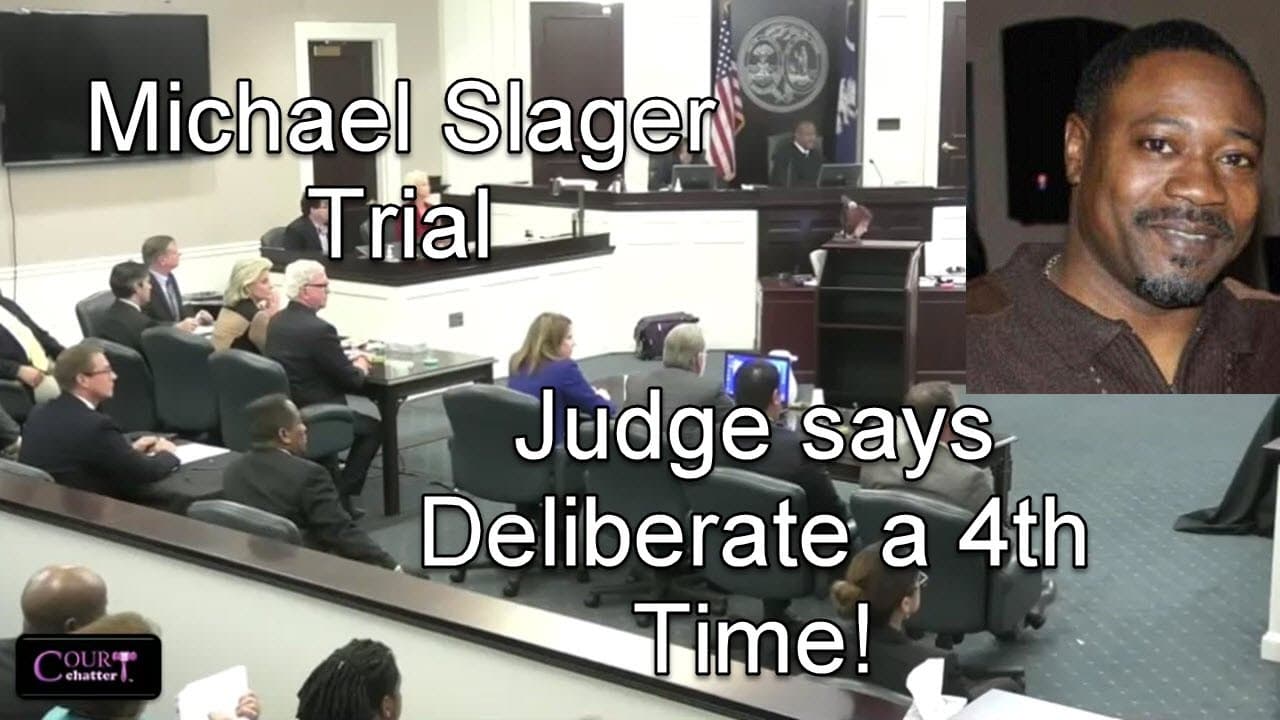
Michael Slager Trial Judge Sends Jurors Back 4th Time to Deliberate 12/2/16
TL;DR
The jury deliberation process is discussed, including statutes, judicial decisions, and concerns over deadlock.
Transcript
appt mr. savage it's the not concerned after reading the statute the language of the statute is the returns a second time without my authority shall not be sent out again without his own consent unless it shall ask for the Lord's Prayer explanation the law so the desert I would have the destruction of that statute that the initiation of the quest m... Read More
Key Insights
- ❓ Clear communication and proper interpretation of statutes are crucial in jury deliberations to avoid any influence on the jury's decision-making.
- 🧑⚖️ Legal precedents, such as "Bluff v. South Carolina Department of Transportation" and "State v. Williams," provide guidance on handling jury deadlock situations and the judge's role in providing instructions.
- 🧚 Concerns over coercion of jurors and the need for diplomatic discussion with the jury to ascertain their consensus are vital aspects of ensuring a fair deliberation process.
Install to Summarize YouTube Videos and Get Transcripts
Explore YouTube Video Summarizer or Get YouTube Transcript Extractor
Questions & Answers
Q: What concerns were raised regarding the interpretation of the statute governing jury deliberations?
Concerns were raised about the proper interpretation of the statute, emphasizing that the jury must not be suggested at by the court or anyone else, and any further action must be initiated by the jury themselves.
Q: Why was the issue of jury deadlock discussed, and what legal cases were referenced?
The issue of jury deadlock was discussed in relation to legal cases like "Bluff v. South Carolina Department of Transportation" and "State v. Williams," addressing the judge's role in handling deadlock and providing further instructions to the jury.
Q: How was the potential coercion of jurors addressed in the context of jury deliberations?
The discussion highlighted the importance of avoiding coercion towards jurors, as seen in legal cases like "State v. Barnes," where the court erred by having the jury come back for further deliberations despite indicating deadlock.
Q: What was the judge's approach to addressing concerns over deadlock and ensuring proper communication with the jury?
The judge focused on clarifying the jury's status, inquiring about their willingness to continue deliberating, and seeking specific requests for further explanation of the law to avoid misunderstandings or coercion.
Summary & Key Takeaways
-
Discussion on the proper interpretation of statutes governing jury deliberations.
-
Analysis of case law regarding jury deadlock and the judge's role in providing further instructions.
-
Concerns raised over potential coercion of jurors and the importance of clear communication during deliberations.
Read in Other Languages (beta)
Share This Summary 📚
Summarize YouTube Videos and Get Video Transcripts with 1-Click
Try YouTube Summary with ChatGPT & Claude or YouTube Transcript Generator
Explore More Summaries from Law&Crime Network 📚




Summarize YouTube Videos and Get Video Transcripts with 1-Click
Try YouTube Summary with ChatGPT & Claude or YouTube Transcript Generator