What Are Electrophilic Aromatic Substitution Reactions?
TL;DR
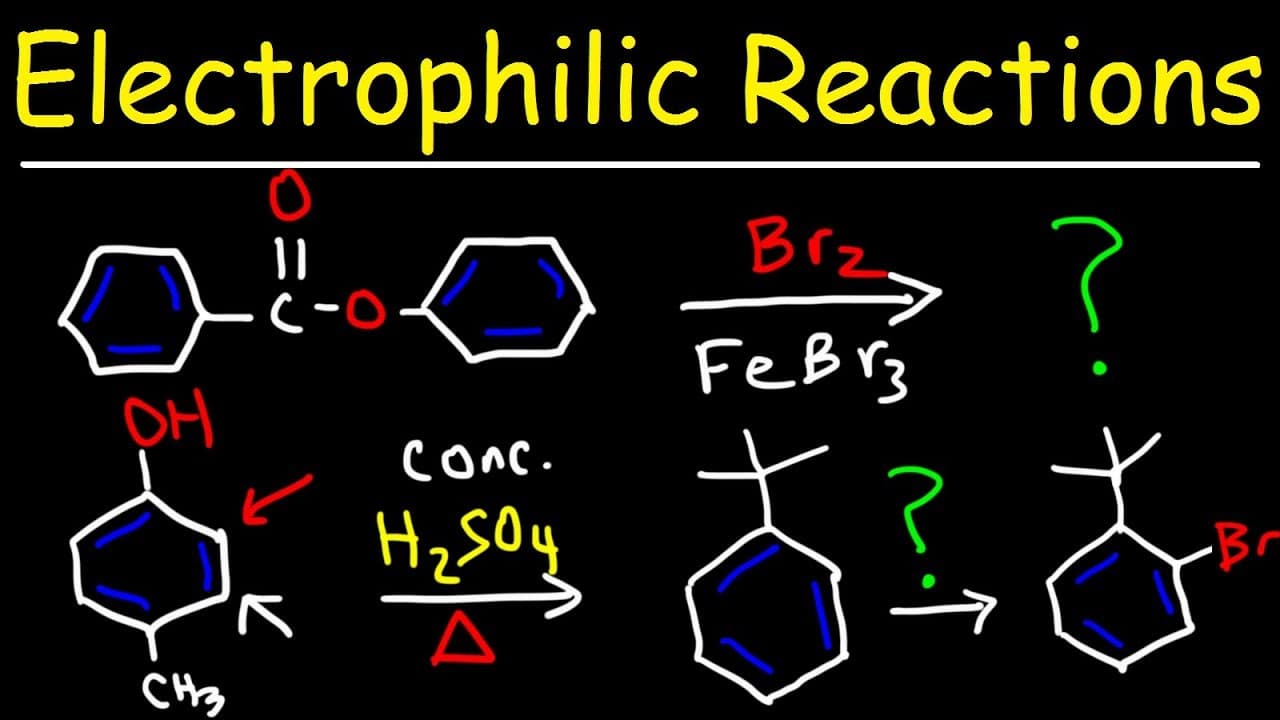
Electrophilic aromatic substitution reactions involve replacing a hydrogen atom in a benzene ring with an electrophilic group, typically using a Lewis acid catalyst. The order of reagent addition and the nature of the substituent groups affect which product is formed, with more activated groups enhancing reactivity and determining the placement of incoming substituents.
Transcript
in this video we're going to work on some problems associated with electrophilic aromatic substitution reactions we're also going to work on some synthesis problems as well and before watching this video you may want to review which groups are orthometer and para directors which ones are activated which ones are deactivated and is the video i have ... Read More
Key Insights
- 😋 Electrophilic aromatic substitution reactions involve replacing a hydrogen atom on a benzene ring with an electrophilic group using a Lewis acid catalyst.
- 😋 The order of reagent addition and the directing effects of groups on the benzene ring determine the major product obtained.
- 👥 Synthetic problems involve strategic selection of reagents and directing groups to achieve desired substitutions on benzene derivatives.
Install to Summarize YouTube Videos and Get Transcripts
Explore YouTube Video Summarizer or Get YouTube Transcript Extractor
Questions & Answers
Q: What is the product of the reaction between benzene and ethyl chloride using an aluminum chloride catalyst?
The hydrogen atom is replaced with an ethyl group, resulting in the formation of ethylbenzene as the product.
Q: How does the ortho and para position affect the products in electrophilic aromatic substitution reactions?
Ortho and para positions are more accessible for the addition of groups due to their proximity to the reaction site, while the meta position is less accessible. This influences the major product formed.
Q: What is the major product when reacting nitrobenzene with bromine using iron(III) bromide as a catalyst?
Nitrobenzene is a meta director, so the bromine atom will preferentially go in the meta position, resulting in the formation of meta-nitrobromobenzene as the major product.
Q: How can benzene be converted into benzoic acid?
Benzene can be reacted with ethyl chloride using an aluminum chloride catalyst to introduce an ethyl group. The ethyl group is then oxidized to a carboxylic acid, resulting in the formation of benzoic acid.
Q: What are the limitations of the Friedel-Crafts alkylation reaction?
The Friedel-Crafts alkylation reaction can lead to carbocation rearrangements, polyalkylations, and cannot be used with strongly deactivated rings.
Summary & Key Takeaways
-
The video covers electrophilic aromatic substitution reactions and synthesis problems for benzene derivatives.
-
Electrophilic aromatic substitution involves replacing a hydrogen atom with an alkyl or other groups using a Lewis acid catalyst.
-
The order of reagent addition and the nature of directing groups on the benzene ring affect the major product obtained.
Read in Other Languages (beta)
Share This Summary 📚
Summarize YouTube Videos and Get Video Transcripts with 1-Click
Try YouTube Summary with ChatGPT & Claude or YouTube Transcript Generator
Explore More Summaries from The Organic Chemistry Tutor 📚





Summarize YouTube Videos and Get Video Transcripts with 1-Click
Try YouTube Summary with ChatGPT & Claude or YouTube Transcript Generator