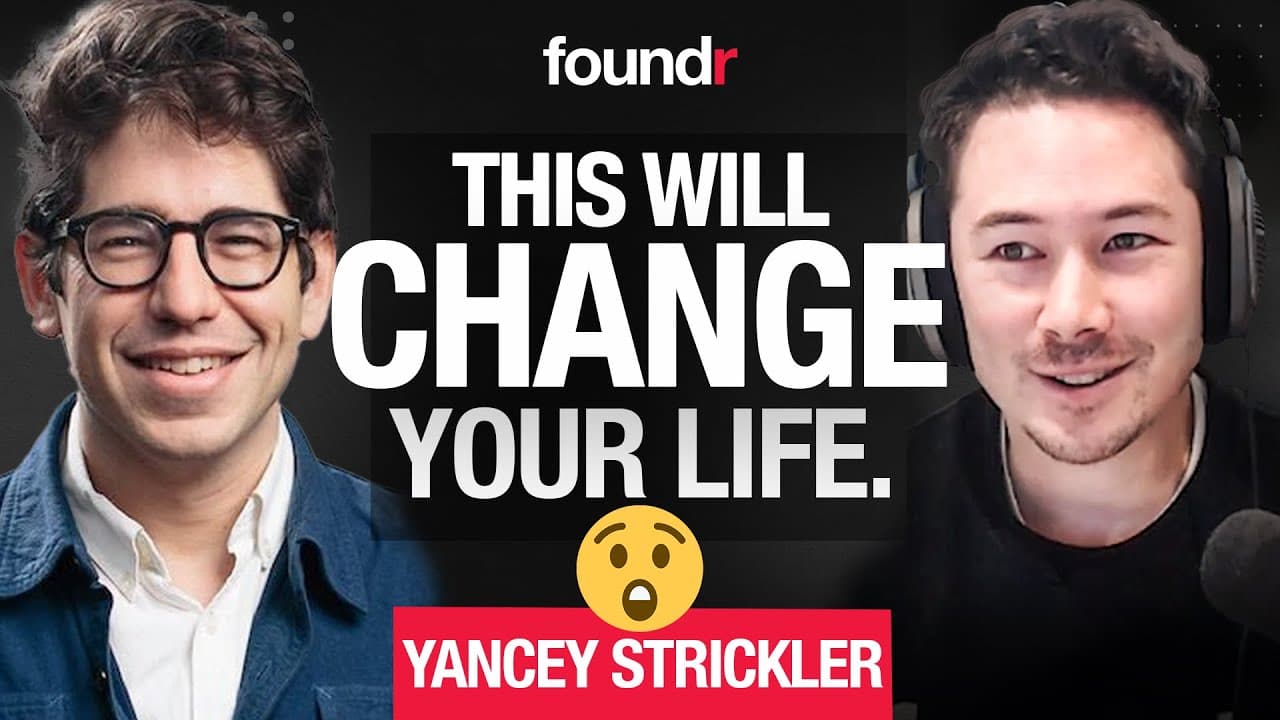
4 Questions to Make Better Decisions | Kickstarter CEO's 'Bento' Framework
TL;DR
Kickstarter's Yancey Strickler discusses decision-making and his 'Bento' framework.
Transcript
it's easier to do the the lazier thing right it is and and we're not bad people because of that hey guys uh welcome back to another interview i hope you are doing okay wherever you are around the world uh today we are humbled and blessed by yancey strickler uh he is the co-founder of kickstarter and he has a lot to share so yancey uh thank you so m... Read More
Key Insights
- Yancey Strickler co-founded Kickstarter after a chance meeting with Perry Chen, who had the original idea.
- Kickstarter's early projects were small, such as screen-printed t-shirts and a collaborative book.
- The company focused on artistic and creative projects, intentionally avoiding charitable fundraising.
- Kickstarter's initial funding came from friends, family, and artists, leading to a Series A from Union Square Ventures.
- Strickler's book, 'This Could Be Our Future,' challenges the notion that financial gain is the primary decision-making factor.
- The 'Bento' framework expands self-interest beyond immediate needs to include future and collective interests.
- Strickler argues that businesses should optimize for values beyond financial returns, like loyalty and community.
- The 'Bento' framework helps individuals and businesses make coherent decisions aligned with their broader values.
Install to Summarize YouTube Videos and Get Transcripts
Explore YouTube Video Summarizer or Get YouTube Transcript Extractor
Questions & Answers
Q: How did Kickstarter start?
Kickstarter began after Yancey Strickler met Perry Chen, who had the original idea for the platform. They connected over a shared interest in culture and creative projects. The company was formed to address the challenge of funding creative ideas, focusing on artistic projects rather than charitable fundraising.
Q: What was Kickstarter's initial funding strategy?
Initially, Kickstarter was funded by friends, family, and artists who believed in the concept. This approach allowed them to launch the platform without institutional investment. Eventually, they secured a Series A round from Union Square Ventures, which aligned with their vision of building a sustainable and mission-driven company.
Q: What is the main argument of 'This Could Be Our Future'?
In 'This Could Be Our Future,' Yancey Strickler challenges the prevailing notion that financial maximization should be the primary decision-making factor. He argues that this mindset is relatively recent and suggests that decisions should also consider broader values, such as community, loyalty, and future impact, to create a more generous world.
Q: What is the 'Bento' framework?
The 'Bento' framework is a decision-making tool that expands the concept of self-interest beyond immediate needs. It includes four dimensions: now me, future me, now us, and future us. This framework helps individuals and organizations make decisions that align with their values and long-term goals, promoting coherence and sustainability.
Q: How does the 'Bento' framework apply to businesses?
For businesses, the 'Bento' framework encourages decisions that satisfy immediate financial needs (now me) while also considering long-term values (future me), stakeholder expectations (now us), and future societal impact (future us). This approach helps companies make coherent choices that align with their mission and create lasting value.
Q: Can you give an example of a company using the 'Bento' framework?
Apple's product decisions can be analyzed using the 'Bento' framework. For instance, the AirPods align with Apple's values of thinking differently and providing technology that just works, fulfilling both now me and now us dimensions. In contrast, the Touch Bar failed to meet these expectations, highlighting the importance of coherence in decision-making.
Q: What motivated Yancey Strickler to create the 'Bento' framework?
Yancey Strickler developed the 'Bento' framework to address the limitations of traditional self-interest, which often focuses solely on immediate needs. He wanted to create a tool that helps individuals and organizations make decisions that consider broader values and long-term impacts, ultimately leading to more meaningful and sustainable choices.
Q: How can individuals use the 'Bento' framework in their personal lives?
Individuals can use the 'Bento' framework to align their actions with their broader values and goals. By considering now me, future me, now us, and future us, people can make decisions that reflect their authentic selves and contribute to their long-term well-being, fostering a sense of coherence and fulfillment in their lives.
Summary & Key Takeaways
-
Yancey Strickler, co-founder of Kickstarter, shares insights into the company's origins and decision-making processes. He emphasizes the importance of focusing on artistic projects and creating a specific community culture, avoiding charitable fundraising to maintain a unique identity.
-
Strickler discusses his book, 'This Could Be Our Future,' which critiques the dominant belief that financial gain should drive decisions. He introduces the 'Bento' framework, a tool to help individuals and businesses consider broader self-interests, including future and collective needs.
-
The 'Bento' framework, inspired by the Japanese bento box, helps users visualize decisions across four dimensions: now me, future me, now us, and future us. This approach encourages decisions that align with long-term goals and values, promoting more coherent and sustainable choices.
Read in Other Languages (beta)
Share This Summary 📚
Summarize YouTube Videos and Get Video Transcripts with 1-Click
Try YouTube Summary with ChatGPT & Claude or YouTube Transcript Generator
Explore More Summaries from Foundr 📚


Summarize YouTube Videos and Get Video Transcripts with 1-Click
Try YouTube Summary with ChatGPT & Claude or YouTube Transcript Generator