What Google Doesn't Want You to Know About Their Search Algorithm
TL;DR
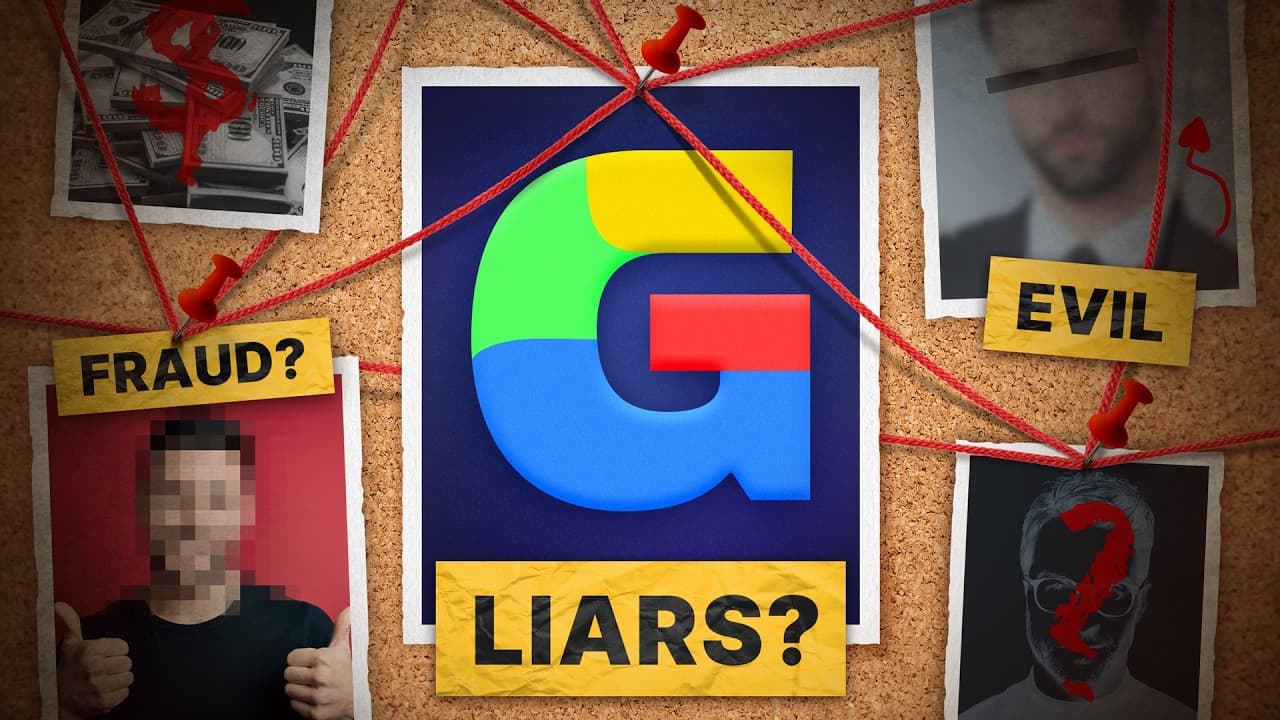
Leaked documents reveal Google's hidden search algorithm practices.
Transcript
A few months ago, thousands of leaked documents surfaced from Google's fault, revealing secrets to their search engine algorithm they never wanted us to see. Buried within were four discoveries that, if true, changed everything. For over a decade, Google has denied that these things exist. And while lone wolves have called out Google for spreading ... Read More
Key Insights
- Leaked documents suggest Google uses Chrome data for search rankings, contradicting their public denials over the years.
- Google's use of clickstream data from Chrome provides them with a competitive advantage in understanding user behavior.
- Click-through rates (CTR) and user interaction data are allegedly used in Google's ranking system, despite public denials.
- Google's alleged use of a 'site authority' metric contradicts their public statements, raising questions about transparency.
- The 'Sandbox' theory, where new sites are temporarily restricted, is supported by leaked documents, despite Google's denials.
- Google's public statements may aim to mislead potential spammers rather than provide full transparency to SEO professionals.
- The role of Chrome data in combating click manipulation highlights Google's efforts to maintain search integrity.
- The SEO community is encouraged to test, verify, and share findings due to Google's inconsistent public statements.
Install to Summarize YouTube Videos and Get Transcripts
Explore YouTube Video Summarizer or Get YouTube Transcript Extractor
Questions & Answers
Q: What is the significance of Chrome data in Google's search algorithm?
The leaked documents suggest that Chrome data provides Google with a comprehensive view of user behavior online, which can be used to refine search results and maintain a competitive edge. This data includes clickstream information, which tracks user interactions across the web, offering insights into user preferences and behaviors.
Q: How does Google allegedly use click-through rates in their ranking algorithm?
Despite public denials, the leaked documents indicate that Google uses click-through rates as part of a system called Navboost. This system helps Google identify successful search patterns, suggesting that user interaction data plays a role in determining search rankings and improving the user experience.
Q: What is the 'Sandbox' theory, and how do the leaks relate to it?
The 'Sandbox' theory posits that new websites are temporarily restricted from ranking well in search results to prevent spam. The leaked documents support this theory by revealing an attribute called 'host stage,' which is used to manage fresh spam and serving time, contradicting Google's public denials of the Sandbox's existence.
Q: Why might Google deny using a 'site authority' metric?
Google's denial of using a 'site authority' metric may be an attempt to prevent manipulation of search rankings. However, the leaks reveal a metric called 'site authority,' suggesting that Google does consider some form of authority in its rankings, though it may differ from commonly understood metrics like Moz's Domain Authority.
Q: What role does Chrome data play in combating click manipulation?
Chrome data helps Google identify genuine user interactions by distinguishing real browsers from potential click farms or bots. This data includes browsing history and click patterns, enabling Google to maintain search integrity by preventing artificial manipulation of search rankings through click spam.
Q: How should SEO professionals respond to Google's inconsistent public statements?
SEO professionals are encouraged to conduct independent testing, verify findings, and share insights with the community. Given Google's inconsistent statements, relying solely on official guidance may not be sufficient. Instead, a collaborative approach within the SEO community can help refine understanding and strategies.
Q: What is the potential impact of the leaked documents on the SEO community?
The leaked documents challenge long-held assumptions about Google's ranking factors, prompting SEO professionals to reconsider their strategies. By revealing potential discrepancies between public statements and actual practices, these leaks encourage a more investigative and experimental approach to understanding Google's algorithm.
Q: Why might Google intentionally mislead the public about their search algorithm?
Google's potential misleading statements could be aimed at preventing spammers from exploiting their search algorithm. By obscuring the true ranking factors, Google may seek to protect the integrity of search results and maintain a competitive advantage, though this approach can also lead to confusion within the SEO community.
Summary & Key Takeaways
-
Leaked documents from Google suggest that the company uses data from its Chrome browser to influence search rankings, despite public denials. This revelation raises questions about Google's transparency and the true factors influencing search results.
-
The documents reveal that Google may use click-through rates and other user interaction metrics in its ranking algorithm, contradicting previous statements by Google representatives. This insight could change how SEO professionals approach search engine optimization.
-
The existence of a 'Sandbox' for new websites and a 'site authority' metric are supported by the leaks, challenging Google's public stance. The SEO community is urged to independently test and verify these findings to better understand Google's algorithm.
Read in Other Languages (beta)
Share This Summary 📚
Summarize YouTube Videos and Get Video Transcripts with 1-Click
Try YouTube Summary with ChatGPT & Claude or YouTube Transcript Generator
Explore More Summaries from Ahrefs 📚




![Three Customer Acquisition Channels That Actually Work [1.2] thumbnail](/_next/image?url=https%3A%2F%2Fi.ytimg.com%2Fvi%2F1HhE_ewaOxQ%2Fhqdefault.jpg&w=750&q=75)

Summarize YouTube Videos and Get Video Transcripts with 1-Click
Try YouTube Summary with ChatGPT & Claude or YouTube Transcript Generator