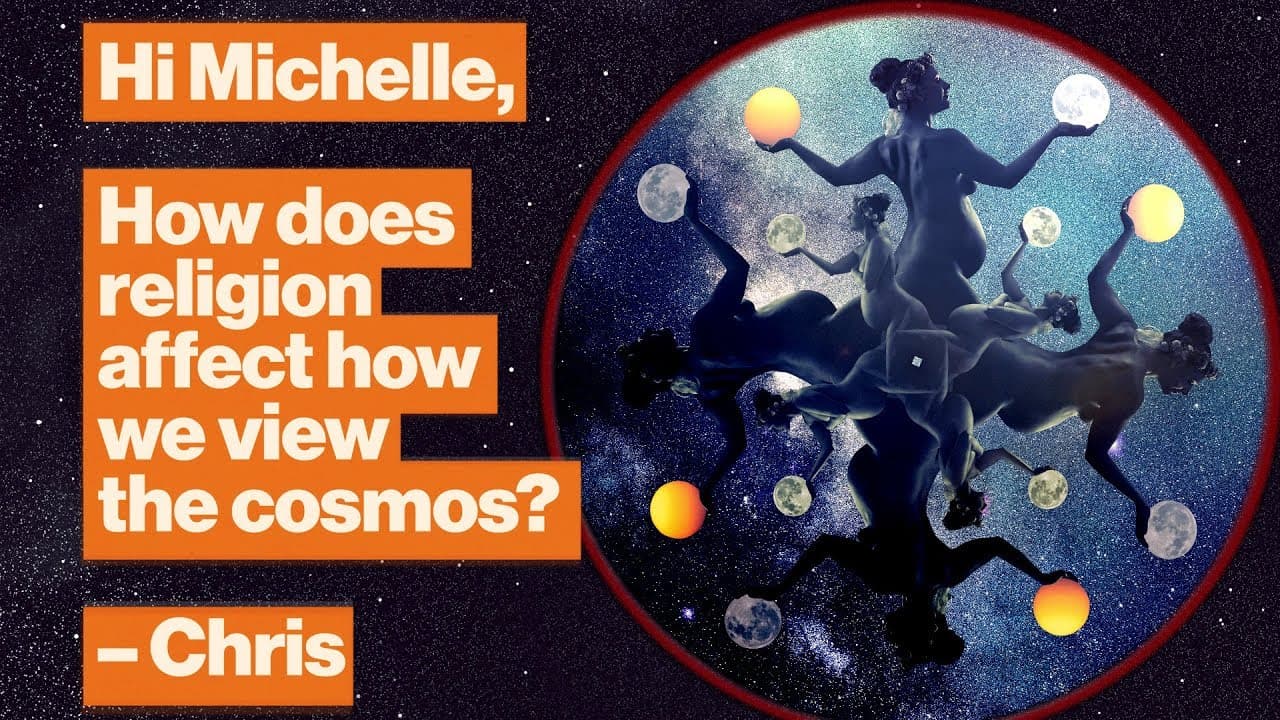
Why spiritualizing the cosmos is a disservice to science and religion | Michelle Thaller | Big Think
TL;DR
Humanity's historical reliance on gods for natural phenomena diminishes as scientific explanations expand.
Transcript
Chris, you ask the question about how religion affects our view of the cosmos. And the first thing I think about is simply the history of being human. There were so many things about the universe that we didn't understand. Thousands of years ago, we watched the seasons change or we observed things like thunderstorms and we had no idea, we didn't ha... Read More
Key Insights
- 🖤 Humanity's historical reliance on gods for unexplained natural events reflects a lack of scientific understanding.
- 💨 Advancements in scientific knowledge have pushed gods farther away from explaining natural phenomena.
- 📣 Religions may provide personal significance, but attributing gods to scientific gaps limits understanding of the universe.
- 🤪 Understanding the universe involves observing its laws without projecting human ego or fears onto it.
- 👮 Humans evolving on Earth are a product of the universe's physical laws, not the universe accommodating us.
- 🤯 Our minds reflect the underlying physical laws of the universe, revealing a symbiotic relationship.
- 🥺 Studying ourselves can lead to a better understanding of the larger universe.
Install to Summarize YouTube Videos and Get Transcripts
Explore YouTube Video Summarizer or Get YouTube Transcript Extractor
Questions & Answers
Q: How has humanity historically explained natural phenomena without scientific knowledge?
Before scientific explanations, humans often attributed natural events like lightning to gods like Thor as a way to comprehend the unexplained.
Q: Why does the concept of gods continue to be pushed farther away with scientific discoveries?
Scientific knowledge displaces gods from explaining natural phenomena, prompting the attribution of God to more distant and less understood concepts.
Q: How does the interplay of religion and science impact our understanding of the universe?
While religion may offer personal solace, overreliance on gods to explain scientific gaps risks hampering our deeper understanding of the cosmos.
Q: How does the speaker suggest we can better align ourselves with the universe?
By studying how our minds reflect the laws of nature and understanding our consciousness within the context of the universe, we can better connect with the cosmos.
Summary & Key Takeaways
-
Throughout history, humans attributed natural occurrences to gods due to a lack of scientific understanding.
-
As scientific knowledge advances, the concept of gods is pushed farther away from explaining natural phenomena.
-
While religion provides personal significance, attributing gods to scientific gaps risks limiting our understanding of the universe.
Read in Other Languages (beta)
Share This Summary 📚
Summarize YouTube Videos and Get Video Transcripts with 1-Click
Try YouTube Summary with ChatGPT & Claude or YouTube Transcript Generator
Explore More Summaries from Big Think 📚



Summarize YouTube Videos and Get Video Transcripts with 1-Click
Try YouTube Summary with ChatGPT & Claude or YouTube Transcript Generator