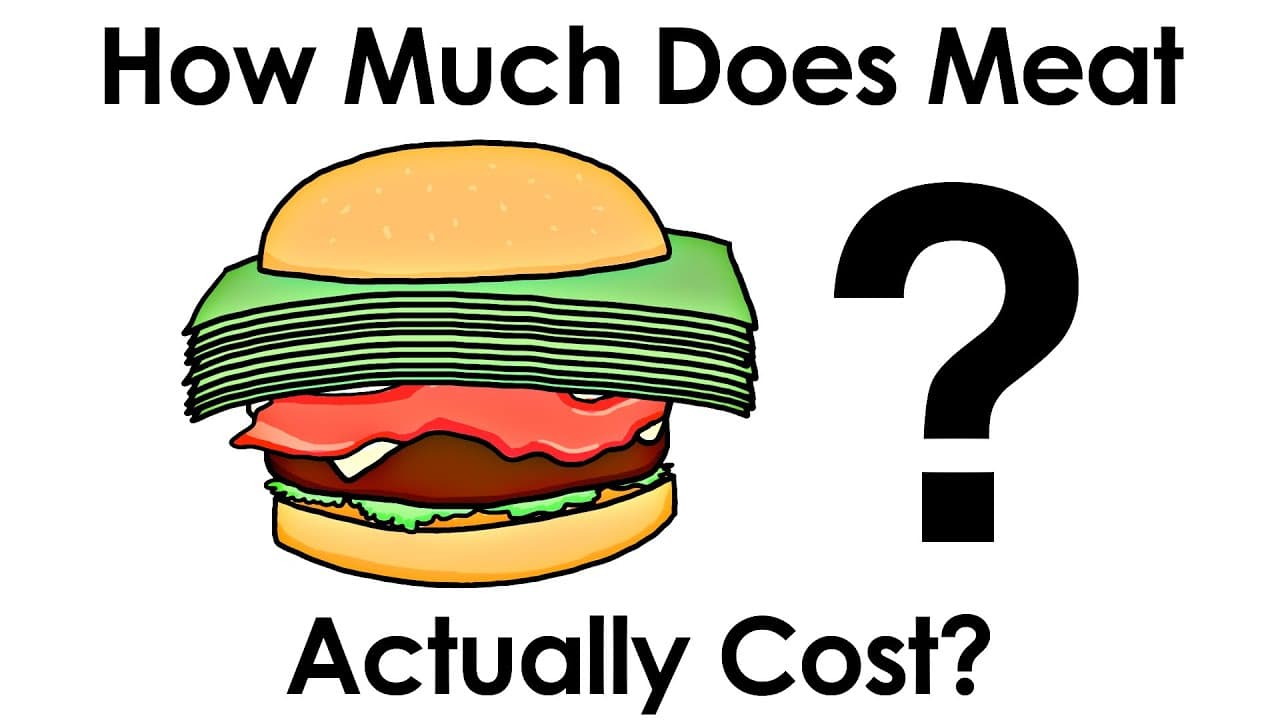
How Much Does Meat Actually Cost?
TL;DR
Consuming meat has hidden costs that impact health, environment, and economy, totaling around $475 per week per family.
Transcript
In the U.S., you can buy a pack of gum for just one or two bucks. But cleaning old chewing gum off of sidewalks and streets can cost a town a hundred thousand dollars a year, a hidden toll the community has to pay. In fact, pretty much everything we consume has hidden costs associated with it – especially the meat, dairy, and eggs that make up a qu... Read More
Key Insights
- 😷 Government subsidies and cheap resources mask the true cost of meat consumption.
- 🍖 Excessive meat consumption is linked to chronic diseases and antibiotic-resistant illnesses.
- 🫢 Meat production contributes to pollution, greenhouse gas emissions, and soil erosion.
- 🧑⚕️ Hidden costs of meat consumption impact health, environment, and economy.
- 🥺 Understanding the true cost of meat may lead to reduced consumption.
- 🍖 Environmental consequences of meat production include resource depletion and pollution.
- 🍖 Meat consumption involves hidden costs that are often not reflected in the price.
Install to Summarize YouTube Videos and Get Transcripts
Explore YouTube Video Summarizer or Get YouTube Transcript Extractor
Questions & Answers
Q: What are some of the hidden costs associated with consuming meat?
Hidden costs of meat consumption include government subsidies, healthcare expenses, and environmental damage. These costs are often not reflected in the price of meat products but have significant impacts on society.
Q: How does excessive meat consumption affect human health?
Excessive meat consumption is linked to chronic diseases such as stroke, heart disease, diabetes, and certain cancers. The antibiotics used in meat production can also lead to antibiotic-resistant illnesses in humans.
Q: What are some of the environmental consequences of meat production?
Meat production contributes to pollution, greenhouse gas emissions, and soil erosion. Livestock farming requires large amounts of land, water, and resources, leading to environmental degradation.
Q: How can individuals reduce the hidden costs of meat consumption?
Individuals can reduce the hidden costs of meat consumption by eating less meat and opting for plant-based alternatives. This can improve personal health, reduce environmental impact, and lower overall societal costs.
Summary & Key Takeaways
-
Meat consumption involves substantial hidden costs, such as government subsidies, healthcare expenses, and environmental damage.
-
The true cost of meat includes impacts on human health, with excessive consumption linked to chronic diseases.
-
Environmental costs of meat production are significant, leading to pollution, greenhouse gas emissions, and soil erosion.
Read in Other Languages (beta)
Share This Summary 📚
Summarize YouTube Videos and Get Video Transcripts with 1-Click
Try YouTube Summary with ChatGPT & Claude or YouTube Transcript Generator
Explore More Summaries from MinuteEarth 📚



Summarize YouTube Videos and Get Video Transcripts with 1-Click
Try YouTube Summary with ChatGPT & Claude or YouTube Transcript Generator