Why Rethink High School Math Curriculum?
TL;DR
High school math education needs reform to better align with real-world applications and student interests. Traditional courses like Algebra 2 may not serve most students, who often feel lost and anxious. Offering diverse math courses, such as practical math, logic, and puzzles, could engage students and prepare them for real-life challenges.
Transcript
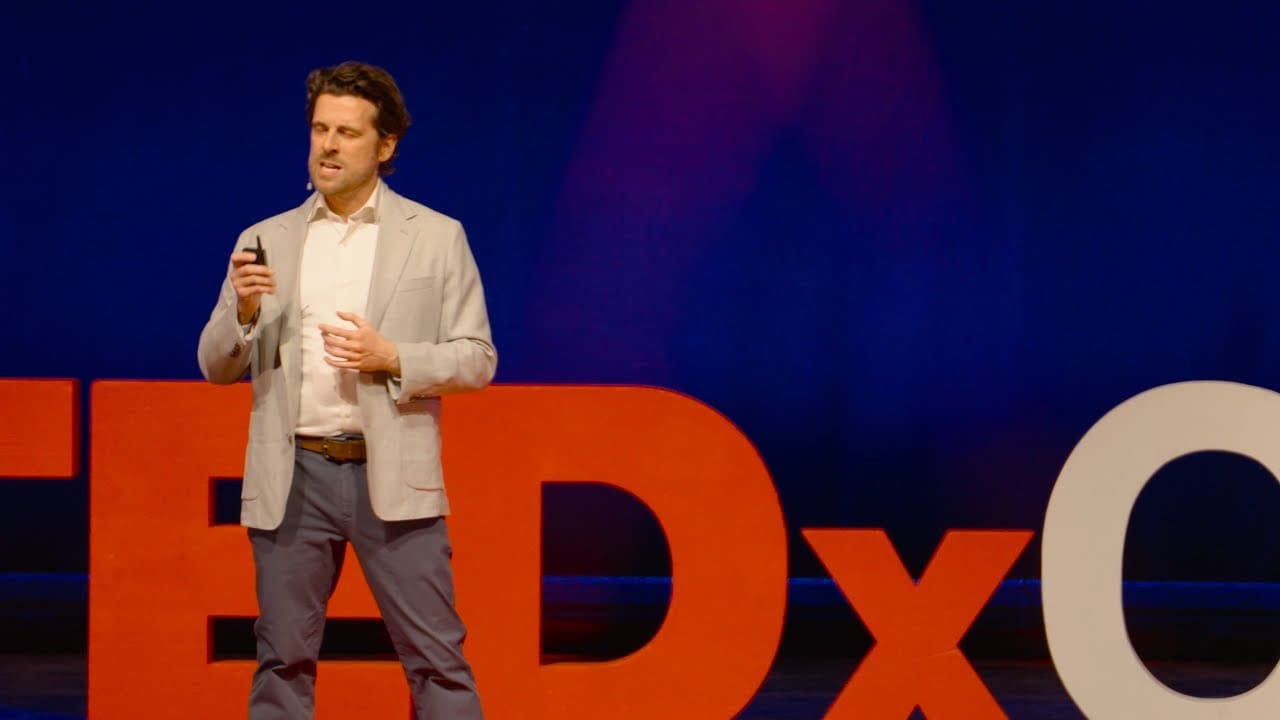
[applause] [cheering] >> All right, quick question before I start. How many of you took Algebra 2 in high school? All right, perfect. You then you're all ready for this question. I was really hoping I'd have some volunteers, so thank you for putting your hand up. You've been tasked to solve for the rational zeros of a polynomial function. You can't... Read More
Key Insights
- High school math education often fails to connect with real-world applications, leaving students feeling lost and anxious.
- Traditional math courses like Algebra 2 are not necessary for the majority of students and may not prepare them for real-life situations.
- Offering diverse math courses such as practical math, logic, and puzzles can better engage students and align with their interests.
- Practical math classes can teach essential life skills like budgeting and planning, which are more relevant to everyday life.
- Theoretical math courses can explore concepts like number theory, enhancing students' understanding of mathematical patterns and algorithms.
- Logic courses can teach students to analyze statements and arguments, skills valuable in many professional fields.
- Puzzles and games can make math fun and teach problem-solving skills, fostering a love for mathematics.
- Reducing class sizes in advanced math courses can create a more focused learning environment for students interested in pursuing math-intensive fields.
Install to Summarize YouTube Videos and Get Transcripts
Explore YouTube Video Summarizer or Get YouTube Transcript Extractor
Questions & Answers
Q: Why should high school math curriculum be reformed?
The high school math curriculum should be reformed because traditional courses like Algebra 2 often do not align with real-world applications, leaving many students feeling lost and anxious. Reforming the curriculum to include diverse courses such as practical math, logic, and puzzles can better engage students and prepare them for real-life challenges, making math more relevant and enjoyable.
Q: What are the benefits of practical math classes?
Practical math classes offer benefits by teaching essential life skills such as budgeting, planning, and financial literacy. These skills are directly applicable to everyday life, helping students navigate challenges like managing money, planning events, and making informed financial decisions. Practical math classes can make math more relevant and engaging for students, fostering a deeper understanding of its real-world applications.
Q: How can theoretical math courses benefit students?
Theoretical math courses benefit students by exploring mathematical concepts such as number theory and algorithms. These courses enhance students' understanding of mathematical patterns and structures, fostering critical thinking and problem-solving skills. Theoretical math can also inspire curiosity and a deeper appreciation for the beauty and intricacy of mathematics, preparing students for advanced studies in math-related fields.
Q: What role does logic play in math education?
Logic plays a crucial role in math education by teaching students to analyze statements, arguments, and reasoning. Logic courses help students develop critical thinking skills, enabling them to evaluate the truth or falsehood of statements and understand complex arguments. These skills are valuable not only in mathematics but also in various professional fields, such as law, computer science, and philosophy, where logical reasoning is essential.
Q: Why are puzzles and games important in math education?
Puzzles and games are important in math education because they make learning math fun and engaging, encouraging students to develop problem-solving skills. By incorporating puzzles and games, students can explore mathematical concepts in a playful and interactive way, fostering a love for mathematics. This approach can help demystify math and make it more accessible, encouraging students to think creatively and critically.
Q: What is the impact of smaller class sizes in advanced math courses?
Smaller class sizes in advanced math courses can have a positive impact by creating a more focused and personalized learning environment. With fewer students, teachers can provide more individualized attention, addressing specific needs and challenges. This setting allows for more in-depth exploration of complex topics, fostering a deeper understanding and appreciation of mathematics. It also encourages active participation and collaboration among students.
Q: How can math education be made more enjoyable for students?
Math education can be made more enjoyable for students by diversifying the curriculum to include courses that align with their interests and real-world applications. Incorporating practical math, logic, puzzles, and games can make learning math fun and engaging. Empowering teachers to choose classes they are passionate about and delivering content with enthusiasm can also inspire students and foster a love for mathematics.
Q: What is Billman's theorem in the context of math education?
Billman's theorem in the context of math education is a proposal to reform the traditional high school math curriculum by introducing diverse courses that align with real-world applications and student interests. It emphasizes keeping math simple, diversifying course offerings, and making math fun. Billman's theorem aims to create a more engaging and relevant math education experience, empowering students to explore their potential and develop a deeper appreciation for mathematics.
Summary & Key Takeaways
-
High school math education needs a revamp to be more relevant and engaging. Traditional courses like Algebra 2 often leave students feeling anxious and disconnected from real-world applications. By introducing diverse courses such as practical math, logic, and puzzles, students can find math more enjoyable and applicable to everyday life.
-
Practical math classes focusing on life skills such as budgeting and planning can help students navigate real-life challenges. Theoretical math courses can explore concepts like number theory, enhancing students' understanding of mathematical patterns and algorithms.
-
Logic courses can teach students to analyze statements and arguments, skills valuable in many fields. Puzzles and games can make math enjoyable and teach problem-solving skills, fostering a love for mathematics. Smaller class sizes in advanced courses can provide a more focused learning environment.
Read in Other Languages (beta)
Share This Summary 📚
Summarize YouTube Videos and Get Video Transcripts with 1-Click
Try YouTube Summary with ChatGPT & Claude or YouTube Transcript Generator
Explore More Summaries from TEDx Talks 📚
Summarize YouTube Videos and Get Video Transcripts with 1-Click
Try YouTube Summary with ChatGPT & Claude or YouTube Transcript Generator