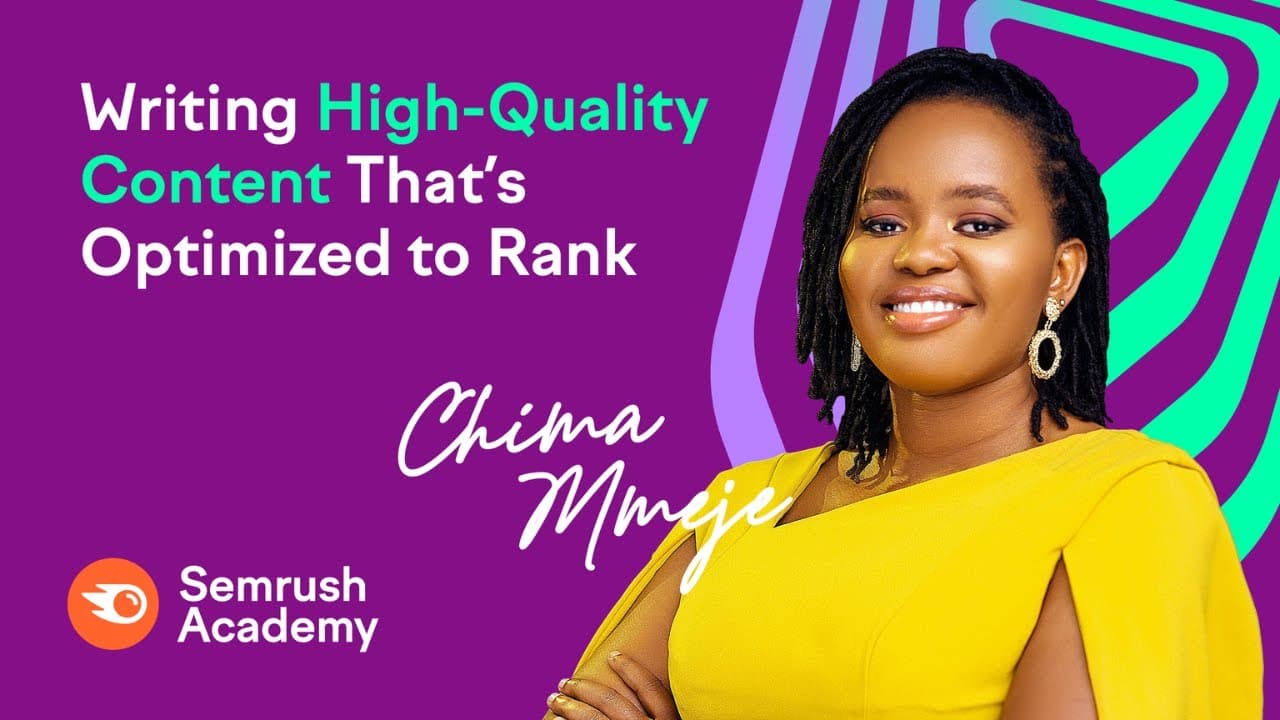
How to Write High-Quality Content Optimized to Rank
TL;DR
Learn to create high-quality, SEO-optimized content to boost rankings.
Transcript
thank you let's begin with establishing what exactly is content-led SEO it is strategy where you write high quality copy that is helpful and optimize to rank on search engine results Pages or search during topical Authority through carefully chosen content is also a key focus with content-led SEO now before I move along I want to Define some key te... Read More
Key Insights
- Content-led SEO focuses on creating high-quality content that ranks well on search engines by establishing topical authority.
- Keywords are essential for SEO, but topical authority involves ranking for all phrases related to a topic, not just individual keywords.
- Audience research, including market analysis and social media listening, is crucial for identifying the right content audience.
- Keyword research identifies what people search for, and tools like Semrush can help determine keyword difficulty and search intent.
- Clustering keywords into topic clusters helps build authority, improve internal linking, and provide comprehensive content for users.
- Content outlines guide the writing process, ensuring inclusion of meta information, internal links, and thematic entities.
- Writing SEO content involves more than keyword stuffing; it requires engaging, user-friendly writing that appeals to readers and search engines.
- Optimization includes using tools to check readability, keyword usage, originality, and ensuring a consistent tone of voice.
Install to Summarize YouTube Videos and Get Transcripts
Explore YouTube Video Summarizer or Get YouTube Transcript Extractor
Questions & Answers
Q: What is content-led SEO?
Content-led SEO is a strategy that focuses on creating high-quality, valuable content that ranks well on search engines. It involves establishing topical authority by organizing related content pieces to demonstrate expertise in a particular area. The goal is to drive traffic from search engines, rank for keywords, and improve internal linking.
Q: How does topical authority differ from keyword ranking?
Topical authority involves ranking for all phrases related to a topic, rather than just individual keywords. It requires creating content clusters, which are groups of related content pieces that collectively cover a topic comprehensively. This approach demonstrates expertise and provides extensive information on the topic, improving search engine rankings.
Q: What role does audience research play in content-led SEO?
Audience research is crucial for identifying the right audience for content. It involves analyzing the market, industry, and competitors, as well as conducting qualitative research like surveys and focus groups. Social media listening and audience analytics provide insights into the audience's demographics and preferences, informing content and marketing strategies.
Q: How is keyword research conducted in content-led SEO?
Keyword research involves identifying what people search for when looking for solutions. Tools like Semrush help determine keyword difficulty, search volume, and search intent. This information guides the selection of keywords to target, ensuring that content is optimized to rank well on search engines for relevant queries.
Q: What are topic clusters, and why are they important?
Topic clusters are groups of related content pieces that collectively cover a topic comprehensively. They are important because they help build authority for the topics a brand wants to be known for, improve internal linking, provide comprehensive content for users, and avoid covering the same topic twice. This approach enhances search engine rankings.
Q: What is included in a content outline?
A content outline includes meta information, internal linking, and thematic entities. Meta information consists of meta descriptions, page titles, and URLs. The outline also details the structure of the content, breaking it down into subheadings and ensuring that all necessary topics are covered. This guides the writing process and ensures consistency.
Q: What are some tips for writing SEO-optimized content?
Writing SEO-optimized content involves creating a compelling headline, using secondary keywords in subheadings, breaking text with images and bullet points, and adopting storytelling to engage readers. It's important to write in a conversational style, teach readers something new, and use thematic entities as anchor text for internal linking.
Q: How is content optimized after writing?
After writing, content is optimized using tools like Semrush's SEO writing assistant. This involves checking readability scores, keyword usage, originality, and tone of voice. The process ensures that the content is clear, consistent, and optimized for search engines. Self-editing is also crucial for eliminating unnecessary words and ensuring logical flow.
Summary & Key Takeaways
-
Content-led SEO is a strategy that involves creating high-quality, helpful content optimized to rank on search engines. It focuses on building topical authority by organizing related content pieces to demonstrate expertise in a specific area. The process includes audience research, keyword research, clustering keywords, creating content outlines, writing, and optimizing content.
-
Keywords are words or phrases people use in search engines to find information. However, topical authority requires ranking for all related phrases, not just individual keywords. This involves creating content clusters, which are groups of related content pieces that collectively cover a topic comprehensively, improving internal linking and establishing authority.
-
The process of content-led SEO involves six steps: determining the audience, conducting keyword research, clustering keywords, creating content outlines, writing content, and optimizing it. This ensures that the content is not only informative and engaging but also optimized for search engines, improving rankings and driving traffic.
Read in Other Languages (beta)
Share This Summary 📚
Summarize YouTube Videos and Get Video Transcripts with 1-Click
Try YouTube Summary with ChatGPT & Claude or YouTube Transcript Generator
Explore More Summaries from Semrush 📚

Summarize YouTube Videos and Get Video Transcripts with 1-Click
Try YouTube Summary with ChatGPT & Claude or YouTube Transcript Generator