How Social Media Changes Your Brain...
TL;DR
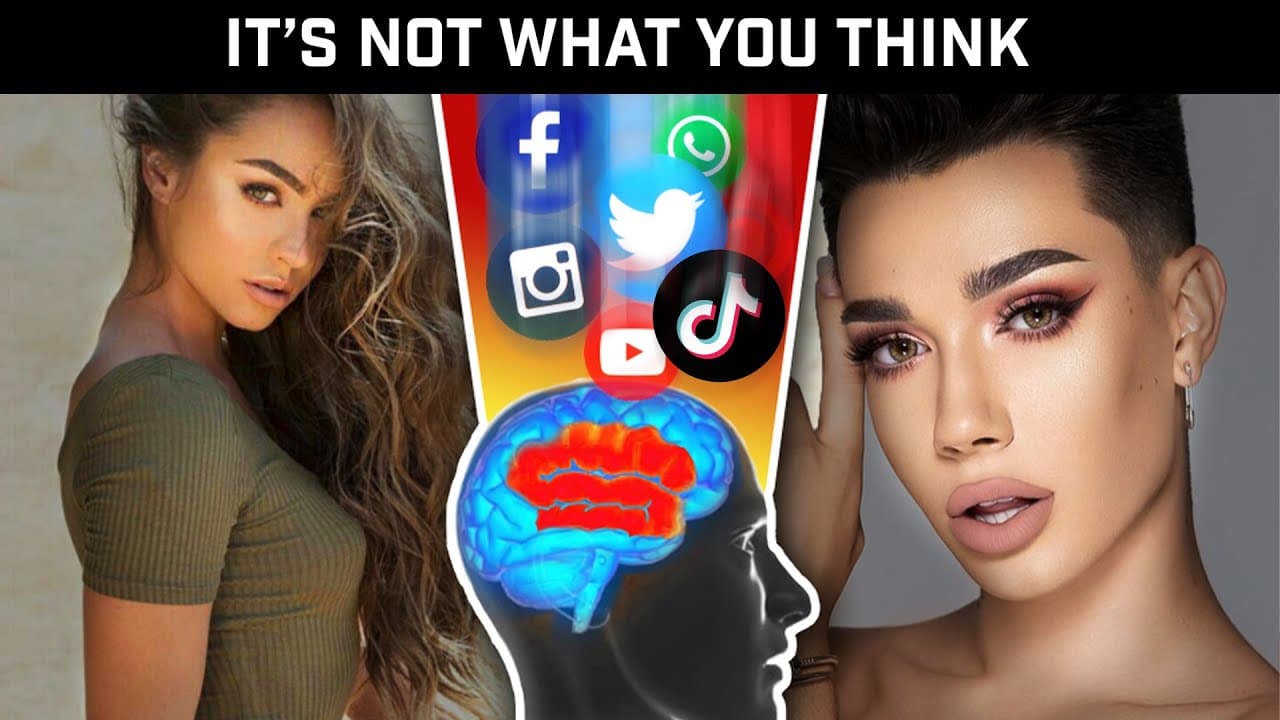
Social media usage and mental health issues have increased, but the direct correlation is unclear. This video explores the positive and negative aspects of social media and offers advice on how to navigate it.
Transcript
45% of teens say that their online constantly and in the Journal of abnormal psychology they reported that over the past decade has been a 52% increase in depression and a 56% increase in suicide rates so there's an increase in time spent on social media and there's an increase in depression but does correlation equal causation over time cheese con... Read More
Key Insights
- 😒 Increased social media use has coincided with a rise in mental health issues, but the direct causation is unclear.
- 🥺 Social media platforms often present an unrealistic and curated view of reality, leading to body image comparisons and feelings of inadequacy.
- 👻 The internet provides infinite leverage, allowing us to compare ourselves to the most extreme individuals, exacerbating mental health impacts.
- 👤 Social media platforms, like TikTok, can be particularly toxic due to their algorithm-driven content and the absence of user control.
- 🥺 Frictionless access to social media has increased cyberbullying and hatred, leading to unprecedented levels of emotional distress.
- ◻️ Novelty-driven dopamine hits on social media platforms can impair attention spans and hinder deep work.
- 🔉 Despite the negative impacts, social media can also offer educational and connection opportunities, depending on how it is used.
Install to Summarize YouTube Videos and Get Transcripts
Explore YouTube Video Summarizer or Get YouTube Transcript Extractor
Questions & Answers
Q: Does increased social media usage directly cause mental health problems?
While there is no direct correlation, research suggests that social media indirectly affects mental health by reducing sleep and physical activity, leading to negative outcomes.
Q: How does social media impact body image?
Social media platforms often present idealized and heavily edited images, leading to body image comparisons and dissatisfaction. These unrealistic portrayals can negatively impact self-esteem.
Q: How do social media platforms create a distorted view of reality?
Social media platforms primarily show a highlight reel of people's lives, not the full picture. This can lead to feelings of inadequacy and FOMO (fear of missing out) as individuals compare their real lives to these curated representations.
Q: Why do people compare their likes and engagement to others?
Likes and engagement on social media are often associated with popularity and social approval. However, this metric does not necessarily reflect deep and meaningful relationships, which are more important for social well-being.
Summary & Key Takeaways
-
Research shows that increased social media use indirectly affects mental health by reducing sleep and physical exercise.
-
Social media platforms often present a distorted view of reality, leading to body image comparisons and dissatisfaction.
-
The internet provides infinite leverage, allowing us to compare ourselves to the most successful and extreme individuals, further impacting mental health.
Read in Other Languages (beta)
Share This Summary 📚
Summarize YouTube Videos and Get Video Transcripts with 1-Click
Try YouTube Summary with ChatGPT & Claude or YouTube Transcript Generator
Explore More Summaries from Andrew Kirby 📚



Summarize YouTube Videos and Get Video Transcripts with 1-Click
Try YouTube Summary with ChatGPT & Claude or YouTube Transcript Generator