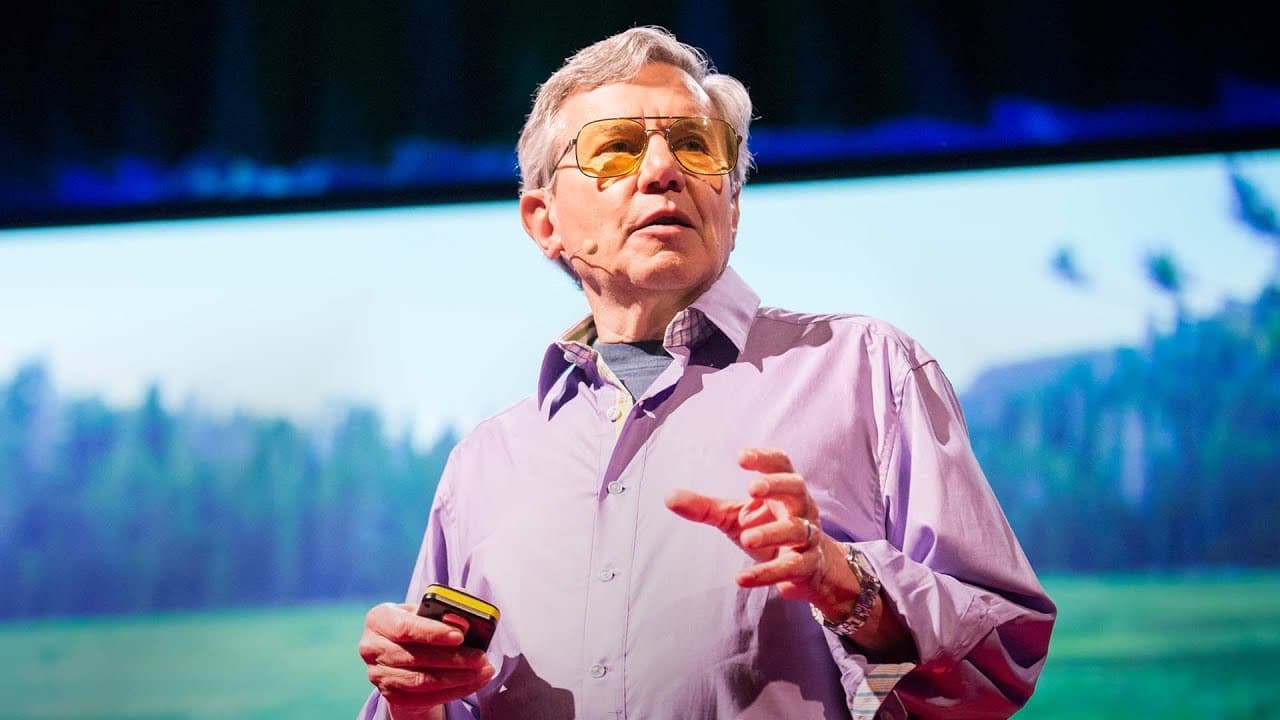
Bernie Krause: The voice of the natural world
TL;DR
This content discusses the significance of wild soundscapes and the valuable information they provide about the health of habitats and the impact of human activity.
Transcript
Read and summarize the transcript of this video on Glasp Reader (beta).
Key Insights
- 🌿 The soundscape of a wild habitat is made up of three sources: geophony (nonbiological sounds), biophony (sounds from organisms), and anthrophony (sounds from humans). Each habitat has its own unique sound signature, containing valuable information about its health and biodiversity.
- 🌍 Global warming, resource extraction, and human noise have significantly altered many habitats, leading to reduced biodiversity and changes in soundscapes. It now takes much longer to capture usable recordings due to these factors.
- 🌲 Traditional methods of evaluating habitats focused on visual data, such as counting species and individuals. However, analyzing sound data allows for more precise assessment of habitat fitness by considering both density and diversity.
- 🌿 Selective logging in Lincoln Meadow resulted in a significant loss of bird species and reduced overall biophony. While visually the habitat appeared unchanged, the altered soundscape revealed the true environmental impact.
- 🌊 Marine organisms like sea anemones produce sounds, expressing their behavior and response to stimuli. Their sound interactions, such as when a sea anemone ingests a microphone and makes static-like sounds, demonstrate the complexity of underwater soundscapes.
- 🐸 The synchronized chorus of Spadefoot toads serves the purposes of mate attraction and predator deterrence. Human noise, such as military jet flybys, can disrupt this chorus, making it difficult for the toads to communicate and potentially exposing them to predators.
- 🌍 Habitat restoration efforts can help restore biodiversity and soundscapes. Mono Lake's frog population returned to normal after habitat restoration and reduced flight activity that masked their chorusing.
- 🦫 The emotional response of a beaver to the destruction of its dam and the loss of its mate and young highlights the capacity of animals to show emotion through sounds. This illustrates the interconnectedness of animal behavior and the importance of preserving habitats for their well-being.
Install to Summarize YouTube Videos and Get Transcripts
Explore YouTube Video Summarizer or Get YouTube Transcript Extractor
Questions & Answers
Q: What are the three basic sources of a soundscape?
The three basic sources of a soundscape are geophony, biophony, and anthrophony.
Q: How has global warming and human activity affected the time it takes to capture usable material?
Global warming, resource extraction, and human noise have all contributed to an increase in the time it takes to capture usable material. It can now take up to 1,000 hours or more to capture the same thing that used to only take 10 hours.
Q: How are habitats typically evaluated and how does soundscape ecology offer a more precise evaluation?
Habitats are typically evaluated by visually counting the numbers of species and individuals within each species. However, soundscape ecology offers a more precise evaluation by comparing data that ties together both density and diversity from what we hear.
Q: Can soundscapes reveal the impact of habitat destruction and resource extraction?
Yes, soundscapes can reveal the impact of habitat destruction and resource extraction. The example provided with Lincoln Meadow demonstrated how selective logging had a significant impact on the density and diversity of the biophony in the area.
Q: What is an example of an animal expressing emotion through sound?
An example of an animal expressing emotion through sound is a beaver. In the story shared, a lone surviving male beaver was heard swimming in slow circles, crying out inconsolably for its lost mate and offspring after they were killed by a stick of dynamite dropped down their dam.
Summary & Key Takeaways
-
Wild soundscapes created by animals and natural habitats contain valuable information and can provide insights into the health of ecosystems.
-
Soundscapes consist of geophony (nonbiological sounds), biophony (sounds generated by organisms), and anthrophony (sounds generated by humans).
-
The impacts of human activities, such as resource extraction and habitat destruction, can significantly alter and reduce the diversity and density of biophony in ecosystems.
Read in Other Languages (beta)
Share This Summary 📚
Summarize YouTube Videos and Get Video Transcripts with 1-Click
Try YouTube Summary with ChatGPT & Claude or YouTube Transcript Generator
Explore More Summaries from TED 📚


Summarize YouTube Videos and Get Video Transcripts with 1-Click
Try YouTube Summary with ChatGPT & Claude or YouTube Transcript Generator