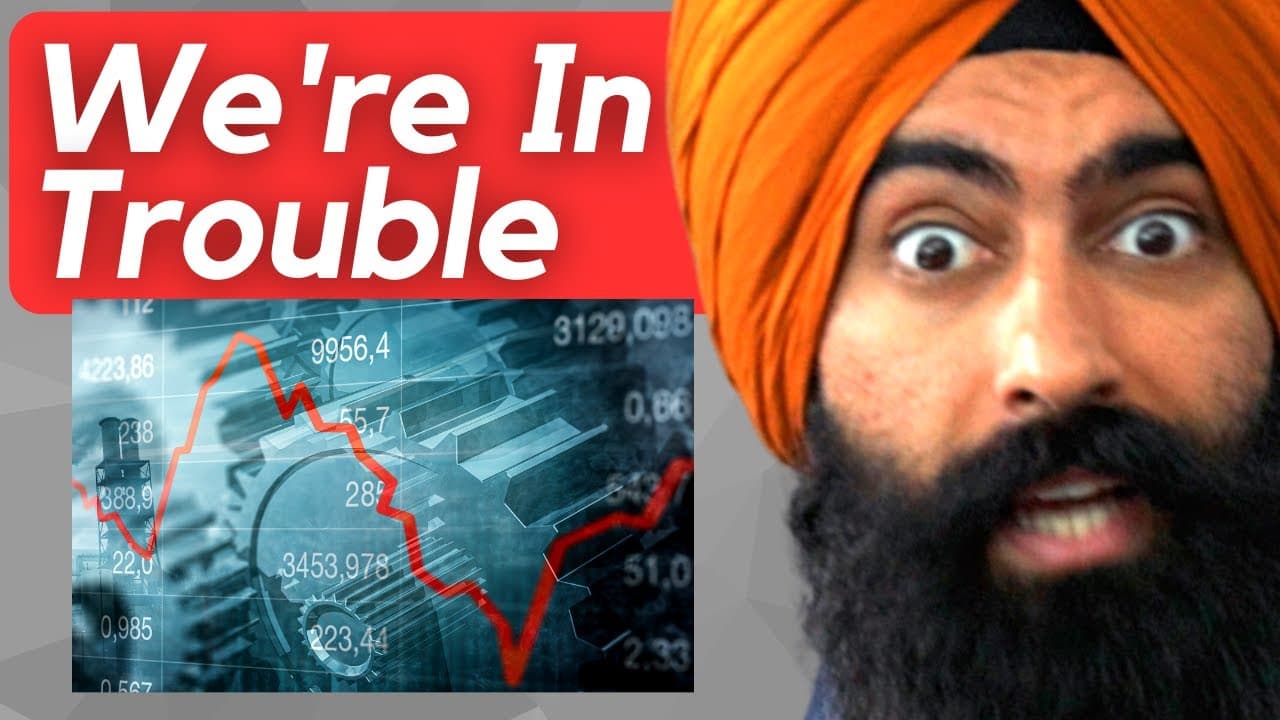
Is The Recession CANCELED? (This Will SHOCK You)
TL;DR
Recent GDP growth revision to 2% sparks debate on recession possibility amidst high inflation and interest rates.
Transcript
a new report just came out which said that our GDP our economy here in the United States actually grew by two percent instead of the 1.3 percent that was originally reported which means that our economy wasn't slowing down as fast as a lot of people thought which has a lot of people wondering is the recession canceled are we still going to see a re... Read More
Key Insights
- 🤨 GDP growth revision to 2% raises questions about the US economy's trajectory and potential recession risks.
- ✋ High inflation pressures prompt the Federal Reserve to raise interest rates to curb rising prices.
- 😮 Consumer spending is supported by higher incomes, credit accessibility, and Social Security benefits, but rising debt levels signal a financial challenge.
- ☠️ Business debt restructuring and increased costs due to inflation and interest rate hikes may impact profitability.
- ☠️ The Federal Reserve's pivot to pause interest rate hikes amidst ongoing inflation suggests a delicate balancing act to maintain economic stability.
- 🤑 Printing money to fund Social Security adjustments contributes to consumer spending but also fuels inflation, highlighting a complex economic cycle.
- 🎓 Economic preparedness and financial education are crucial in navigating potential economic downturns and capitalizing on opportunities in volatile market conditions.
Install to Summarize YouTube Videos and Get Transcripts
Explore YouTube Video Summarizer or Get YouTube Transcript Extractor
Questions & Answers
Q: How did the revision in GDP growth impact concerns about a recession?
The revision to 2% GDP growth raised doubts about the imminent recession, highlighting the complexity of economic indicators and forecasting models.
Q: What role does high inflation play in the current economic landscape?
High inflation necessitates interest rate hikes to combat rising prices and maintain economic stability, but poses challenges for the Federal Reserve in managing the economy.
Q: How are consumers sustaining spending amidst high inflation and rising interest rates?
Consumers are utilizing higher incomes, increased credit access, and Social Security adjustments to maintain spending levels, leading to a potential debt burden in the future.
Q: What implications do rising debt levels and interest rates have for businesses?
Businesses are facing increased debt servicing costs due to rising interest rates, along with higher operational expenses from inflation, potentially leading to financial strain.
Summary & Key Takeaways
-
The US GDP growth was revised to 2%, higher than the initial 1.3% estimate, leading to questions about a potential recession.
-
High inflation is being addressed by the Federal Reserve through interest rate hikes to control rising prices.
-
Consumer spending is fueled by higher incomes, credit availability, and Social Security adjustments, but rising debt levels pose a risk.
Read in Other Languages (beta)
Share This Summary 📚
Summarize YouTube Videos and Get Video Transcripts with 1-Click
Try YouTube Summary with ChatGPT & Claude or YouTube Transcript Generator
Explore More Summaries from Minority Mindset 📚
Summarize YouTube Videos and Get Video Transcripts with 1-Click
Try YouTube Summary with ChatGPT & Claude or YouTube Transcript Generator