How Are Computers Learning to Be Creative?
TL;DR
Computers are learning creativity through neural networks that generate unique images and poetry, reflecting the connection between perception and imagination. By mimicking the brain's structure, these machines can process visuals and produce artistic outputs, extending human cognitive abilities and understanding.
Transcript
Read and summarize the transcript of this video on Glasp Reader (beta).
Key Insights
- 🎨 Perception and creativity are closely connected, as both involve the act of imagining and perceiving.
- 🧠 Studying the brain involves understanding its complex structures and processes, which have been explored for over a century.
- 🧩 Neurons in the brain have intricate structures resembling wires, and understanding their connections is an ongoing challenge.
- ⚙️ Neural networks, similar to the brain's architecture, can process and recognize images, allowing computers to identify objects like birds or faces.
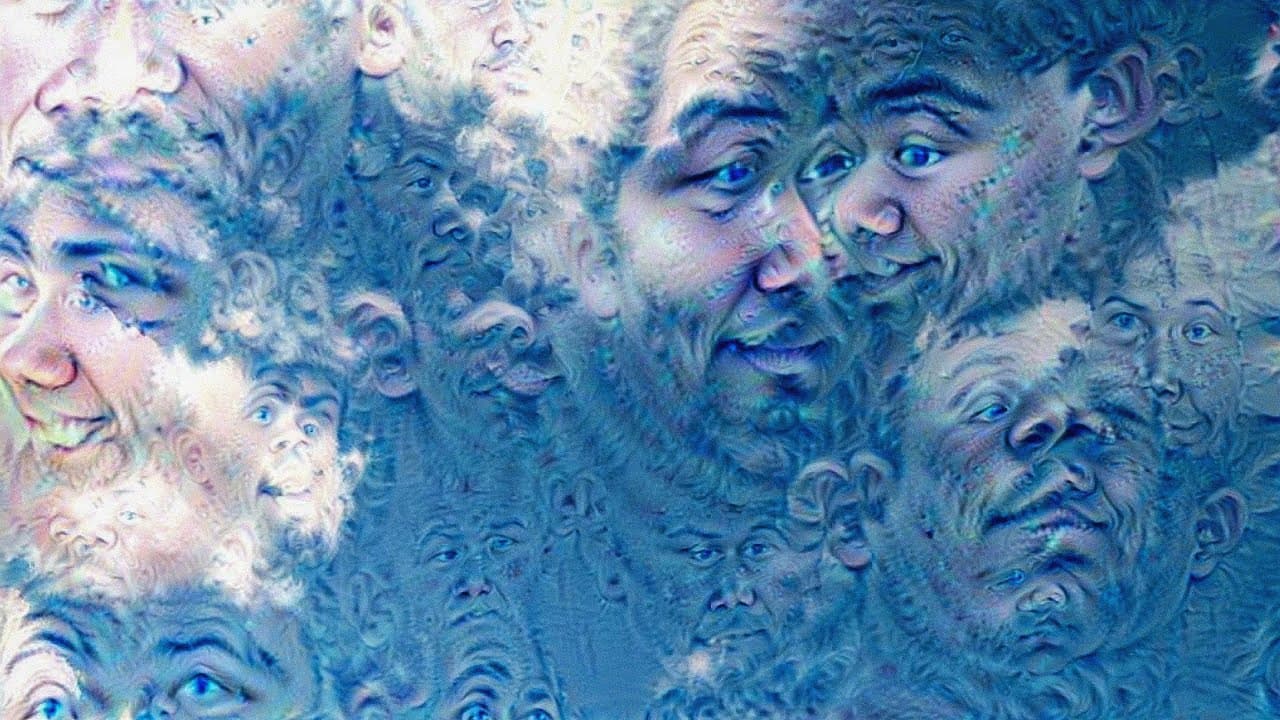
- 📷 Neural networks can also generate new images based on existing knowledge, creating unique visual representations.
- 📚 Neural networks can go beyond visual recognition and be used in other fields, such as generating poetry based on images.
- 🌍 Perception and creativity are not limited to humans; computational models can exhibit similar abilities and be trained to perform various tasks.
- 💡 The development of computing technology has allowed us to better understand and extend our own cognitive abilities, fulfilling the early vision of intelligent machinery.
Install to Summarize YouTube Videos and Get Transcripts
Explore YouTube Video Summarizer or Get YouTube Transcript Extractor
Questions & Answers
Q: What is the speaker's role at Google?
The speaker leads a team at Google that works on machine intelligence and the engineering discipline of making computers and devices able to do tasks similar to human brains.
Q: What is the connection between machine perception and machine creativity?
The speaker's team's work on machine perception has unexpectedly connected with the world of machine creativity and machine art, suggesting that perception and creativity are closely related processes.
Q: How did the early anatomists name the structures of the brain?
Early anatomists gave the superficial structures of the brain fanciful names, such as "hippocampus," meaning "little shrimp," but these names did not provide much insight into what was actually happening inside the brain.
Q: Who was Santiago Ramón y Cajal and what did he do for our understanding of the brain?
Santiago Ramón y Cajal was a great Spanish neuroanatomist in the 19th century who used microscopy and special stains to study the individual cells in the brain. His drawings of neurons were groundbreaking at the time and still hold value in our understanding of the brain today.
Q: How are neural networks used to process visual information?
Neural networks process visual information by passing information from one layer of neurons to another, connected by synapses with different weights. The strengths of these synapses characterize the computational properties of the network, and at the end, a specific neuron or group of neurons light up to identify the object or concept being perceived.
Q: How do computers learn to recognize and distinguish objects through neural networks?
Computers learn to recognize and distinguish objects through neural networks by solving for the strengths of synapses through an iterative process. This learning process involves minimizing errors by taking guesses at the synaptic weights and adjusting them until the desired recognition accuracy is achieved.
Q: Can neural networks generate or hallucinate images?
Yes, neural networks can generate or hallucinate images by solving for the input pixels given known weights and desired outputs. This process involves optimizing the network to reconstruct or generate images that match the given outputs, resulting in creative and sometimes surreal visual representations.
Q: What is the significance of perception and creativity in relation to computing?
Perception and creativity are interconnected processes that are not limited to humans. By studying and modeling these processes in computers, we can understand our own minds better and extend our capabilities. Computing offers the ability to create intelligent machinery that not only helps with accounting or entertainment but also expands our understanding of the human mind and its potential.
Summary & Key Takeaways
-
The speaker is part of a team at Google that works on machine intelligence, focusing on making computers and devices perform tasks that are typically done by brains.
-
Machine perception algorithms developed by the team are used in applications such as Google Photos to enable image search based on content.
-
The team has also explored machine creativity and machine art, finding connections between perception, creativity, and imagination in both humans and machines.
Read in Other Languages (beta)
Share This Summary 📚
Summarize YouTube Videos and Get Video Transcripts with 1-Click
Try YouTube Summary with ChatGPT & Claude or YouTube Transcript Generator
Explore More Summaries from TED 📚




Summarize YouTube Videos and Get Video Transcripts with 1-Click
Try YouTube Summary with ChatGPT & Claude or YouTube Transcript Generator