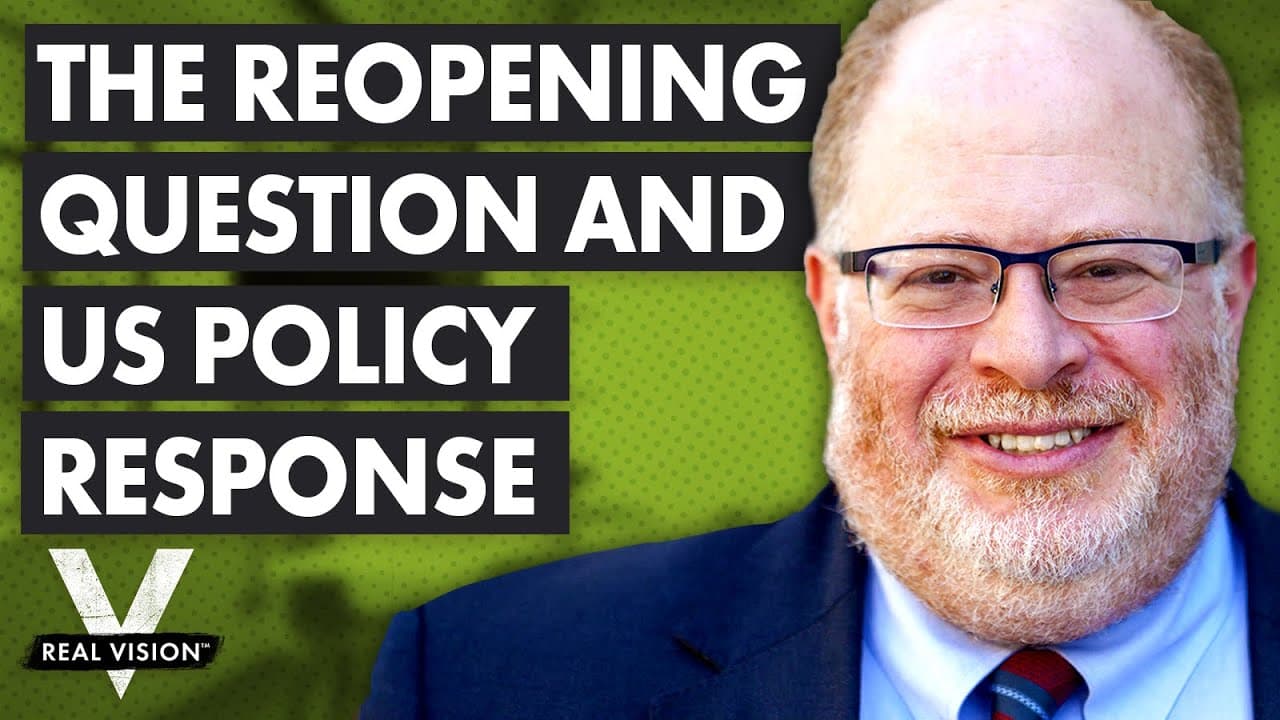
Is Reopening the US a Good Idea? (w/ Pedro da Costa and Adam Posen)
TL;DR
Delayed economy reopening can prevent healthcare system overload and maintain consumer confidence.
Transcript
PEDRO DA COSTA: Coming back to the US context, since we're going to be stuck at home for a while now it seems, I wanted to ask you a couple of things. The administration and others have presented the reopening of the economy as a tension, like either you reopen the economy now, or if you actually address the pandemic, then you risk a deeper downtur... Read More
Key Insights
- 😷 Delaying economy reopening can prevent healthcare overload and ensure sufficient resources for the sick.
- 🦺 Consumer perception of safety drives economic activity, impacting spending and investment decisions.
- ⚖️ Historical pandemics provide valuable insights on balancing healthcare system capacity with economic reopening.
- 👏 The US fiscal stimulus, equivalent to 10% of GDP, is praised for its rapid implementation and direct support to households and businesses.
- 🌸 Economic stability hinges on a cautious approach to reopening to avoid setbacks and prevent loss of life.
- 📁 Providing liquidity and support without direct bailouts can help maintain financial stability amidst the crisis.
- 💠 Coordination and collaboration among policymakers have been crucial in shaping an effective economic response.
Install to Summarize YouTube Videos and Get Transcripts
Explore YouTube Video Summarizer or Get YouTube Transcript Extractor
Questions & Answers
Q: How does delaying the reopening of the economy benefit the healthcare system?
Delaying reopening prevents a surge in COVID-19 cases that could overwhelm hospitals, ensuring resources are available for those in need.
Q: Why is consumer perception of safety important for economic recovery?
Consumer confidence drives spending and investment; if people feel unsafe, economic activity remains low, impacting overall recovery efforts.
Q: What insights can past pandemics provide for the current situation?
Lessons from past pandemics like the 1918 flu highlight the importance of balancing healthcare system capacity with economic reopening strategies.
Q: How does the US fiscal stimulus response compare to previous crises?
The US fiscal stimulus package, equivalent to about 10% of GDP, is lauded as historically significant and necessary for economic stability during the crisis.
Summary & Key Takeaways
-
Delaying the economy reopening can prevent overwhelming the healthcare system, ensuring proper care for the sick.
-
Consumer perception of safety is crucial in driving economic activity, impacting spending behavior and investment decisions.
-
Premature reopening can lead to more deaths and economic setbacks, making a cautious approach necessary.
Read in Other Languages (beta)
Share This Summary 📚
Summarize YouTube Videos and Get Video Transcripts with 1-Click
Try YouTube Summary with ChatGPT & Claude or YouTube Transcript Generator
Explore More Summaries from Real Vision 📚

Summarize YouTube Videos and Get Video Transcripts with 1-Click
Try YouTube Summary with ChatGPT & Claude or YouTube Transcript Generator