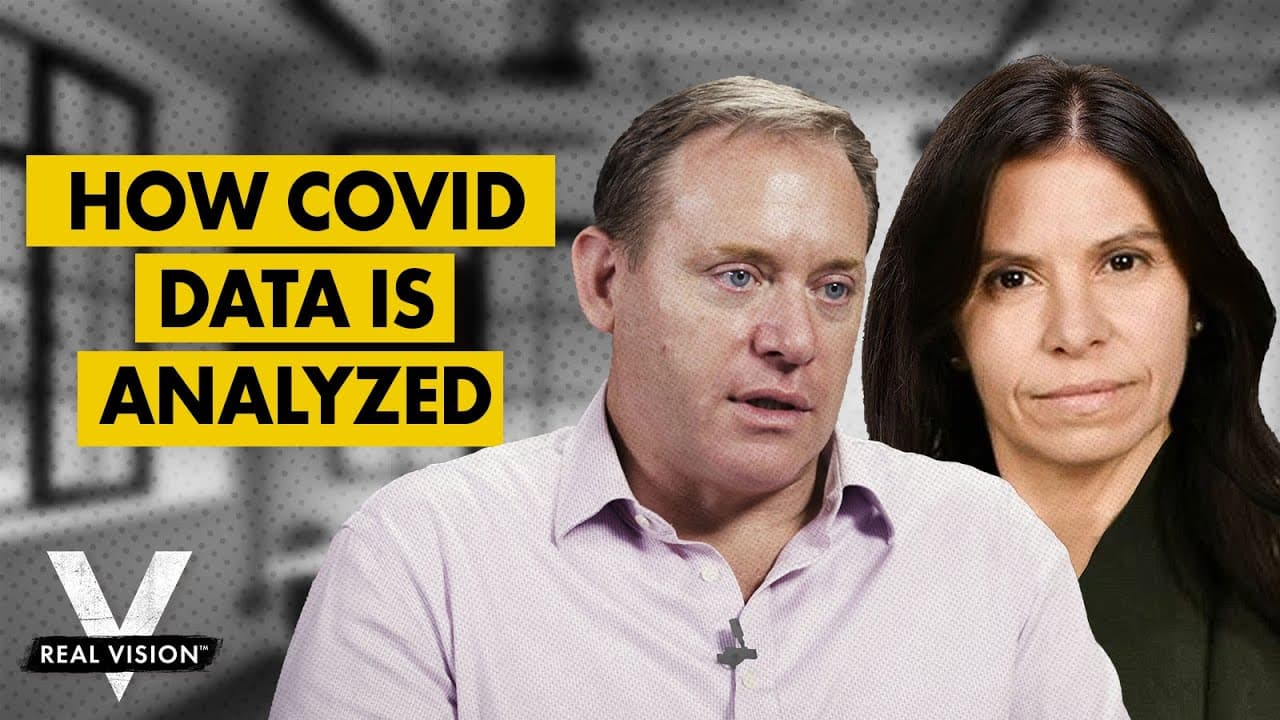
How COVID-19 Data Is Collected and Analyzed (w/ Mike Green and Christina Ramirez)
TL;DR
Biostatistics Professor discusses Covid-19 data, healthcare systems, and societal impacts.
Transcript
mike green i'm here in northern california i'm really excited because this is a little bit of a change of pace i'm going to sit down with christina ramirez who's a professor at ucla at the fielding school of public health christina you're professor of biostatistics can you tell me very quickly what biostatistics is so uh yeah hi um happy to be here... Read More
Key Insights
- 🧑⚕️ Data quality and accessibility impact policy decisions and public health strategies.
- 🧑⚕️ Balancing health risks with economic impacts is crucial in pandemic response.
- 🤱 Vulnerable populations, including nursing homes, require targeted protection and support.
- 🖐️ Mathematical tools like biostatistics play a critical role in understanding health data.
- 🍉 Pandemic responses should consider the long-term effects on societal well-being.
- 🍝 Learning from past mistakes and adapting policies based on data insights is essential.
- 🧑⚕️ Education and interest in data science offer valuable tools for addressing public health challenges.
Install to Summarize YouTube Videos and Get Transcripts
Explore YouTube Video Summarizer or Get YouTube Transcript Extractor
Questions & Answers
Q: What is biostatistics, and why is it important in healthcare?
Biostatistics applies statistics to health data, providing insights for policy decisions and healthcare outcomes. It plays a crucial role in understanding disease dynamics, treatment effectiveness, and public health strategies.
Q: How has the Covid-19 pandemic highlighted the need for quality data and real-time analysis?
The pandemic emphasized the importance of having up-to-date data accessible for policy-making. Initiatives like public data repositories and tracking projects are vital for informed decision-making and effective response strategies.
Q: What are the challenges in accurately reporting Covid-19 deaths and interpreting the data?
Issues like varied reporting standards, differing data quality across regions, and potential underreporting contribute to challenges in interpreting Covid-19 death data. Uniform definitions and consistent reporting practices are essential for accurate analysis.
Q: How can statisticians contribute to understanding the indirect effects of the Covid-19 pandemic?
Statisticians can analyze data to identify indirect impacts such as increased suicide rates, drug overdoses, and child abuse. By studying these patterns, actionable insights can guide interventions to address societal challenges exacerbated by the pandemic.
Summary & Key Takeaways
-
Biostatistics is the application of statistics and math to health data.
-
Covid-19 data challenges include privacy concerns and data quality.
-
Policy decisions need to balance health risks, economic impact, and vulnerable populations.
Read in Other Languages (beta)
Share This Summary 📚
Summarize YouTube Videos and Get Video Transcripts with 1-Click
Try YouTube Summary with ChatGPT & Claude or YouTube Transcript Generator
Explore More Summaries from Real Vision 📚



Summarize YouTube Videos and Get Video Transcripts with 1-Click
Try YouTube Summary with ChatGPT & Claude or YouTube Transcript Generator