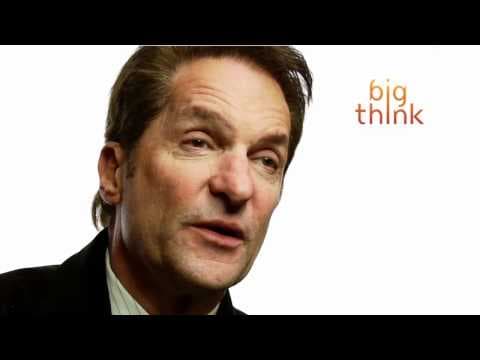
Is Hope for Weak People? One Man's Journey through Life with MS | Richard M. Cohen | Big Think

TL;DR
MS diagnosis leads to a transformative journey through stem cell therapy, shifting mindset towards hope and optimism.
Transcript
I have a very—I've had a very skittish relationship with hope going back to when I was diagnosed with MS. I really didn't believe in the idea of hope for a long time. Frankly, I thought it was for weak people, you know, I thought that the strength, personal strength and perseverance, could replace hope. And when I was at the Vatican I met with a lo... Read More
Key Insights
- 🥹 Personal resilience can challenge and change deeply held beliefs.
- 💖 Exposure to innovative treatments can spark newfound hope and motivation.
- 🤞 The journey towards hope involves personal introspection and growth.
- 🥺 Sharing personal experiences can lead to a deeper understanding of one's mindset.
- 🤞 Interactions with diverse perspectives, including clergy, can offer varying views on hope.
- ❓ Hope is an organic feeling that can transform through personal inquiry.
- 🤗 Opening oneself up to hope can lead to shifts in mindset and demeanor.
Install to Summarize YouTube Videos and Get Transcripts
Explore YouTube Video Summarizer or Get YouTube Transcript Extractor
Questions & Answers
Q: How did the speaker's MS diagnosis affect their perception of hope?
The speaker initially viewed hope as something for weak individuals and believed personal strength could replace it. However, a transformative experience with stem cell therapy shifted their mindset towards hope.
Q: What led the speaker to seek out stem cell therapy?
After being introduced to doctors and scientists conducting stem cell therapy at the Vatican, the speaker was determined to find help. This eventually led them to a neurologist in New York who offered the opportunity to participate in a trial.
Q: How did being the first person treated with mesenchymal cells impact the speaker's journey?
Being the first to undergo this specific cell treatment allowed for a unique experience in monitoring progress due to the unusual presentation of the disease on one side of the speaker's body. This experience marked a significant point in the speaker's journey towards hope and optimism.
Q: How did writing a book on hope contribute to the speaker's personal growth?
Writing a book on hope became a personal inquiry that led the speaker to understand their evolving relationship with hope. It allowed for introspection and a shift in mindset, resulting in increased optimism and positive prospects for the future.
Summary & Key Takeaways
-
Initially skeptical of hope due to MS diagnosis.
-
Introduced to stem cell therapy at the Vatican, sparking newfound hope.
-
Becoming the first person treated with mesenchymal cells, leading to a shift in perspective on hope and optimism.
Read in Other Languages (beta)
Share This Summary 📚
Summarize YouTube Videos and Get Video Transcripts with 1-Click
Try YouTube Summary with ChatGPT & Claude or YouTube Transcript Generator
Explore More Summaries from Big Think 📚

Summarize YouTube Videos and Get Video Transcripts with 1-Click
Try YouTube Summary with ChatGPT & Claude or YouTube Transcript Generator