What Happens in Your Brain When Making a Deal?
TL;DR
When making a deal, specific brain regions activate, particularly those associated with theory of mind and conflict resolution. Game theory suggests that individuals use different strategies to anticipate others' actions, and studies show that chimpanzees outperform humans in adhering to these strategic principles. Understanding brain activity during negotiations could help predict disagreements and improve decision-making.
Transcript
Read and summarize the transcript of this video on Glasp Reader (beta).
Key Insights
- 🧠 Game theory and neuroscience can be used together to understand human social interactions when value is at stake.
- 🤝 Game theory provides a mathematical taxonomy of social life and predicts people's actions based on how everyone's actions affect each other.
- 🎮 A simple game demonstrates how people strategically choose numbers to win a prize, similar to making decisions in a rising stock market.
- 🧠 Cognitive hierarchy theory suggests that people may have different levels of thinking when making decisions.
- 🤔 Equilibrium analysis is a popular theory in game theory that predicts everyone wants to be below everyone else and play zero.
- 📊 Data from experiments on a number-guessing game show that most people choose numbers around 33 and 22, with a small group choosing zero or one.
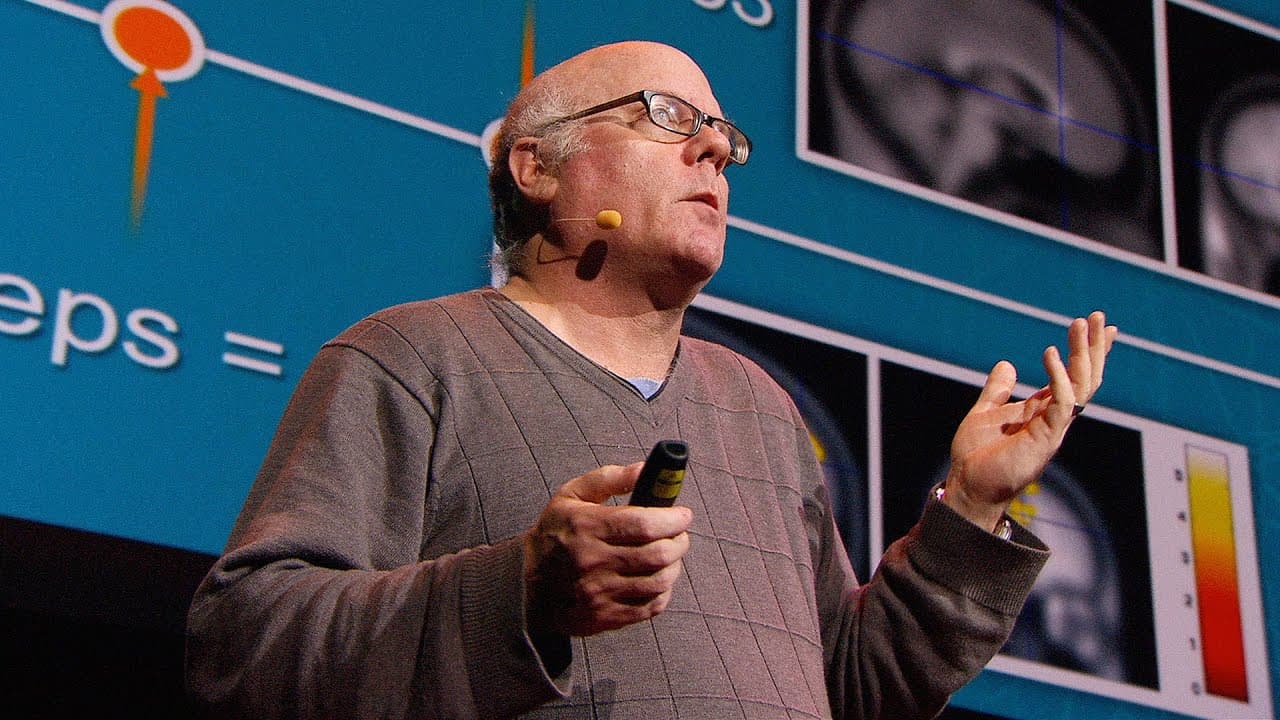
- 🧠 Brain imaging studies show that regions involved in theory of mind are active during game playing, suggesting that people try to predict others' behavior.
- ️ Early brain activity differences can potentially predict whether there will be disagreements in bargaining games, indicating a possible use in avoiding litigation and conflicts.
- 🐵 Chimpanzees outperform humans in adhering to game theory principles, suggesting that humans may not be as strategic as we think we are.
Install to Summarize YouTube Videos and Get Transcripts
Explore YouTube Video Summarizer or Get YouTube Transcript Extractor
Questions & Answers
Q: What is game theory and how is it used in various fields?
Game theory is a branch of applied mathematics that is primarily used in fields such as economics, political science, and biology. It provides a mathematical framework for understanding how people interact socially when their actions impact others. Game theory can be used to analyze and predict behaviors in a variety of situations, including competition, cooperation, bargaining, and games like hide-and-seek and poker.
Q: Can you explain the simple game where players choose a number and the average is computed?
In this game, players are asked to choose a number between zero and 100. The average of all the chosen numbers is then calculated. The player who is closest to two-thirds of the average wins a fixed prize. The optimal strategy is to choose a number slightly below the average, but not too far below, as everyone else will also try to choose a number below the average.
Q: What are the two theories about how people think in this game?
One theory suggests that people may not be strategic at all and simply choose the average number (50) as their own number. Another theory suggests that people may take a more sophisticated approach by considering what others might choose and adjust their number accordingly. For example, if they believe others will choose 50, they may choose two-thirds of that number (33).
Q: What do the data from experiments on the number game reveal about human behavior?
The data shows that there are distinct patterns in the numbers chosen by participants. Many participants choose numbers around 33 and 22, indicating that they are considering others' choices and trying to be slightly below the average. However, there is also a group of participants who choose numbers close to zero or one, which indicates that they may be applying equilibrium analysis. However, choosing such low numbers often leads to poor outcomes in the game.
Q: What brain regions are involved when people play the number game?
Studies using functional magnetic resonance imaging (fMRI) have shown that certain brain regions are active when people play the number game. These regions include the medial prefrontal cortex, dorsomedial prefrontal cortex, ventromedial prefrontal cortex, anterior cingulate, and temporoparietal junction. These areas are part of the "theory of mind" circuit, which is involved in imagining and predicting the behaviors of others.
Q: How can brain activity in the number game be used to predict a person's abilities or tendencies?
By analyzing brain activity during the number game, it may be possible to make predictions about a person's social and strategic abilities. For example, individuals who show activity in regions associated with theory of mind may be more skilled at predicting and understanding others' behavior. This information could have practical applications, such as identifying individuals who may excel in poker or assessing the social acumen of adolescents based on brain development.
Q: What is the bargaining game used to study brain activity?
In the bargaining game, two players are given a certain amount of money (ranging from one to six dollars) and have 10 seconds to make a deal on how to divide the money. If no deal is made, both players receive nothing. One player is informed about the amount available, while the other player is uninformed but aware of the informed player's knowledge. The uninformed player's task is to assess whether the informed player is being fair or trying to deceive them.
Q: How does brain activity differ when players in the bargaining game agree or disagree?
When players in the bargaining game agree on a division of the money, brain activity shows a sequential pattern. Activity in the informed player's brain is observed first, followed by activity in the uninformed player's brain. However, when players disagree and fail to reach a deal, brain activity shows a different pattern. There is more simultaneous activity in both players' brains, with activity in the informed player's brain appearing first, followed by activity in the uninformed player's brain.
Q: What is the cognitive trade-off hypothesis in relation to chimpanzees and humans?
The cognitive trade-off hypothesis suggests that chimpanzees may prioritize certain cognitive abilities, such as strategic thinking and negotiation, due to their need for status and competition within their social groups. This hypothesis proposes that chimpanzees have specialized brain activity related to competitive behavior, which may resemble strategic thinking. Comparing how humans and chimpanzees behave in game theory experiments can provide insights into the evolution of brain functions.
Q: How do chimpanzees and humans differ in their adherence to game theory predictions?
In experiments where chimpanzees interacted and played a game based on game theory, the chimpanzees showed a high degree of adherence to game theory predictions. They exhibited behavior consistent with Nash equilibrium, which is the optimal strategy predicted by game theory. On the other hand, humans showed less adherence to game theory predictions and were less influenced by the payoffs and previous rewards in the game. This suggests that chimpanzees may be more skilled competitors than humans in terms of conforming to game theory strategies.
Summary & Key Takeaways
-
The speaker discusses the use of game theory and neuroscience to understand social interaction in situations where value is at stake.
-
An experiment involving a simple game shows different strategies that people use to gain an advantage, and how this can be reflected in brain activity.
-
The speaker also compares the behavior of chimpanzees and humans in game-like situations and finds that chimpanzees are more adept at applying game theory strategies.
Read in Other Languages (beta)
Share This Summary 📚
Summarize YouTube Videos and Get Video Transcripts with 1-Click
Try YouTube Summary with ChatGPT & Claude or YouTube Transcript Generator
Explore More Summaries from TED 📚




Summarize YouTube Videos and Get Video Transcripts with 1-Click
Try YouTube Summary with ChatGPT & Claude or YouTube Transcript Generator