How the last two centuries led to today’s economy | Adam Davidson | Big Think
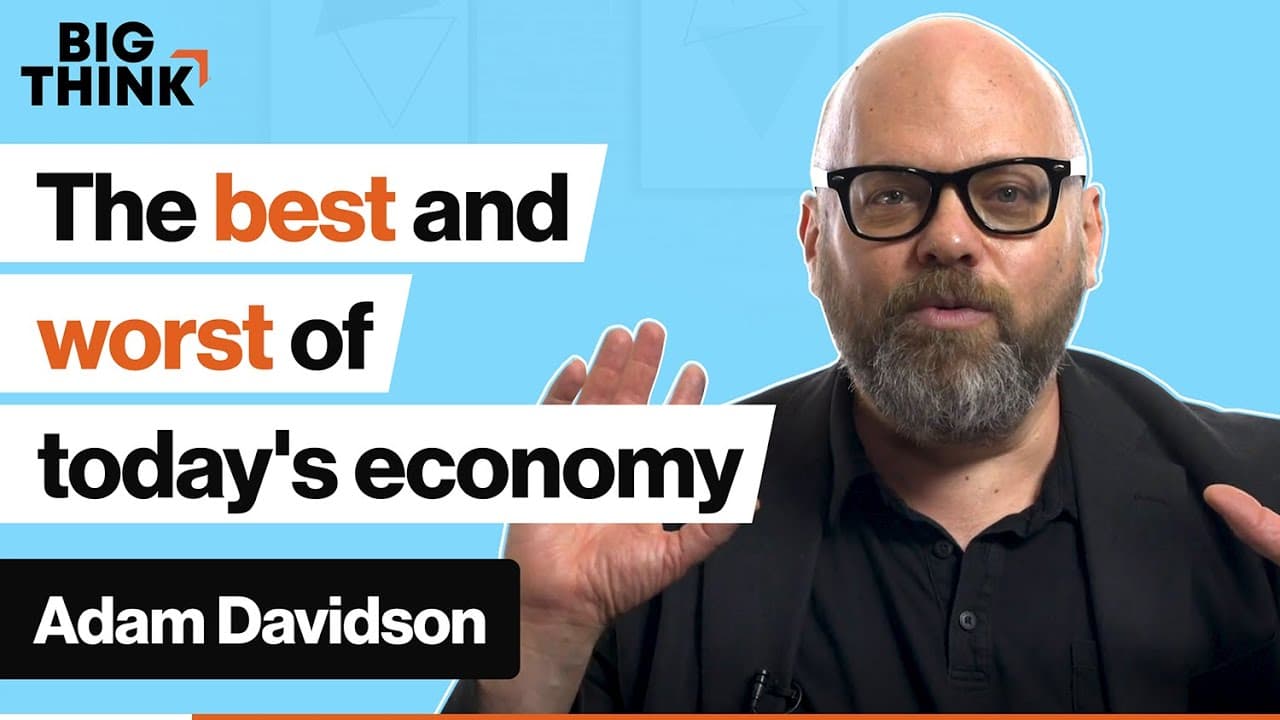
TL;DR
Society shifted from local intimacy to global scale in production, but now intimacy at scale is revolutionizing businesses.
Transcript
I had this thought as I wrote the book that the best of the 21st century combines the best of the 19th and the best of the 20th and then my joke is the worst combines the worst of those two centuries as well what I mean by that is if you look at the 19th century and pretty much all human history before business was conducted almost entirely locally... Read More
Key Insights
- 🌐 History transitions from local intimacy to global scale production.
- 😃 Big companies struggle with growth due to saturated markets.
- 👨💼 Intimacy at scale revolutionizes businesses by offering unique products globally.
- ❓ The passion economy focuses on catering to highly interested buyers.
- 🪛 Unique products at a premium price drive the passion economy.
- 🌐 Small companies leverage the internet and AI for global reach.
- ❓ Adam Smith's model of pricing for the indifferent buyer contrasts with the passion economy's focus on passionate buyers.
Install to Summarize YouTube Videos and Get Transcripts
Explore YouTube Video Summarizer or Get YouTube Transcript Extractor
Questions & Answers
Q: How has production shifted throughout history from local intimacy to global scale?
In the past, local producers catered to intimate needs, but the 20th century saw mass production for global markets, leading to a disconnect between producers and consumers.
Q: Why are big companies struggling to grow in the current market?
Large-scale companies like Procter & Gamble face challenges in creating transformative value as most consumers already have their products, resulting in market share competition.
Q: What is the concept of intimacy at scale in the business world?
Intimacy at scale refers to the ability of smaller companies to create unique products and reach customers globally through tools like the internet and AI, focusing on personalized experiences.
Q: How does the passion economy differ from traditional economic models?
The passion economy targets the most interested buyers willing to pay premium prices for unique products, shifting away from targeting a mass market and embracing specialization.
Summary & Key Takeaways
-
Before the 20th century, local producers served intimate needs, whereas the 20th century saw mass production for global markets.
-
Big companies face challenges sustaining growth with mass production, leading to the rise of intimate products at scale.
-
The passion economy focuses on catering to the most interested buyers rather than targeting a mass market.
Read in Other Languages (beta)
Share This Summary 📚
Summarize YouTube Videos and Get Video Transcripts with 1-Click
Try YouTube Summary with ChatGPT & Claude or YouTube Transcript Generator
Explore More Summaries from Big Think 📚




Summarize YouTube Videos and Get Video Transcripts with 1-Click
Try YouTube Summary with ChatGPT & Claude or YouTube Transcript Generator