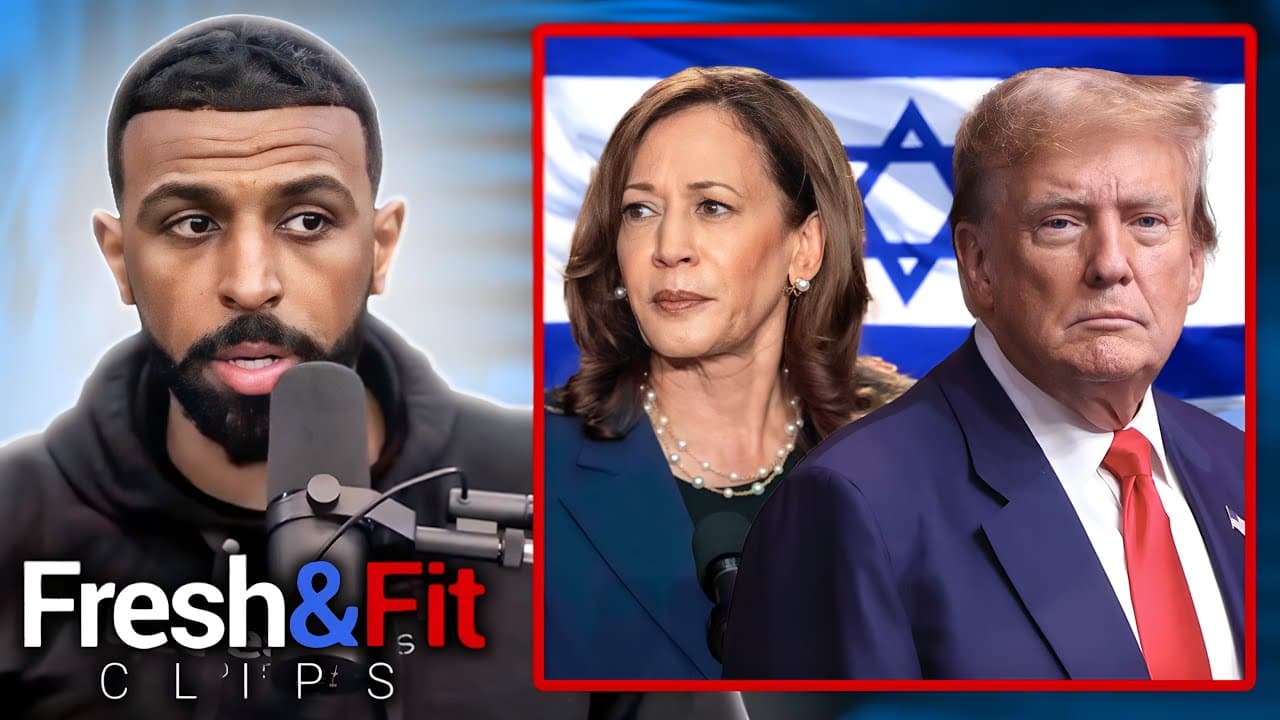
How Each Presidential Candidate Will Most Likely Handle Israel
TL;DR
Israel intensifies military actions amid political dynamics and seeks justification for broader conflict.
Transcript
now this is what I think is going on a lot of people right especially people that like study the Middle Eastern Affairs they'll tell you that this has been probably the quickest amount of escalation that's occurred in such a short period of time between the pages the assassinations Etc you know a lot of developments in just the past year the reason... Read More
Key Insights
- 🖼️ The recent violent escalation in the Middle East has been framed by Israel as a necessary response to longstanding regional tensions.
- ✊ Netanyahu's consolidation of power offers him a unique opportunity to pursue a more aggressive military agenda amidst perceived political disarray in the U.S.
- 🎖️ The dynamics of U.S. foreign policy significantly impact the level of military and financial support Israel receives, reflecting differing Democratic and Republican approaches to the conflict.
- 🔒 The historical context of Arab-Israeli relations underscores Israel's urgent desire for security and existential recognition from neighboring states.
- 🥺 The recent events have led to a perception of a short political window for Israeli actions before potential shifts in U.S. leadership, influencing military strategies.
- ✊ Concerns regarding the repercussions of a broader conflict involving global powers can affect public and political discourse on U.S. involvement in the region.
- 💁 Military strategies, informed by a deep understanding of intelligence and regional dynamics, shape Israel's operations against groups like Hezbollah and Hamas.
Install to Summarize YouTube Videos and Get Transcripts
Explore YouTube Video Summarizer or Get YouTube Transcript Extractor
Questions & Answers
Q: What triggered the recent escalation of conflict involving Israel?
The escalation was significantly influenced by the events of October 7th, which provided a pretext for Israel to respond aggressively against groups opposing its existence, gathering both domestic and international support for military action.
Q: How does Netanyahu’s leadership impact Israel's military strategy?
Netanyahu's leadership has consolidated power, allowing him to initiate military operations against Gaza. His governmental control reflects an effort to unify the nation while tackling both external threats and internal political challenges, especially amid corruption allegations against him.
Q: How do U.S. political dynamics affect Israel's support?
U.S. political dynamics, particularly within the Democratic Party, complicate decisiveness related to military aid. With Democratic leaders more sympathetic to Palestinian issues, there is a potential for aid withholding, contrasting the more unequivocal support from the Republican side, particularly under a potential Trump administration.
Q: What role does foreign policy play in the current U.S. presidential election cycle regarding Israel?
The ongoing conflict shapes foreign policy discussions during the election cycle, with candidates' positions on Israel influencing voter sentiments. Political leaders, including Vice President Kamala Harris, face challenges balancing domestic opinions and international support for Israel amidst escalating tensions.
Q: How does Israel view its adversaries and their threats?
Israel perceives its adversaries, particularly those within the Arab world, as existential threats. Historical context plays a large role, as many neighboring nations have not recognized Israel's sovereignty, fostering a deeply rooted sense of vulnerability among Israeli leadership and military strategies.
Q: What fears exist regarding escalating U.S. involvement in the conflict?
A significant concern is that increased U.S. military involvement could inadvertently draw the nation into a broader global conflict involving major powers like Russia and China, especially regarding military operations against Iran, escalating the risks of a multi-faceted war.
Q: How does Netanyahu's current strategy aim to eliminate threats?
Netanyahu's strategy focuses on eliminating not just immediate threats like Hamas in Gaza but also broader regional actors like Hezbollah and Iran. This reflects a long-standing Israeli goal of neutralizing potential threats to its existence shaped by historical tensions since its founding.
Q: What are the implications of foreign aid on Israel's military operations?
Foreign aid, particularly from the U.S., is crucial for the operational capability of Israel’s military, especially in maintaining its Iron Dome defense system. Any alterations or withholding of this aid could directly affect Israel's military readiness and strategic operations against adversarial forces.
Summary & Key Takeaways
-
The rapid escalation of conflict in the Middle East, particularly after the October 7th incident, has empowered Israel to pursue aggressive military strategies against perceived adversaries, including regional powers that oppose its existence.
-
Israel's Prime Minister, Benjamin Netanyahu, seeks to unify the country and garner international support by launching offensive operations, exploiting perceived weaknesses in U.S. leadership during an election cycle.
-
Political tensions in the U.S. influence aid decisions and military strategies for Israel, with potential implications on future dynamics should leadership change in the next administration.
Read in Other Languages (beta)
Share This Summary 📚
Summarize YouTube Videos and Get Video Transcripts with 1-Click
Try YouTube Summary with ChatGPT & Claude or YouTube Transcript Generator
Explore More Summaries from FreshandFit 📚

Summarize YouTube Videos and Get Video Transcripts with 1-Click
Try YouTube Summary with ChatGPT & Claude or YouTube Transcript Generator