Why Are Trump's Tariffs Important for America?
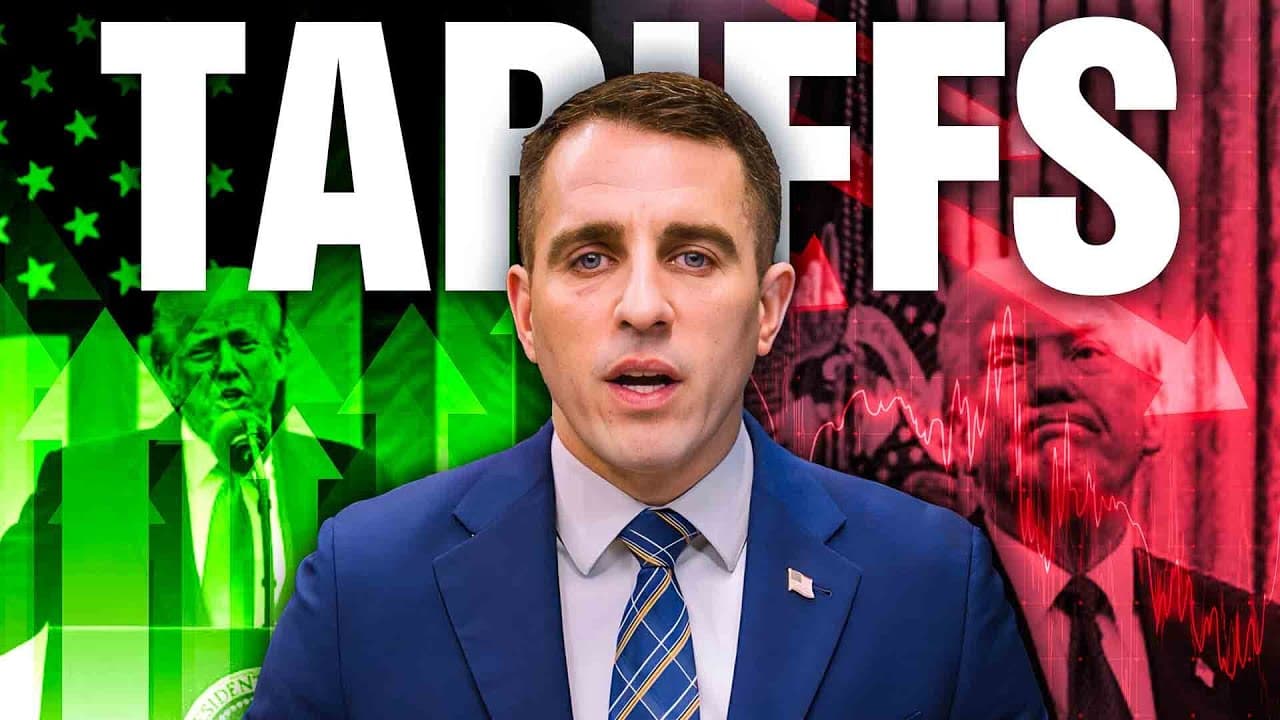
TL;DR
Trump's tariffs aim to protect American industries, boost government revenue, and revitalize domestic manufacturing. These policies respond to economic disparities faced by the working class while also seeking to negotiate better trade terms with foreign countries. The tariffs represent a strategic approach to fostering economic stability and growth.
Transcript
I've got a lot of friends that have been reaching out to me asking about tariffs. What are they? Why are they being implemented? How do they work? And what do I think is going to happen in the future? And so rather than answer all those text messages, phone calls, emails, and conversations, I thought I would just sit down and talk to you and explai... Read More
Key Insights
- 🌐 Tariffs serve multiple functions, such as generating government revenue, protecting nascent industries, and potentially reshaping global trade relationships.
- ✊ The financial experiences of different demographics in the U.S. reveal stark contrasts, with wealth accumulating among asset holders while working-class individuals struggle with diminishing purchasing power.
- ❓ A historical context is crucial in understanding current tariff policies; they have evolved from foundational economic principles to respond to globalization and competitive inequalities.
- 🙂 Economic strategies like reshoring manufacturing jobs have gained urgency in light of supply chain vulnerabilities exposed by events like the COVID-19 pandemic.
- 🏛️ The application of tariffs is not just an economic tool but a political strategy representing the voices and grievances of disillusioned working-class populations.
- ✋ Effective negotiation tactics, such as proposing high initial tariffs with the anticipation of compromise, are integral to the tariff implementation process.
- 🤑 Consumer behavior shifts once tariffs are enacted, as there are financial incentives to prefer American products over potentially more expensive imported ones.
Install to Summarize YouTube Videos and Get Transcripts
Explore YouTube Video Summarizer or Get YouTube Transcript Extractor
Questions & Answers
Q: What are tariffs, and how do they function in the U.S. economy?
Tariffs are taxes imposed on imported goods. The U.S. government employs them to increase the cost of foreign products entering the country, thereby encouraging consumers to buy American-made products. This helps generate revenue for the government and aims to protect domestic industries from foreign competition, ultimately aiming to create more American jobs.
Q: How have tariffs historically impacted the U.S. economy?
Historically, tariffs have been used to stimulate the growth of nascent U.S. industries and to fund government operations before income taxes were established. They played a critical role in the industrial revolution and have adapted over time, reflecting changing economic conditions and policy priorities, from protecting young industries to addressing globalization challenges.
Q: Why do some populations in the U.S. feel hurt by current economic policies, including tariffs?
Many working-class Americans lack investment assets and have seen the value of their dollar decrease over time, resulting in diminished purchasing power and increased living costs. This demographic often feels marginalized by a system that appears to favor the wealthy, leading to social unrest and a demand for protective measures like tariffs.
Q: What were the main objectives of Trump's tariffs as discussed in the content?
Trump's tariffs were designed with three key objectives: to generate revenue for the U.S. government, to gain leverage against foreign nations to lower their tariffs, and to reshore manufacturing jobs back to America. These policies are aimed at addressing trade imbalances and protecting American workers from unfair competition.
Q: What are the potential consequences of imposing tariffs on imported goods?
Imposing tariffs can lead to higher prices for consumers as the cost of goods increases. However, historical data suggest that prices can stabilize or decrease after an initial increase, as domestic production ramps up. Tariffs can protect local jobs, but they may also lead to trade wars, impacting international relations and domestic inflation.
Q: How do tariffs relate to the broader themes of economic inequality in the U.S.?
Tariffs are seen as a response to the growing inequality where the wealthy have succumbed to asset appreciation while the working class suffers due to devaluation of currency and rising costs. Implementing tariffs is a measure to protect and empower the working class, aiming to bridge the economic gap between different societal groups.
Summary & Key Takeaways
-
The implementation of tariffs seeks to protect American industries from overseas competition while generating revenue for the government, enhancing negotiation power with trade partners, and aiming to reshore domestic manufacturing jobs.
-
Tariffs have historical roots in U.S. policy, originating from the need to protect emerging industries and raise government funds, which has evolved into complex global trade dynamics creating disparity between socioeconomic classes.
-
Current economic challenges, such as rising costs for the working class and inflation, indicate the need for tariffs as potential mechanisms for revitalizing American manufacturing and providing relief to economically vulnerable populations.
Read in Other Languages (beta)
Share This Summary 📚
Summarize YouTube Videos and Get Video Transcripts with 1-Click
Try YouTube Summary with ChatGPT & Claude or YouTube Transcript Generator
Explore More Summaries from Anthony Pompliano 📚

Summarize YouTube Videos and Get Video Transcripts with 1-Click
Try YouTube Summary with ChatGPT & Claude or YouTube Transcript Generator