What Impact Did D. Shivanandan Have on Mumbai's Crime in the 90s?
TL;DR
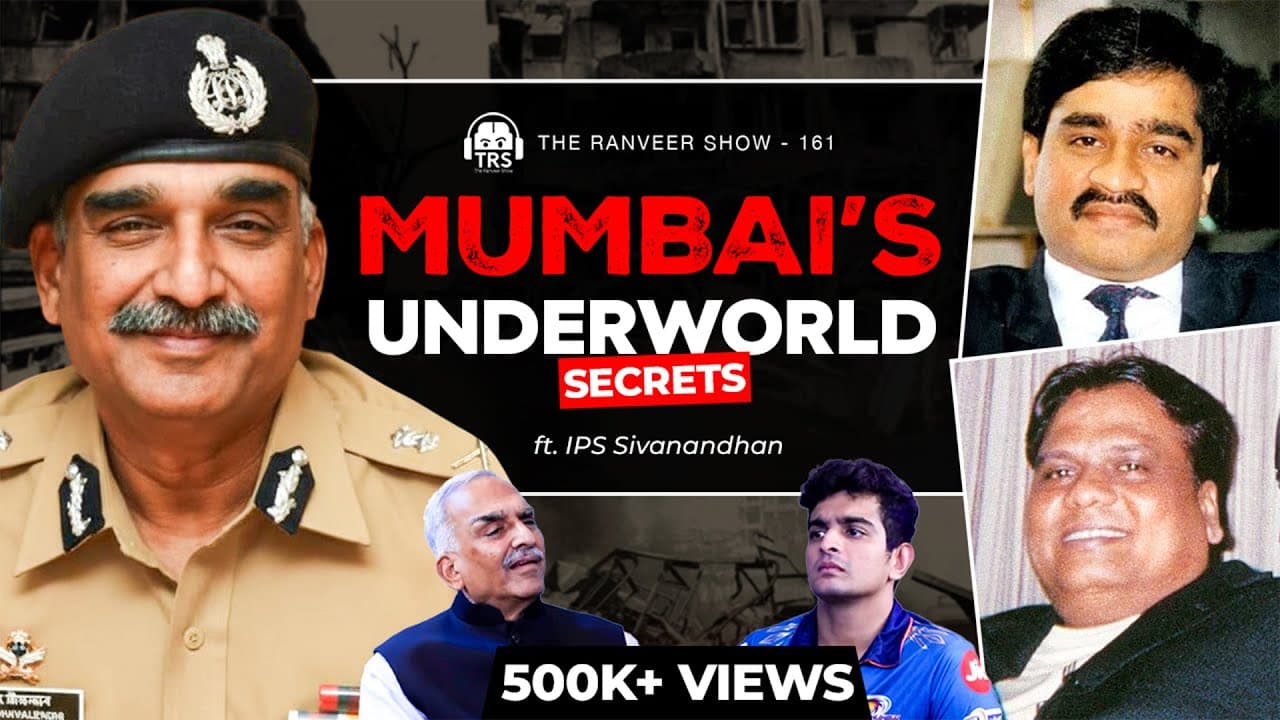
D. Shivanandan, as Joint Commissioner of Mumbai Police in the 90s, played a crucial role in significantly reducing violent crime and curtailing the underworld through strategic policing and intelligence strategies. His efforts, coupled with the Maharashtra Organized Crime Control Act, led to a dramatic decline in crime rates and enhanced public safety, marking a pivotal shift in law enforcement in the region.
Transcript
when you listen to this entire podcast you're going to look back and say holy hell this was one legendary episode because it featured a legend d shivanandan he served as the joint commissioner of the mumbai police he also served in the intelligence bureau and the cbi while he was serving in mumbai in 90s he was responsible for bringing down the mum... Read More
Key Insights
- 🖐️ D. Shivanandan played a pivotal role in reducing violent crime in Mumbai during the 90s by implementing strategic policing measures.
- 🥺 The introduction of the Maharashtra Organized Crime Control Act facilitated faster legal proceedings against organized criminals, leading to a decline in crime rates.
- 🙈 Geopolitics plays an integral role in India's security landscape, with Pakistan and China seen as significant threats to stability.
- 👶 Technology in policing is evolving, making it essential for law enforcement to adapt to new forms of cyber crime.
- 🍉 Education and socio-economic development are crucial to addressing root causes of crime and ensuring long-term safety.
- 🦺 The necessity for a disciplined and aware youth is emphasized as essential for a safer and more productive society.
- 🔒 Internal security challenges like Naxalism reflect deeper socio-economic issues that require systemic change in governance and development strategies.
Install to Summarize YouTube Videos and Get Transcripts
Explore YouTube Video Summarizer or Get YouTube Transcript Extractor
Questions & Answers
Q: What specific strategies did D. Shivanandan employ to combat the Mumbai underworld?
Shivanandan implemented several strategies including the use of electronic intelligence like telephone tapping, which allowed police access to gang plans. He also initiated Maharashtra's Organized Crime Control Act to expedite trials for criminal activities, thereby reducing crime rates significantly.
Q: How did the 1993 blasts change policing in India?
The 1993 blasts brought about significant changes in India's approach to terrorism and crime prevention. The police adopted a more proactive strategy, emphasizing intelligence gathering and coordination among various agencies to prevent future incidents.
Q: How does Shivanandan view the role of intelligence in modern policing?
Shivanandan stresses that intelligence is crucial for effective policing. His experience in the Intelligence Bureau taught him the importance of gathering and analyzing information to anticipate criminal activities and prevent them before they occur.
Q: What advice does Shivanandan have for the younger generation regarding crime and safety?
He emphasizes that understanding the historical context of crime in India is vital. Awareness about scams and the importance of hard work over shortcuts can help youth avoid becoming victims or contributors to crime.
Q: In what ways does Shivanandan believe technology impacts cyber crime?
He explains that technology is a double-edged sword; while it aids law enforcement, it also provides criminals with new tools for committing cyber crimes. Awareness and education about these threats are essential for the public.
Q: What challenges does India face regarding internal security and external threats?
Shivanandan points out that India's primary challenges stem from persistent threats from Pakistan, internal conflicts like Naxalism, and the looming influence of China, necessitating a comprehensive approach to security that includes socio-economic development.
Summary & Key Takeaways
-
D. Shivanandan, former Joint Commissioner of Mumbai Police, narrates his experiences in tackling the city's notorious underworld in the 90s. He highlights the rise of crime and the police's role in restoring order.
-
The episode delves into India's geopolitical challenges, particularly concerning Pakistan and China, emphasizing the need for robust internal security and economic growth.
-
Shivanandan showcases the impact of technology on policing, elaborating on intelligence gathering methods that shifted strategies used to combat organized crime.
Read in Other Languages (beta)
Share This Summary 📚
Summarize YouTube Videos and Get Video Transcripts with 1-Click
Try YouTube Summary with ChatGPT & Claude or YouTube Transcript Generator
Explore More Summaries from The Ranveer Show - All Episodes 📚

Summarize YouTube Videos and Get Video Transcripts with 1-Click
Try YouTube Summary with ChatGPT & Claude or YouTube Transcript Generator