Dynamic vs Condenser Mics: Which Should You Buy?
TL;DR
Understand the differences between dynamic and condenser microphones to choose the best one for your needs.
Transcript
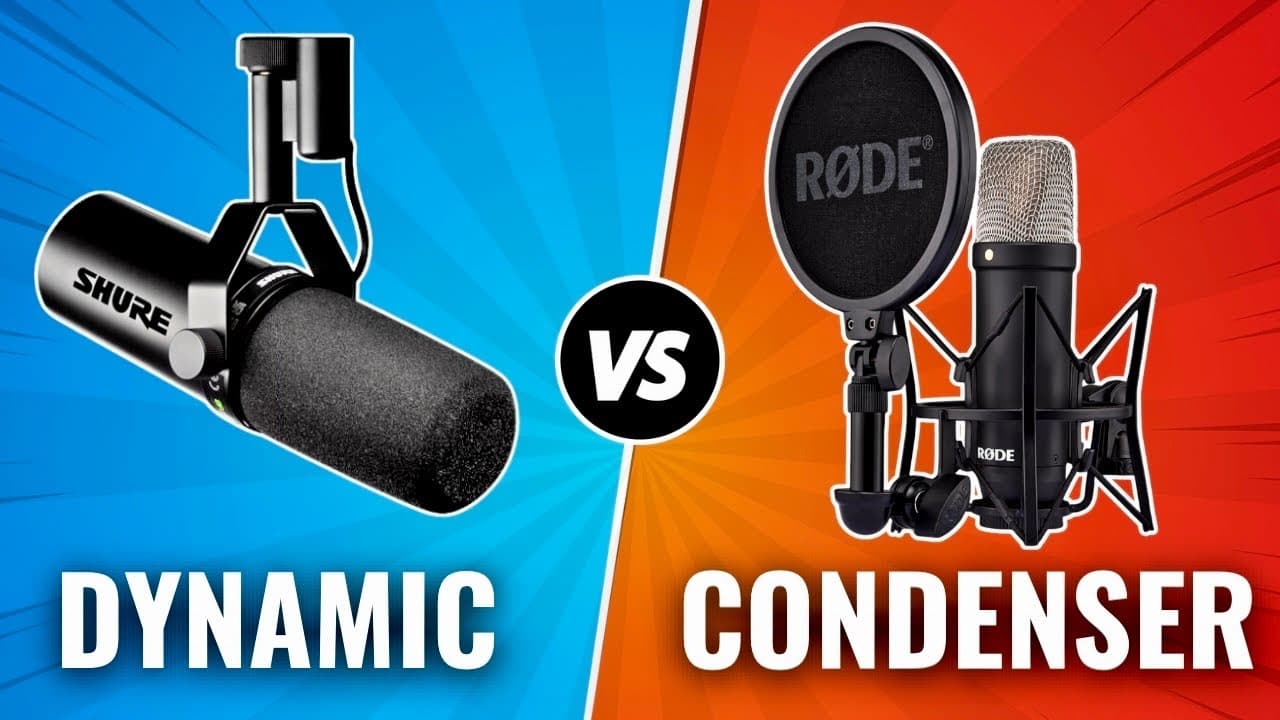
should you buy a dynamic mic or a condenser mic this is a very popular question amongst musicians content creators podcasters and voice over artists So today we're gonna talk about the main differences between both microphones to help you decide which one may be right for your home studio starting with Dynamic microphones if you ever listen to a ra... Read More
Key Insights
- 🫀 Dynamic mics are preferred in untreated environments due to their noise isolation and durability.
- 🤭 Condenser mics excel in capturing nuances but require quiet surroundings and phantom power.
- 🪡 The Shure SM7B is a top choice for professionals but needs a signal booster for optimal performance.
- 🎙️ Affordable entry-level microphones like the Shure SM57 and Rode PodMic are widely used in various recording applications.
- 👂 Acoustic treatment is vital for condenser mic performance, significantly enhancing sound quality.
- 👋 Understanding microphone types is essential for content creators and musicians to ensure the best audio experience.
- 🎙️ Each microphone has its strengths and weaknesses, so knowing your recording context is crucial for decision-making.
Install to Summarize YouTube Videos and Get Transcripts
Explore YouTube Video Summarizer or Get YouTube Transcript Extractor
Questions & Answers
Q: What are the primary benefits of using dynamic microphones?
Dynamic microphones offer excellent background noise rejection, making them suitable for untreated environments. They're also highly durable, which is advantageous for live performances. Additionally, they can handle high sound pressure levels, allowing them to record loud sounds accurately, such as drums and guitar amplifiers.
Q: Why are condenser microphones recommended for certain recordings?
Condenser microphones are recommended for their ability to pick up intricate details and provide a clearer sound representation. They're particularly effective for recording vocals and acoustic instruments due to their wider frequency response, especially in the high frequencies, making them ideal for capturing nuances in musical performances.
Q: What considerations should be made when choosing between dynamic and condenser microphones?
When choosing between the two, consider your recording environment and needs. If you're in an untreated room with potential background noise, a dynamic microphone might be best. However, if your setup has acoustic treatment and you want to capture detailed sound, a condenser microphone could provide superior results.
Q: Are there any recommended microphones for beginners with different budgets?
Yes, for dynamic microphones, options include the Shure SM57 for around $100 and the Shure MV7 for $200-300. For condensers, consider the Rode NT1 or Lewitt LCT 440 Pure, which cater to various price points while still delivering quality sound for beginners.
Summary & Key Takeaways
-
Dynamic microphones are durable, isolate audio sources well, and excel in untreated rooms but lack detail and require close placement.
-
Condenser microphones capture intricate details with a wider frequency range but are sensitive to background noise and need phantom power.
-
Depending on your room’s sound treatment and recording needs, either microphone type can be appropriate for various applications, from podcasts to music.
Read in Other Languages (beta)
Share This Summary 📚
Summarize YouTube Videos and Get Video Transcripts with 1-Click
Try YouTube Summary with ChatGPT & Claude or YouTube Transcript Generator
Explore More Summaries from Home Studio Academy 📚
Summarize YouTube Videos and Get Video Transcripts with 1-Click
Try YouTube Summary with ChatGPT & Claude or YouTube Transcript Generator