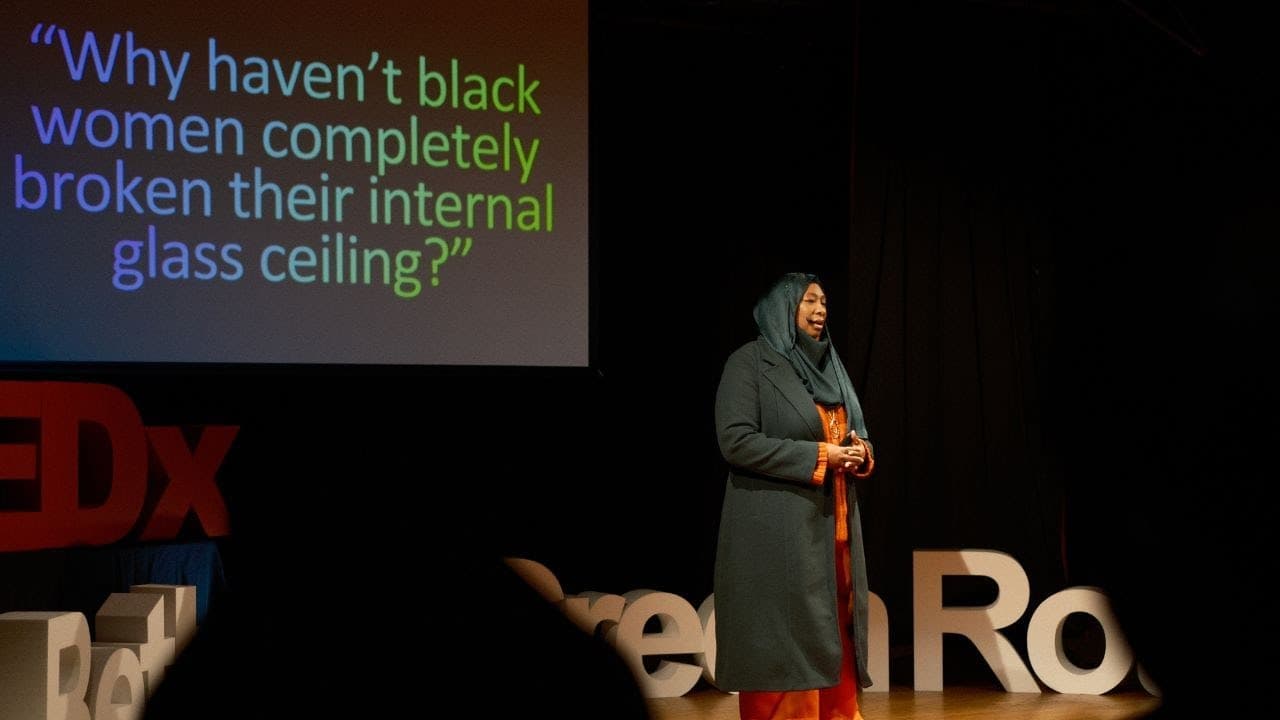
Rooted In Acceptance; Deconstructing Black Beauty Standards | Ameenah Shaw | TEDxBethnal Green Road
TL;DR
Black hair trauma stems from historical pathologization, leading to shame and insecurity in Black individuals.
Transcript
when I was about 12 years old in the pursuit of giving myself some baby hairs or what gen Z Now call edges I made a calculated decision I stood in my mirror I took a fine tooth comb and I parted a section of hair from ear to ear making sure it was exactly an inch in length all the way along my hairline I then took a pair of scissors and I cut this ... Read More
Key Insights
- 🖤 Historical pathologization of Black features underpins Black hair trauma.
- 🙂 Dr. Joy DeGruy's work sheds light on multigenerational trauma in Black communities.
- 🖤 Eurocentric beauty standards perpetuate feelings of shame and insecurity in Black individuals.
- 👩🦰 Black women's hair is a complex issue tied to identity and self-worth.
- 👩🦼 The salon chair serves as a sanctuary for Black women to discuss their struggles and transformations.
- 👩🦰 Black women navigate internalized shame and judgment regarding their hair.
- 👱 Natural hair journeys can be empowering but come with challenges.
Install to Summarize YouTube Videos and Get Transcripts
Explore YouTube Video Summarizer or Get YouTube Transcript Extractor
Questions & Answers
Q: What is the historical context behind Black hair trauma?
Black hair trauma is rooted in centuries of white medical experts pathologizing African features, leading to shame and insecurity in Black individuals.
Q: How does "post-traumatic slave syndrome" contribute to Black hair trauma?
Dr. Joy DeGruy's concept highlights the multigenerational trauma Black people endure, leading to internalized shame and judgment regarding their hair.
Q: How do Eurocentric beauty standards impact Black individuals' perception of their hair?
Eurocentric beauty standards perpetuate feelings of shame and insecurity in Black individuals, as they struggle to fit their hair into a narrow definition of beauty.
Q: Why is Black hair more than just a physical feature for many Black women?
Black hair is intertwined with identity and self-worth for Black women, as societal judgments and historical trauma shape their perceptions of beauty.
Summary & Key Takeaways
-
Originating from centuries of pathologization, Black hair trauma manifests as shame and insecurity.
-
Dr. Joy DeGruy coined the term "post-traumatic slave syndrome" to describe multigenerational trauma in Black communities.
-
Society's Eurocentric beauty standards perpetuate internalized shame and judgment regarding Black hair.
Read in Other Languages (beta)
Share This Summary 📚
Summarize YouTube Videos and Get Video Transcripts with 1-Click
Try YouTube Summary with ChatGPT & Claude or YouTube Transcript Generator
Explore More Summaries from TEDx Talks 📚



Summarize YouTube Videos and Get Video Transcripts with 1-Click
Try YouTube Summary with ChatGPT & Claude or YouTube Transcript Generator