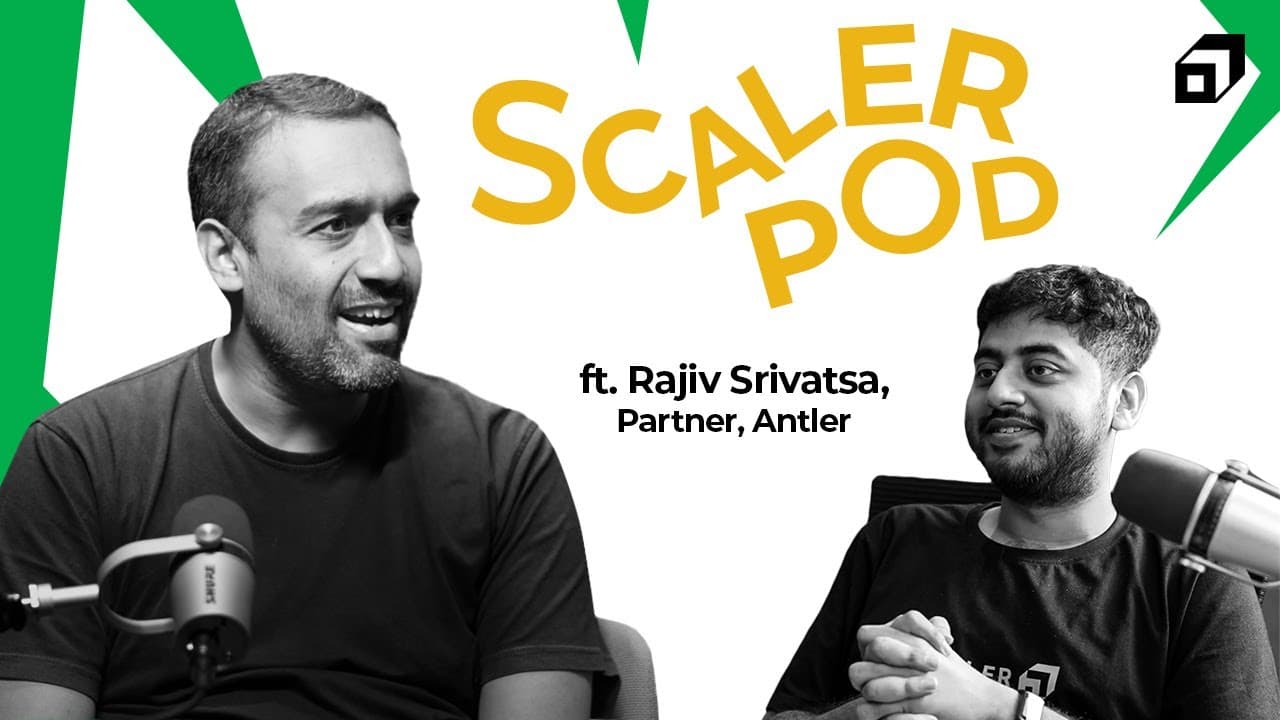
How to Build a Successful Startup? | Funding Insights from VC Rajiv Srivatsa, Antler | SCALER POD 15
TL;DR
Engineers considering entrepreneurship should evaluate their readiness, financial situation, and passion for creating a legacy. Finding a compatible co-founder and gaining relevant experience are crucial steps. It's important to start small, validate ideas, and gradually transition into early-stage startups before taking the leap to become a founder.
Transcript
most successful startups at least in the early years need at least two co-founders because this journey is very lonely it is it can shake you up a lot it means that it's better to go along with it with someone that you trust or are able to build trust and respect with which means 99 of the people who are graduating out of college should not become ... Read More
Key Insights
- ❓ Engineers considering entrepreneurship should evaluate their readiness, financial situation, and passion for creating a legacy.
- 🥶 Finding a compatible co-founder with aligned values and complementary skills is crucial for success.
- 😃 Transitioning from a big company to mid-stage and then early-stage startups can provide valuable experience and insights.
- 🛩️ Start small, validate ideas, and gradually transition into entrepreneurship to mitigate risks and gain confidence.
Install to Summarize YouTube Videos and Get Transcripts
Explore YouTube Video Summarizer or Get YouTube Transcript Extractor
Questions & Answers
Q: Why do most successful startups require at least two co-founders?
Having a co-founder helps in navigating the lonely and challenging journey of entrepreneurship. Co-founders can offer support, trust, and complementary skills, increasing the chances of success.
Q: Should I leave my job and start a startup if I don't have much financial savings?
It's important to have a financial safety net before starting a startup. Evaluate your personal finances and make sure you have enough savings to sustain yourself for at least one to two years without a stable income.
Q: How do I decide if an idea is worth turning into a startup?
Before diving into a startup, validate your idea by conducting market research, gathering customer feedback, and assessing the market demand. This will help you determine if your idea has potential and if there is a market for your product or service.
Q: Is it necessary to have prior experience at an early-stage startup before starting my own?
While prior experience at an early-stage startup can be valuable, it is not a strict requirement. However, gaining relevant experience in mid-stage startups can provide insights into entrepreneurship, team management, and the challenges of scaling a business.
Summary & Key Takeaways
-
Consider your readiness for the entrepreneurial journey, including technical skills, interpersonal skills, financial situation, and passion for creating a legacy.
-
Find a compatible co-founder who aligns with your values, vision, and complements your skills.
-
Gain relevant startup experience by working in mid-stage startups before diving into early-stage companies.
-
Start small, validate ideas, and gradually transition into entrepreneurship, focusing on market demand and customer interest.
Read in Other Languages (beta)
Share This Summary 📚
Summarize YouTube Videos and Get Video Transcripts with 1-Click
Try YouTube Summary with ChatGPT & Claude or YouTube Transcript Generator
Explore More Summaries from SCALER 📚

Summarize YouTube Videos and Get Video Transcripts with 1-Click
Try YouTube Summary with ChatGPT & Claude or YouTube Transcript Generator