The Worst Economy to Ever Exist: Zimbabwe
TL;DR
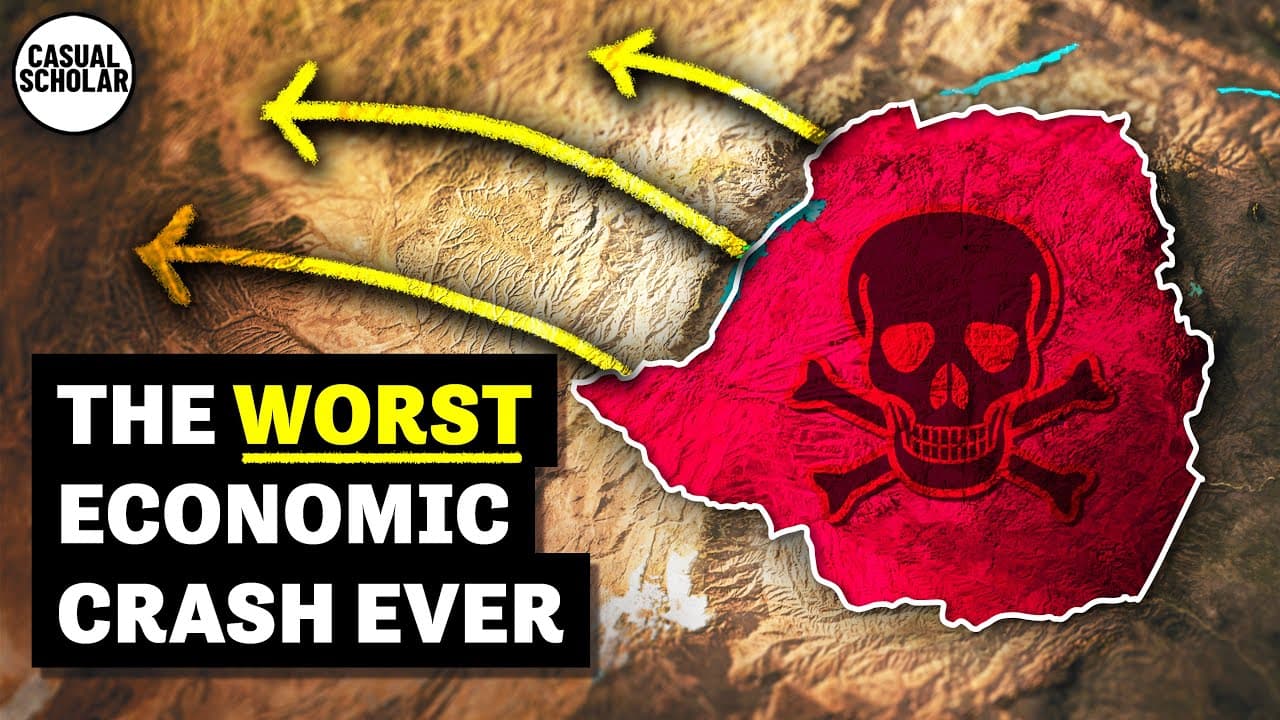
Zimbabwe, once one of Africa's wealthiest nations, experienced a devastating economic collapse marked by inflation, unemployment, and political corruption.
Transcript
it's July 2003 at a general hospital in Zimbabwe's third largest city security officers on a routine Patrol stumble across something bizarre a person is returning a corpse to the morgue upon investigating the officers uncover the disturbing secret the mortician and his assistant are not just preparing the dead they are also renting them out but tho... Read More
Key Insights
- 🇿🇼 Zimbabwe's economic collapse was a result of mismanagement, corruption, and misguided economic policies.
- 💨 The fast-track land reforms worsened the crisis by causing a collapse in the agricultural sector.
- 💄 Hyperinflation reached astronomical levels, making the Zimbabwean currency worthless.
- 😋 The consequences of the collapse were severe, including widespread unemployment, food shortages, and a crumbling healthcare system.
Install to Summarize YouTube Videos and Get Transcripts
Explore YouTube Video Summarizer or Get YouTube Transcript Extractor
Questions & Answers
Q: What led to Zimbabwe's economic collapse?
Zimbabwe's economic collapse was caused by a combination of factors, including mismanagement, corruption, and misguided economic policies. The government's decision to implement fast-track land reforms played a significant role in exacerbating the crisis.
Q: How did inflation reach such astronomical levels in Zimbabwe?
Inflation in Zimbabwe soared to 89.7 6 trillion percent, rendering the country's currency worthless. The government's excessive printing of money, coupled with limited productivity and economic decline, led to hyperinflation.
Q: What were the consequences of Zimbabwe's economic collapse?
The consequences of Zimbabwe's economic collapse were dire. Unemployment reached 94%, essential services crumbled, and the population suffered from widespread poverty, food shortages, and a deteriorating healthcare system.
Q: How did Zimbabwe attempt to stabilize its economy?
Zimbabwe attempted to stabilize its economy by introducing foreign currencies such as the US dollar, South African Rand, and the Euro as replacements for its own currency. This brought temporary stability, but subsequent mismanagement and political instability led to further economic decline.
Summary & Key Takeaways
-
In the early 2000s, Zimbabwe experienced an economic decline, leading to severe unemployment, blackouts, and a 94% inflation rate.
-
The collapse was caused by a combination of factors, including mismanagement, corruption, and misguided economic policies.
-
The government's decision to implement fast-track land reforms further exacerbated the crisis, leading to a collapse of the agricultural sector and widespread food shortages.
Read in Other Languages (beta)
Share This Summary 📚
Summarize YouTube Videos and Get Video Transcripts with 1-Click
Try YouTube Summary with ChatGPT & Claude or YouTube Transcript Generator
Explore More Summaries from Casual Scholar 📚

Summarize YouTube Videos and Get Video Transcripts with 1-Click
Try YouTube Summary with ChatGPT & Claude or YouTube Transcript Generator