How Do Camera Traps Capture Tiger Behavior?
TL;DR
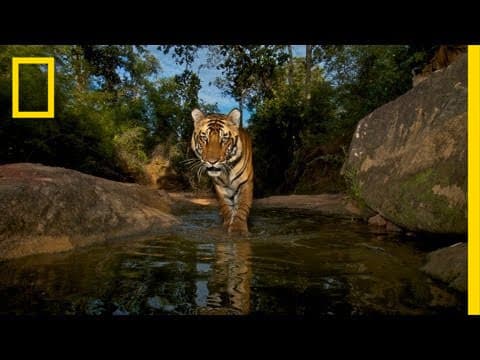
Camera traps are used to capture unexpected behaviors of tigers in the wild, providing unique insights into their natural activities without human interference. These non-invasive devices reveal surprising moments that can inspire a love for wildlife conservation and emphasize the importance of protecting these majestic animals.
Transcript
he is marking his territory now and we want to get a picture what it's like looking down at him while he's doing it but the claws right at the camera is what I want camera traps I put up because they're working while I'm doing other stuff and here's a beautiful image I put a camera trap in the middle of this water hole where there's a family of mot... Read More
Key Insights
- 💨 Camera traps offer a non-invasive way to capture wildlife behavior.
- 🐯 Tigers can be curious and destructive towards camera traps.
- 😀 Photographers face challenges and risks when using camera traps in wildlife habitats.
- 🥰 Images captured by camera traps can inspire a love for wildlife conservation.
- 🎥 Camera traps provide valuable data for conservation efforts.
- ❓ Wildlife photography requires patience and dedication.
- 😮 The element of surprise is a significant part of using camera traps.
Install to Summarize YouTube Videos and Get Transcripts
Explore YouTube Video Summarizer or Get YouTube Transcript Extractor
Questions & Answers
Q: How do camera traps help in capturing rare wildlife moments?
Camera traps are set up in wildlife habitats to capture animals in their natural behavior without human interference. This technology allows for rare and unexpected wildlife moments to be documented.
Q: What challenges do photographers face when using camera traps to capture wildlife?
Photographers have to deal with the risk of wildlife damaging or destroying the camera traps. Additionally, setting up camera traps in remote locations can be dangerous due to the presence of wild animals.
Q: What emotions do photographers experience when they review the images captured by camera traps?
Photographers feel a sense of excitement and gratitude when they come across unique and unexpected images captured by camera traps. Each photograph is like a gift that reveals the beauty of wildlife.
Q: How do camera traps contribute to conservation efforts for endangered species like tigers?
Camera traps provide valuable insights into the behavior and habitat of endangered species like tigers. By studying these images, conservationists can better understand and protect these animals.
Summary & Key Takeaways
-
Camera traps capture unexpected tiger behaviors in the wild.
-
Tigers are curious and sometimes destructive towards the camera traps.
-
Photographer values the unique images captured by the camera traps.
Read in Other Languages (beta)
Share This Summary 📚
Summarize YouTube Videos and Get Video Transcripts with 1-Click
Try YouTube Summary with ChatGPT & Claude or YouTube Transcript Generator
Explore More Summaries from National Geographic 📚




Summarize YouTube Videos and Get Video Transcripts with 1-Click
Try YouTube Summary with ChatGPT & Claude or YouTube Transcript Generator