Coinbase origin story | Brian Armstrong and Lex Fridman
TL;DR
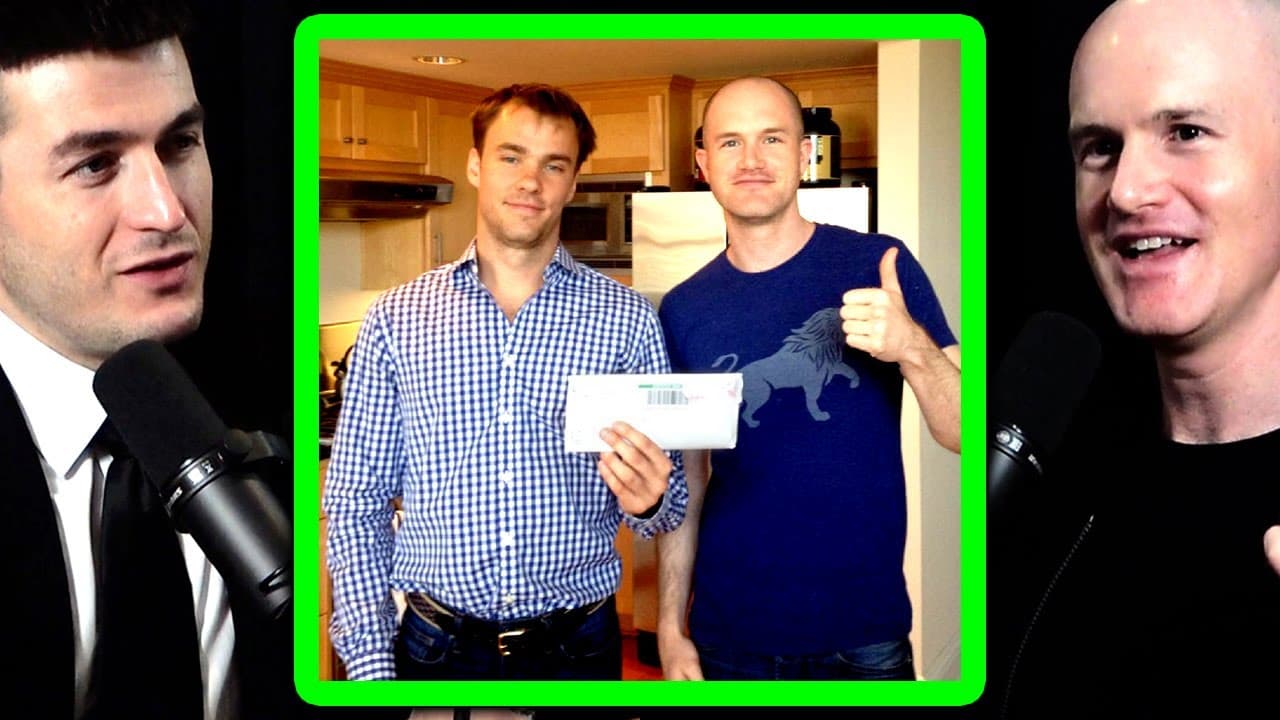
Coinbase founder recounts the journey from the first prototype to finding product-market fit, overcoming doubts and challenges.
Transcript
you started coinbase when bitcoin was ten dollars yeah um and you just mentioned an incredible system with security with transactions everything is thought through there's a lot going on but what was version one back in those early days the first prototype of coinbase what did that look like yeah like what what did it take to write it to think thro... Read More
Key Insights
- 🥺 Following gut instincts and passions can lead to groundbreaking ideas and successful entrepreneurial ventures.
- 💡 External validation from respected individuals or institutions can boost confidence and provide the necessary momentum to pursue an idea.
- ⚾ Understanding customer needs, seeking feedback, and iterating based on it are crucial for finding product-market fit.
- 🤘 Overcoming doubts and challenges is part of the entrepreneurial journey and can be a sign of growth and progress.
- 😥 Recognizing pain points and providing convenient solutions, like easy on-ramps, can significantly improve user experience and adoption.
- 🥳 The early days of a startup are often filled with uncertainty, self-doubt, and setbacks, but perseverance and determination can lead to success.
- 🐕🦺 Building partnerships, such as bank collaborations, is vital for facilitating financial transactions and expanding services.
Install to Summarize YouTube Videos and Get Transcripts
Explore YouTube Video Summarizer or Get YouTube Transcript Extractor
Questions & Answers
Q: How did the founder come up with the idea for Coinbase?
While working at Airbnb, the founder read the Bitcoin white paper and attended Bitcoin meetups, which led him to envision a hosted service that made Bitcoin easy to use and secure.
Q: What were the main concerns and doubts the founder faced during the early days?
Many friends thought Bitcoin was a scam and believed storing Bitcoin would lead to hacking risks. These doubts made the founder initially hesitant about pursuing Coinbase as a full-time business.
Q: How did Y Combinator's validation impact the founder's decision?
Y Combinator's investment of $150k provided the founder with external validation and the confidence to quit his job, pursue Coinbase full-time, and find a co-founder.
Q: What was the turning point for Coinbase in finding product-market fit?
After launching a buy Bitcoin feature and actively listening to user feedback, Coinbase started gaining traction and experiencing a steady increase in users, signaling product-market fit.
Summary & Key Takeaways
-
The founder started working on a prototype of Coinbase while still employed at Airbnb, following his gut feeling about the potential of Bitcoin.
-
Despite doubts from friends and concerns about security, he created a hosted Bitcoin wallet prototype and applied to Y Combinator for validation.
-
Paul Graham and Y Combinator's investment provided the confidence to quit his job, find a co-founder, and eventually achieve product-market fit by incorporating an easy buy Bitcoin feature.
Read in Other Languages (beta)
Share This Summary 📚
Summarize YouTube Videos and Get Video Transcripts with 1-Click
Try YouTube Summary with ChatGPT & Claude or YouTube Transcript Generator
Explore More Summaries from Lex Clips 📚



Summarize YouTube Videos and Get Video Transcripts with 1-Click
Try YouTube Summary with ChatGPT & Claude or YouTube Transcript Generator