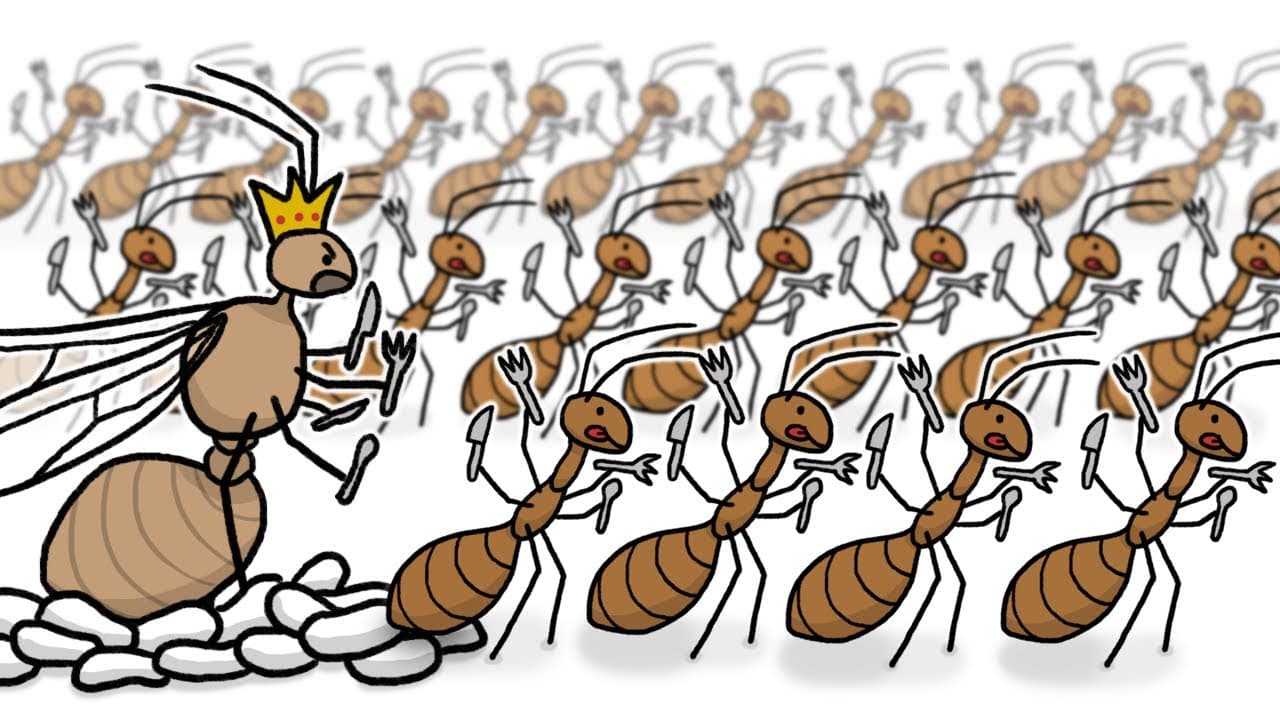
Invasion of the Yellow Crazy Ants!
TL;DR
Human activities introduce invasive species that disrupt ecosystems, costing billions and causing ecological chaos.
Transcript
Earth's ecosystems have always been changing, with species mixing and mingling thanks to migrations, freak events, and slow creeping expansions. But since we humans arrived on the scene, we've put things into fast-forward, moving plants, animals, and other organisms around the globe -- whether intentionally or not. Once in a while, one of these tra... Read More
Key Insights
- 🌐 Introduction of invasive species by human activities has accelerated disruptions in ecosystems on a global scale.
- 🧑⚕️ Invasive species not only threaten biodiversity but also impact agriculture, economies, and human health.
- 🎯 Effective management of invasive species requires a multi-faceted approach, including prevention, early detection, and targeted control strategies.
- 🇨🇫 Biosecurity measures and public awareness campaigns are essential in preventing the spread of invasive species.
- 🎮 Understanding the biology and behavior of invasive species is crucial for developing successful control and eradication methods.
- 🍉 Long-term management of invasive species requires continuous monitoring and adaptive strategies to prevent re-establishment.
- 🌐 Global cooperation and coordination are necessary to address the transboundary nature of invasive species spread.
Install to Summarize YouTube Videos and Get Transcripts
Explore YouTube Video Summarizer or Get YouTube Transcript Extractor
Questions & Answers
Q: How do invasive species impact ecosystems and biodiversity?
Invasive species disrupt ecosystems by outcompeting native species, leading to biodiversity loss and ecological imbalance. They can also cause harm to agriculture, fisheries, and human health.
Q: What are some examples of successful invasive species control measures?
Successful control measures for invasive species often involve a combination of strategies, such as targeted eradication methods, biological control agents, and habitat restoration efforts. For example, using specific baits to target ant populations can effectively reduce their numbers.
Q: Why is prevention crucial in managing invasive species?
Prevention is the most effective approach to managing invasive species because once established, they are difficult and costly to control. Preventing the introduction of invasive species through strict biosecurity measures can save ecosystems from irreversible damage.
Q: How can public awareness help in combating the spread of invasive species?
Public awareness campaigns can educate communities about the risks associated with invasive species and promote responsible behaviors to prevent their spread. Citizen science initiatives can also help in early detection and monitoring efforts.
Summary & Key Takeaways
-
Human activities have accelerated the spread of invasive species, leading to disruptions in ecosystems worldwide.
-
Invasive species pose a threat to biodiversity, agriculture, and economies, costing billions of dollars in control measures.
-
Effective management of invasive species requires a deep understanding of their biology and behavior to prevent further harm.
Read in Other Languages (beta)
Share This Summary 📚
Summarize YouTube Videos and Get Video Transcripts with 1-Click
Try YouTube Summary with ChatGPT & Claude or YouTube Transcript Generator
Explore More Summaries from MinuteEarth 📚




Summarize YouTube Videos and Get Video Transcripts with 1-Click
Try YouTube Summary with ChatGPT & Claude or YouTube Transcript Generator