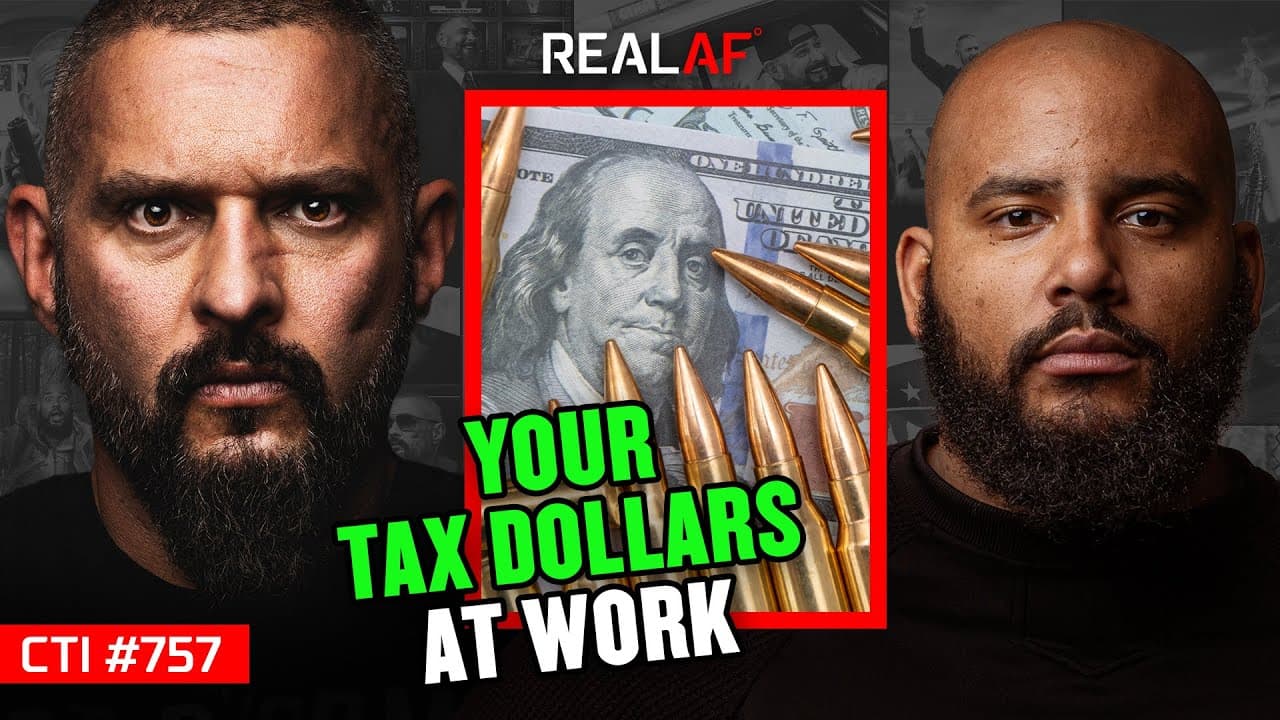
The Truth Behind Why They Really Want A War - Ep 757 CTI
TL;DR
Discussion on war, economy, and political deception.
Transcript
and I think most of the middle class and most of the people who actually work for a living and pay most of the tax in this country agree they don't want to pay tax for us to go to war over the Middle East they don't want to pay tax for us to go to war over in Ukraine no regular people want this war politicians want this war because they own stocks ... Read More
Key Insights
- The podcast criticizes U.S. politicians for prioritizing wars for financial gains, highlighting the detrimental impact on American families and soldiers.
- The hosts discuss the manipulation of public perception through media and political narratives, emphasizing the importance of critical thinking.
- Concerns about the U.S. economy's instability are raised, pointing to discrepancies between political claims and economic realities.
- The discussion touches on the complex geopolitical tensions involving the U.S., Israel, and Iran, questioning the motivations behind military actions.
- The podcast critiques identity politics, arguing that decisions should be based on policies rather than race or gender.
- The influence of political lobbying and financial interests on U.S. foreign policy is highlighted as a major issue.
- The hosts express skepticism about mainstream media narratives, urging listeners to seek diverse perspectives.
- The podcast emphasizes the need for American self-reliance and prioritizing domestic issues over foreign interventions.
Install to Summarize YouTube Videos and Get Transcripts
Explore YouTube Video Summarizer or Get YouTube Transcript Extractor
Questions & Answers
Q: Why do politicians support wars according to the podcast?
Politicians support wars for financial gains, as they often own stocks in defense companies like Lockheed Martin and Raytheon. These wars provide them with kickbacks and financial benefits, while American soldiers and taxpayers bear the cost. The hosts argue that this is detrimental to American families and soldiers.
Q: How do the hosts view the U.S. economy?
The hosts express concerns about the U.S. economy's instability, highlighting discrepancies between political claims and economic realities. They argue that the economy is not as strong as politicians claim, with rising debt, credit card defaults, and inflation affecting American families. They criticize the manipulation of economic data to create a false sense of stability.
Q: What is the podcast's stance on identity politics?
The podcast criticizes identity politics, arguing that policy decisions should be based on merit and effectiveness rather than race or gender. The hosts believe that focusing on identity can lead to poor decision-making and distract from addressing critical issues affecting all Americans, such as economic stability and national security.
Q: What are the hosts' views on U.S. foreign policy?
The hosts are critical of U.S. foreign policy, particularly its involvement in Middle Eastern conflicts. They argue that foreign interventions are often driven by financial interests and political lobbying rather than genuine national security concerns. The podcast emphasizes the need for the U.S. to focus on domestic issues and reduce foreign entanglements.
Q: How do the hosts perceive media narratives?
The hosts are skeptical of mainstream media narratives, suggesting that they often manipulate public perception to serve political agendas. They urge listeners to critically evaluate information and seek diverse perspectives to understand the full scope of political and economic issues. The podcast calls for more transparency and accountability in media reporting.
Q: What concerns do the hosts have about geopolitical tensions?
The hosts express concerns about escalating geopolitical tensions involving the U.S., Israel, and Iran. They question the motivations behind military actions and criticize the influence of political lobbying on foreign policy decisions. The podcast warns against unnecessary military interventions that could lead to broader conflicts.
Q: What is the podcast's perspective on American self-reliance?
The podcast emphasizes the importance of American self-reliance, advocating for prioritizing domestic issues over foreign interventions. The hosts argue that the U.S. should focus on strengthening its economy, infrastructure, and social systems to ensure a stable and prosperous future for its citizens. They believe that self-reliance is key to national security and economic resilience.
Q: How do the hosts view political lobbying?
The hosts criticize political lobbying, particularly by powerful organizations like AIPAC, for influencing U.S. foreign policy decisions. They argue that lobbying often prioritizes the interests of foreign nations over American citizens, leading to policies that do not benefit the U.S. The podcast calls for greater transparency and accountability in political decision-making.
Summary & Key Takeaways
-
The podcast episode discusses the motivations behind U.S. involvement in foreign wars, particularly focusing on financial interests and the impact on American soldiers and taxpayers. The hosts criticize politicians for prioritizing their financial gains over the well-being of the American people.
-
The discussion highlights the manipulation of public perception through political narratives and media, urging listeners to critically evaluate information. The hosts express concerns about the U.S. economy's instability, pointing out discrepancies between political claims and economic realities.
-
Geopolitical tensions involving the U.S., Israel, and Iran are explored, questioning the motivations behind military actions. The hosts criticize identity politics, arguing for policy-based decisions rather than those based on race or gender. They emphasize the need for American self-reliance and prioritizing domestic issues.
Read in Other Languages (beta)
Share This Summary 📚
Summarize YouTube Videos and Get Video Transcripts with 1-Click
Try YouTube Summary with ChatGPT & Claude or YouTube Transcript Generator
Explore More Summaries from Andy Frisella 📚


Summarize YouTube Videos and Get Video Transcripts with 1-Click
Try YouTube Summary with ChatGPT & Claude or YouTube Transcript Generator