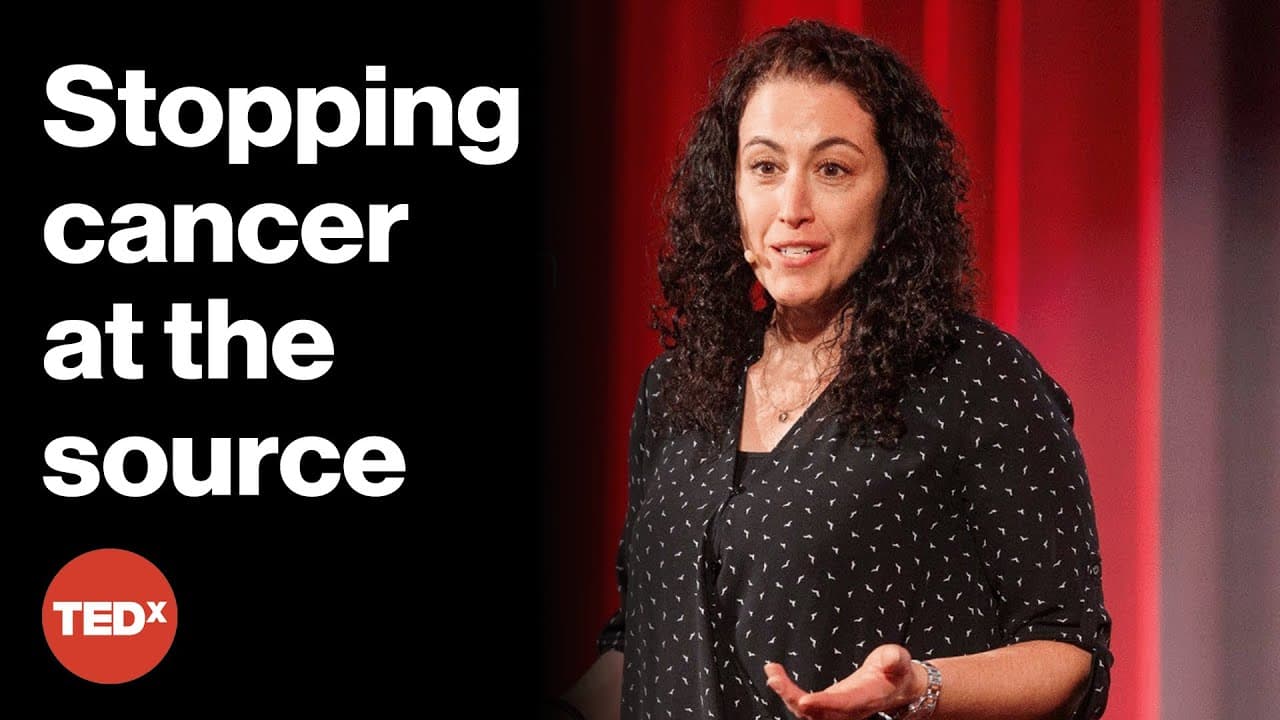
How our changing DNA keeps us alive | Linda Chelico | TEDxUniversityofSaskatchewan
TL;DR
Our DNA changes every day due to external and internal factors, leading to mutations that can be both beneficial and detrimental. Understanding how these mutations occur and their impact on biology and cancer is crucial.
Transcript
[Applause] thank you m DNA it is sometimes called the blueprint of life I'm sure we've all heard that before well in some ways it is true you can't change your eye color for example but in many ways it really isn't our DNA changes every day DNA is actually getting damaged every day by external factors like UV rays from the Sun or internal factors l... Read More
Key Insights
- 🥳 DNA changes every day due to external and internal factors, leading to mutations that can have both positive and negative effects.
- 👻 Mutations are crucial for beneficial evolution, allowing organisms to adapt and survive in changing environments.
- 🖐️ Apel Beck proteins induce mutations in DNA, playing a role in our immune response and cancer development.
- 👶 Understanding the paths and outcomes of Apel Beck-induced mutations can guide the development of new cancer treatments.
Install to Summarize YouTube Videos and Get Transcripts
Explore YouTube Video Summarizer or Get YouTube Transcript Extractor
Questions & Answers
Q: How does DNA get damaged, and can it always be repaired?
DNA can get damaged by external factors like UV rays and internal factors like chemicals. While DNA repair proteins can fix most of the damage, some mutations can't be repaired.
Q: What is the role of mutations in beneficial evolution?
Mutations are essential for beneficial evolution as they result in genetic variations that allow organisms to adapt and survive in changing environments. However, mutations can also lead to diseases like cancer.
Q: How do Apel Beck proteins induce mutations, and what is their function?
Apel Beck proteins randomly induce mutations in DNA, and surprisingly, most of the time, it works in our best interest. They play a crucial role in our immune response, helping us make better antibodies to fight infections.
Q: How do Apel Beck-induced mutations affect cancer development?
Apel Beck-induced mutations are found in approximately 75% of cancer types. The impact of these mutations varies, sometimes causing cancer cell catastrophe, killing the cells, or helping the cancer cells evolve. Understanding these paths can lead to new cancer treatments.
Summary & Key Takeaways
-
DNA gets damaged every day by external factors like UV rays and internal factors like chemicals, leading to mutations that can't always be repaired.
-
Mutations can cause beneficial evolution in some situations, but they can also lead to diseases like cancer when DNA repair proteins don't work properly.
-
Humans and other organisms have evolved proteins, like Apel Beck, that deliberately induce DNA damage and mutations to adapt and survive in uncertain situations.
Read in Other Languages (beta)
Share This Summary 📚
Summarize YouTube Videos and Get Video Transcripts with 1-Click
Try YouTube Summary with ChatGPT & Claude or YouTube Transcript Generator
Explore More Summaries from TEDx Talks 📚



Summarize YouTube Videos and Get Video Transcripts with 1-Click
Try YouTube Summary with ChatGPT & Claude or YouTube Transcript Generator