LITERATURE - Edward Gibbon
TL;DR
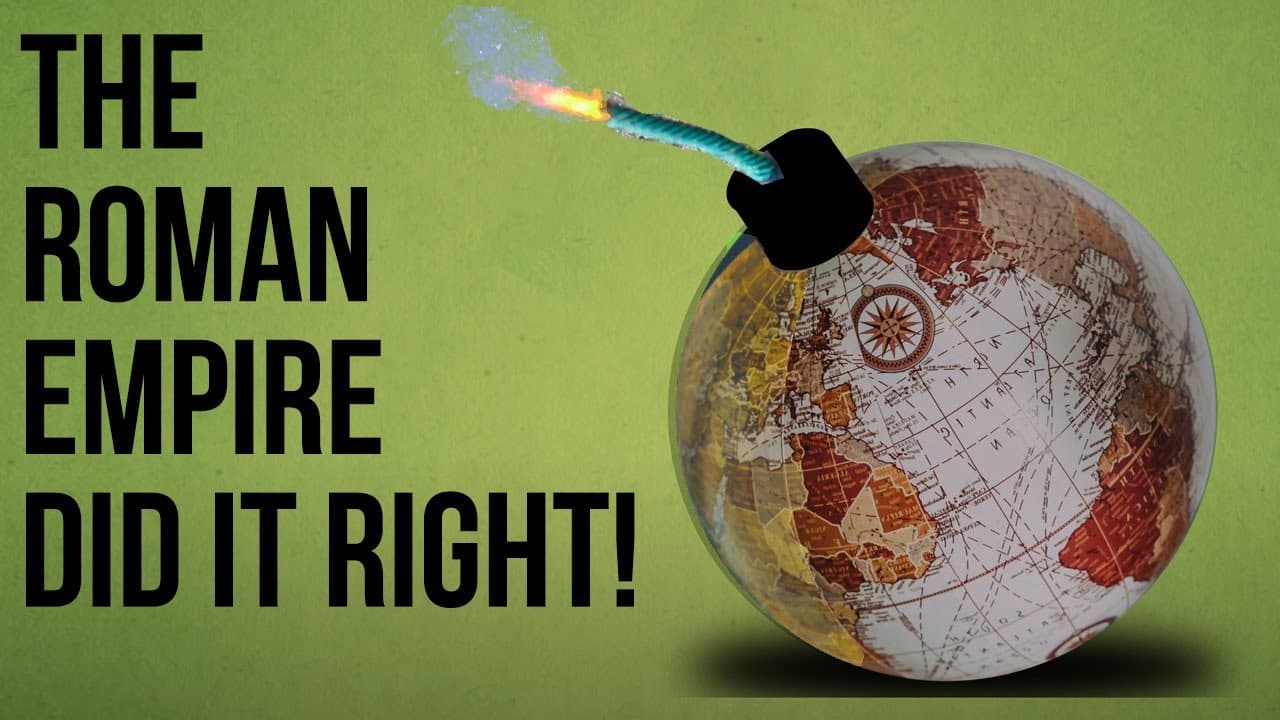
Edward Gibbon's "The History of the Decline and Fall of the Roman Empire" provides a historical perspective that reminds us that societal troubles and the decline of civilizations are not unique to our time.
Transcript
the news is often determined to tell us that we live in uniquely critical times beset by political disasters and afflicted by terrible crises and that the demise of human civilization is surely imminent we're encouraged by the media to view the world and our own lives in Bleak apocalyptic terms oddly history can be powerfully consoling at such mome... Read More
Key Insights
- 🎗️ History provides a consoling perspective and reminds us that societal troubles are not unique to our generation.
- 💋 The decline of the Roman Empire was marked by various challenges, including despotic rulers and invasions.
- 👶 Renewal and new forces often develop in the background during times of decline.
- 🧑🌾 The fall of the Roman Empire had far-reaching impacts, benefiting other regions.
- 💦 Gibbon's work highlights the cyclical nature of history and offers solace and perspective in troubled times through his classical prose.
- 🍂 The decline and fall of civilizations are prolonged processes, often unnoticed in their early stages.
- 🎚️ The gradual process of renewal and elevation is often overshadowed by surface-level disasters.
Install to Summarize YouTube Videos and Get Transcripts
Explore YouTube Video Summarizer or Get YouTube Transcript Extractor
Questions & Answers
Q: How does Edward Gibbon's work provide a different perspective on our current societal troubles?
Gibbon's work shows that large societal problems and the decline of civilizations are not unique to our time, reminding us of the cyclical nature of history. It encourages us to view current troubles with a less apocalyptic lens.
Q: What are some of the challenges that the Roman Empire faced during its decline?
The challenges faced by the Roman Empire included despotic rulers, barbarian invasions, corrupt institutions, loss of control over the army, plagues, economic decline, factionalism, and abandonment of significant landmarks like the Roman Forum.
Q: How did the fall of the Roman Empire impact other regions?
The fall of the Roman Empire benefitted the city-state of Venice, which became highly revered. Additionally, scholars fled to the West, leading to the Renaissance. The northern tribes feared by the Romans eventually became influential in various fields, such as Danish interior design, German intellectualism, and Scottish architecture.
Q: How does Gibbon's writing style contribute to the understanding of Roman history?
Gibbon's classical prose, quiet dignity, and sense of balance in his writing reflect the very essence of the Roman Empire he discusses. His reflections on historical disasters provide solace and perspective when faced with troubling news.
Summary & Key Takeaways
-
Edward Gibbon's "The History of the Decline and Fall of the Roman Empire" covers 1,500 years of Roman history, showcasing the decline and collapse of the empire.
-
The Roman Empire faced numerous challenges, including mad despotic Emperors, invasions by Barbarians, corrupt institutions, plagues, economic collapse, and loss of control over the army.
-
Despite the empire's ultimate fall, the world did not end, and new forces and renewal emerged in the background.
Read in Other Languages (beta)
Share This Summary 📚
Summarize YouTube Videos and Get Video Transcripts with 1-Click
Try YouTube Summary with ChatGPT & Claude or YouTube Transcript Generator