A rocket engine that doesn't need fuel would be a game changer | Natalya Bailey and Lex Fridman
TL;DR
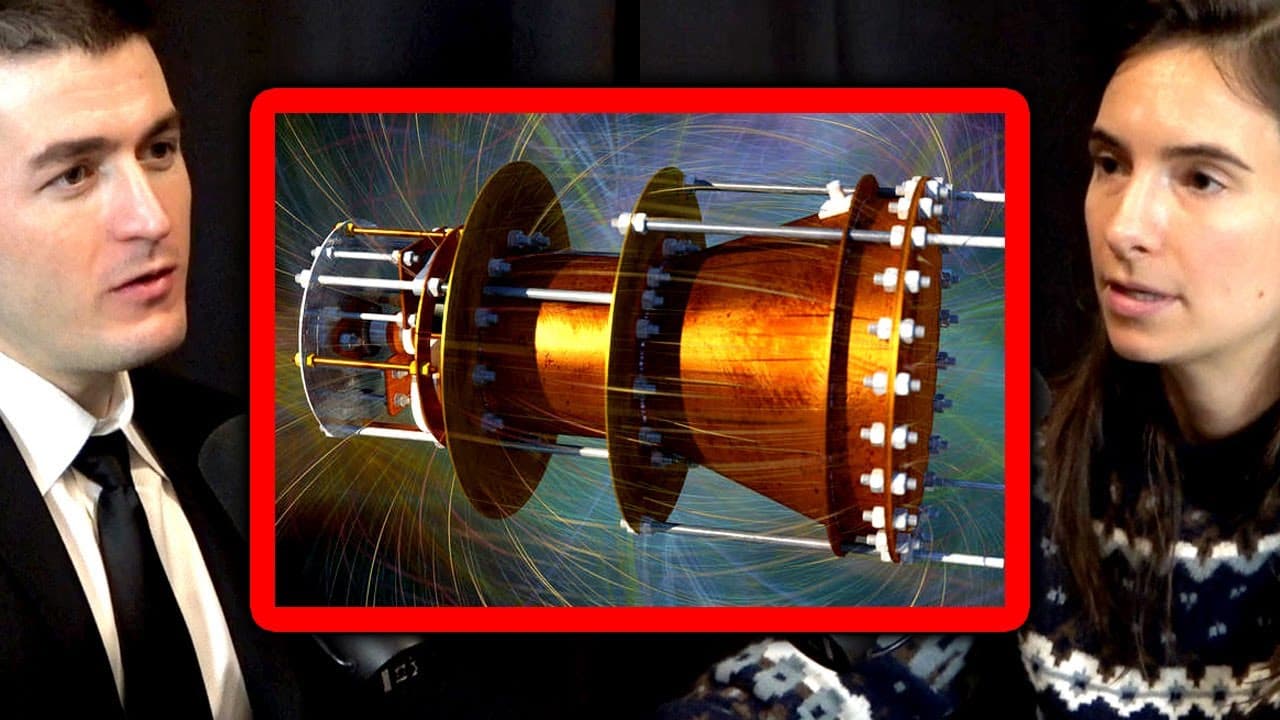
The discussion explores current and potential propulsion methods, including propellant-less propulsion, ion engines, and the debunked concept of the m-drive.
Transcript
so we talked about two uh different forms of propulsion which are super exciting so the chemical based that's doing pretty well and then the electric base is um are there types of propulsion that might sound like science fiction right now but are actually within the reach of science in the next 10 20 30 50 years that you kind of think about or mayb... Read More
Key Insights
- ⚾ Chemical-based and electric-based propulsion methods are currently the most prevalent in space travel.
- 🖤 Propellant-less propulsion, while highly desirable, still lacks a clear scientific understanding and practical implementation.
- 🌎 The m-drive concept, initially showing promise, was later debunked due to inconsistencies in its experimental results.
- 🥺 Further research and breakthroughs in physics may lead to the development of new propulsion methods beyond our current understanding.
- ❓ Exploration of concepts like the Casimir effect could provide insights into potential propellant-less forces.
- 🔋 Power sources for propellant-less propulsion systems can vary, ranging from traditional batteries to advanced energy generation techniques.
- 👾 Continued experimentation and collaboration between researchers and space agencies are crucial for advancing propulsion technology.
Install to Summarize YouTube Videos and Get Transcripts
Explore YouTube Video Summarizer or Get YouTube Transcript Extractor
Questions & Answers
Q: What is propellant-less propulsion, and why is it considered a game changer?
Propellant-less propulsion refers to a propulsion system that doesn't require carrying or finding propellant. This would revolutionize space travel by eliminating the need for refueling or resource extraction, greatly expanding our exploration capabilities.
Q: Can you explain the Casimir effect as a potential propellant-less force?
The Casimir effect involves using the fluctuating vacuum energy between two closely spaced plates to generate a force. If harnessed properly, this phenomenon could provide a propellant-less propulsion method, although further research and understanding are necessary.
Q: What was the m-drive concept, and why was it debunked?
The m-drive claimed to produce thrust by using microwaves inside a resonant cavity. While early experiments showed promising results, further testing revealed inconsistencies, suggesting that the measured thrust was influenced by external factors and not a genuine propellant-less propulsion breakthrough.
Q: What are the power sources for propellant-less propulsion systems?
Power sources for propellant-less systems can vary. The m-drive concept relied on batteries or solar panels to generate microwaves, while other potential methods may require more advanced energy generation techniques such as nuclear power or novel energy conversion methods.
Summary & Key Takeaways
-
Two main forms of propulsion are discussed: chemical-based and electric-based, both showing promise.
-
Propellant-less propulsion is considered the ultimate game changer in the field, although the physics behind it remain unclear.
-
The m-drive, a concept that claimed to generate thrust using microwaves, was debunked due to inconsistencies in its experimental results.
Read in Other Languages (beta)
Share This Summary 📚
Summarize YouTube Videos and Get Video Transcripts with 1-Click
Try YouTube Summary with ChatGPT & Claude or YouTube Transcript Generator
Explore More Summaries from Lex Clips 📚


Summarize YouTube Videos and Get Video Transcripts with 1-Click
Try YouTube Summary with ChatGPT & Claude or YouTube Transcript Generator