ネイティブがよく使うI think 以外の5つの表現!〔#661〕
TL;DR
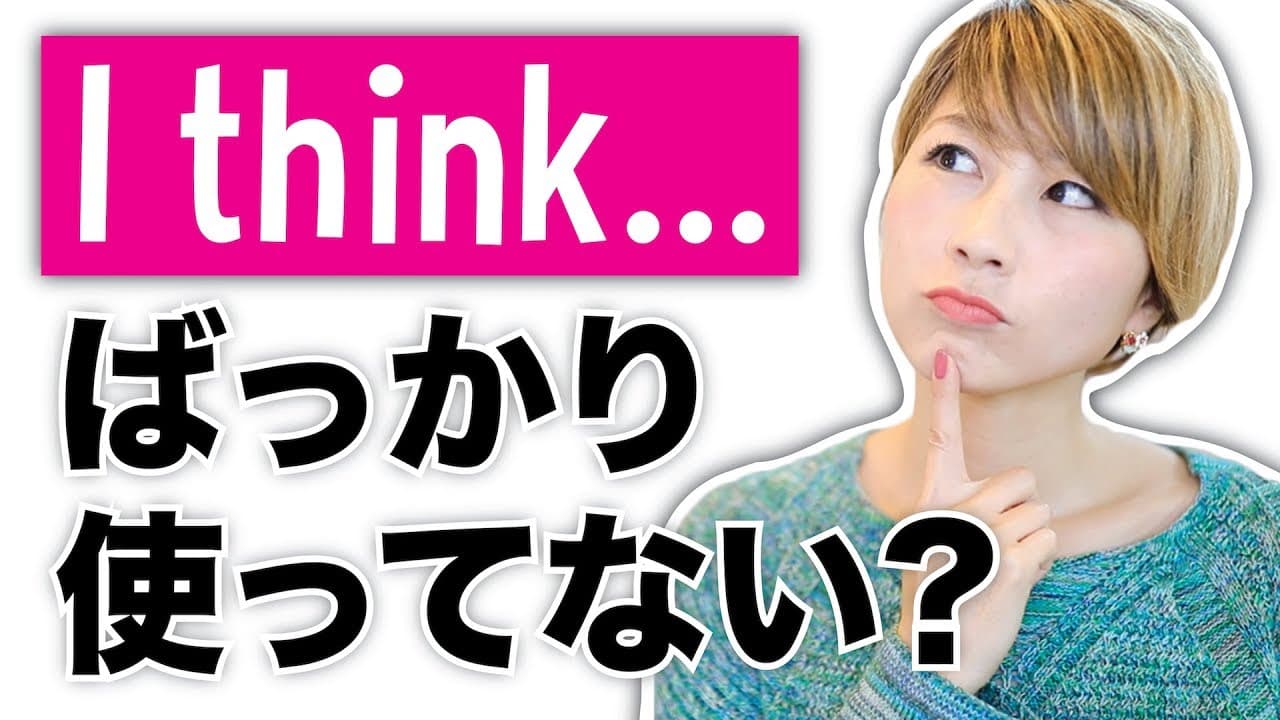
Learn five expressions to replace 'I think' in English.
Transcript
hey guys it's Jacob - on colony - Attica this Joe ah I think a guy needs Kyra it's not your game oh yes they don't weigh much I believe I assume I imagine I'm guessing I figure what he ducks I mean not at all mom this get it all come on you I took the advanced not pay my debt what sheikhoo dada da gávea penita Pitino or stick that site right guys a... Read More
Key Insights
- The video introduces five expressions to use instead of 'I think': I believe, I assume, I imagine, I'm guessing, and I figure.
- Each expression has a slightly different nuance, allowing for more precise communication in English.
- The expressions are commonly used by native speakers, making them valuable for learners to understand and incorporate.
- I believe conveys a stronger conviction than 'I think' and is used when the speaker has more confidence in their statement.
- I assume implies a conclusion based on available information, often without concrete evidence.
- I imagine is used to express a creative or speculative thought, often without any basis in fact.
- I'm guessing indicates a lack of certainty and is often used when making an educated guess.
- I figure suggests reasoning or calculating based on the information at hand, often used in problem-solving contexts.
Install to Summarize YouTube Videos and Get Transcripts
Explore YouTube Video Summarizer or Get YouTube Transcript Extractor
Questions & Answers
Q: What are the five alternative expressions to 'I think' discussed in the video?
The video discusses five alternative expressions to 'I think': I believe, I assume, I imagine, I'm guessing, and I figure. These expressions offer different nuances and levels of certainty, allowing speakers to convey their thoughts more precisely in various contexts.
Q: How does 'I believe' differ from 'I think'?
'I believe' differs from 'I think' in that it conveys a stronger sense of conviction or confidence. When someone says 'I believe,' they are expressing a higher level of certainty about their statement, suggesting that they have more evidence or assurance backing their opinion.
Q: When should 'I assume' be used instead of 'I think'?
'I assume' should be used instead of 'I think' when the speaker is drawing a conclusion based on available information, often without solid evidence. It implies a level of uncertainty and is used when the speaker is making an educated guess or inference.
Q: What is the nuance of using 'I imagine'?
Using 'I imagine' introduces a speculative or creative thought, often without any factual basis. It suggests that the speaker is considering a scenario or possibility that is not necessarily grounded in reality, making it suitable for hypothetical or imaginative discussions.
Q: In what context is 'I'm guessing' appropriate?
'I'm guessing' is appropriate in contexts where the speaker lacks certainty and is making an educated guess. It indicates that the speaker is unsure about the information they are providing and is relying on intuition or limited knowledge to form a conclusion.
Q: How is 'I figure' typically used?
'I figure' is typically used when the speaker is reasoning or calculating based on the information they have. It suggests a process of deduction or problem-solving and is often used in contexts where the speaker is trying to work out a solution or make sense of a situation.
Q: What additional expressions are mentioned in the description?
In addition to the five main expressions, the description mentions 'I bet,' 'I suppose,' and 'I reckon' as alternatives. 'I bet' is used for confident guesses, 'I suppose' is a weaker expression for tentative thoughts, and 'I reckon' is more common in British and Australian English.
Q: How does the video suggest these expressions can improve communication?
The video suggests that using these expressions can improve communication by allowing speakers to express their thoughts with greater precision. By choosing the right expression for the context, learners can convey different levels of certainty and nuance, enhancing their ability to engage in more effective and meaningful conversations.
Summary & Key Takeaways
-
The video provides five alternatives to 'I think' for more nuanced expression: I believe, I assume, I imagine, I'm guessing, and I figure. Each expression has a unique implication and is frequently used by native speakers.
-
I believe is for confident statements, while I assume is for conclusions based on incomplete information. I imagine is speculative, I'm guessing shows uncertainty, and I figure involves reasoning.
-
These expressions help learners communicate more effectively by choosing the right phrase for the context, enhancing their conversational skills in English.
Read in Other Languages (beta)
Share This Summary 📚
Summarize YouTube Videos and Get Video Transcripts with 1-Click
Try YouTube Summary with ChatGPT & Claude or YouTube Transcript Generator
Explore More Summaries from バイリンガール英会話 | Bilingirl Chika 📚






Summarize YouTube Videos and Get Video Transcripts with 1-Click
Try YouTube Summary with ChatGPT & Claude or YouTube Transcript Generator