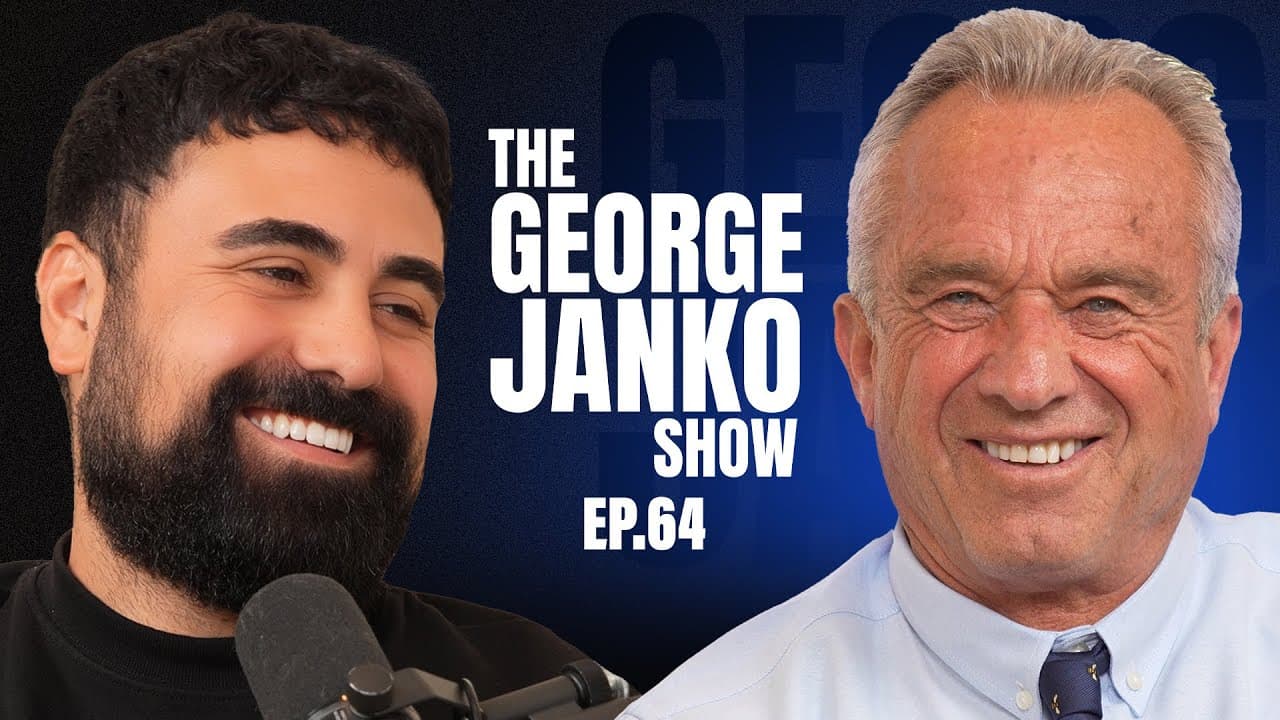
RFK Jr. On Family Betrayal, Biden Being Bought & Ending Corruption | EP. 64
TL;DR
Robert Kennedy Jr. shares insights on politics, social issues, and his presidential campaign aspirations.
Transcript
are you not nervous what gives you the confidence to speak like this towards your country and really put them on the spotlight what's the point of being here if you're not going to tell the truth people came to schools with their rifles was anybody ever a threat no I have to ask a question it's just super uncomfortable to ask go ahead if you don't ... Read More
Key Insights
- 🥶 Kennedy highlights the significance of free speech as fundamental to democracy, particularly during times of crisis.
- 🫵 His family's legacy and political history deeply influence his views and aspirations for the presidency.
- 💗 There is a growing concern over the impact of mass shootings, with Kennedy advocating for a nuanced discussion around gun rights and cultural values.
- 🙈 Drug addiction and mental health issues are seen as critical areas for national intervention, with a call for expanded rehabilitation services.
- 🌍 Kennedy promotes the idea of informed and respectful debate as a means of fostering unity in a politically divided nation.
- 🇨🇫 The importance of healthy food and farming practices are emphasized as central to improving public health in America.
- 💉 Concerns over social media's impact on youth mental health are discussed, suggesting a need for societal intervention.
Install to Summarize YouTube Videos and Get Transcripts
Explore YouTube Video Summarizer or Get YouTube Transcript Extractor
Questions & Answers
Q: What inspired Robert Kennedy Jr. to run for president at this time?
Kennedy was inspired mainly by the censorship he faced during the COVID-19 pandemic, which made him realize the importance of free speech in democracy. He felt compelled to run to bring attention to issues he believes are crucial for the country and to communicate directly with the public.
Q: How does Kennedy perceive the current political environment regarding free speech?
Kennedy expresses concern about the erosion of free speech and believes that democracy cannot exist without it. He highlights his own experiences of censorship on social media and other platforms, which motivated him to seek the presidency to promote unfiltered dialogue.
Q: What does Kennedy propose regarding gun control and its relation to American culture?
Kennedy acknowledges the cultural significance of guns, especially in rural areas, and commits to upholding the Second Amendment. He believes in finding common ground for sensible gun control measures rather than outright bans, stressing the need to address underlying issues related to mass shootings.
Q: How does Kennedy plan to reform the American healthcare system?
He plans to prioritize preventative health measures and address the epidemic of chronic diseases in the U.S. by advocating for a return to natural, organic food sources, as well as investing in rehabilitation facilities to combat addiction issues.
Q: What are Kennedy's thoughts on social media and its impact on youth today?
Kennedy is concerned that social media and video games may negatively affect the mental health and interactions of younger generations. He believes that without proper guidance, children can foster unhealthy habits that impact their social skills and well-being.
Q: How does Kennedy view political polarization and its effect on American society?
He sees political polarization as a significant barrier to progress and believes that Americans need to remember their shared identity as citizens first. Kennedy aims to encourage unity and cooperation for the common good.
Q: In what ways does Kennedy suggest rebuilding trust in government?
Kennedy proposes strict accountability measures for federal employees, stating that if they lie to the public, they should lose their jobs. He emphasizes the need for truthfulness in government communications to restore public trust.
Q: How does Kennedy characterize the current state of drug addiction in America?
He describes it as a crisis exacerbated by access to prescription drugs and the socio-economic conditions affecting mental health. He emphasizes a need for community-based rehabilitation programs to tackle addiction effectively.
Summary & Key Takeaways
-
Robert Kennedy Jr. reflects on his family's political legacy and his decision to run for president, citing heavy censorship and the importance of free speech as motivating factors.
-
Kennedy advocates for understanding different viewpoints in political discourse, emphasizing the need for respectful debate and addressing divisive issues responsibly.
-
The interview covers various social issues, including gun control, drug addiction, and the need for transparency in government, with a focus on community engagement and building trust.
Read in Other Languages (beta)
Share This Summary 📚
Summarize YouTube Videos and Get Video Transcripts with 1-Click
Try YouTube Summary with ChatGPT & Claude or YouTube Transcript Generator
Explore More Summaries from George Janko 📚
Summarize YouTube Videos and Get Video Transcripts with 1-Click
Try YouTube Summary with ChatGPT & Claude or YouTube Transcript Generator