Portuguese from Angola! [Pronunciation, Grammar, Vocabulary & Music]
TL;DR
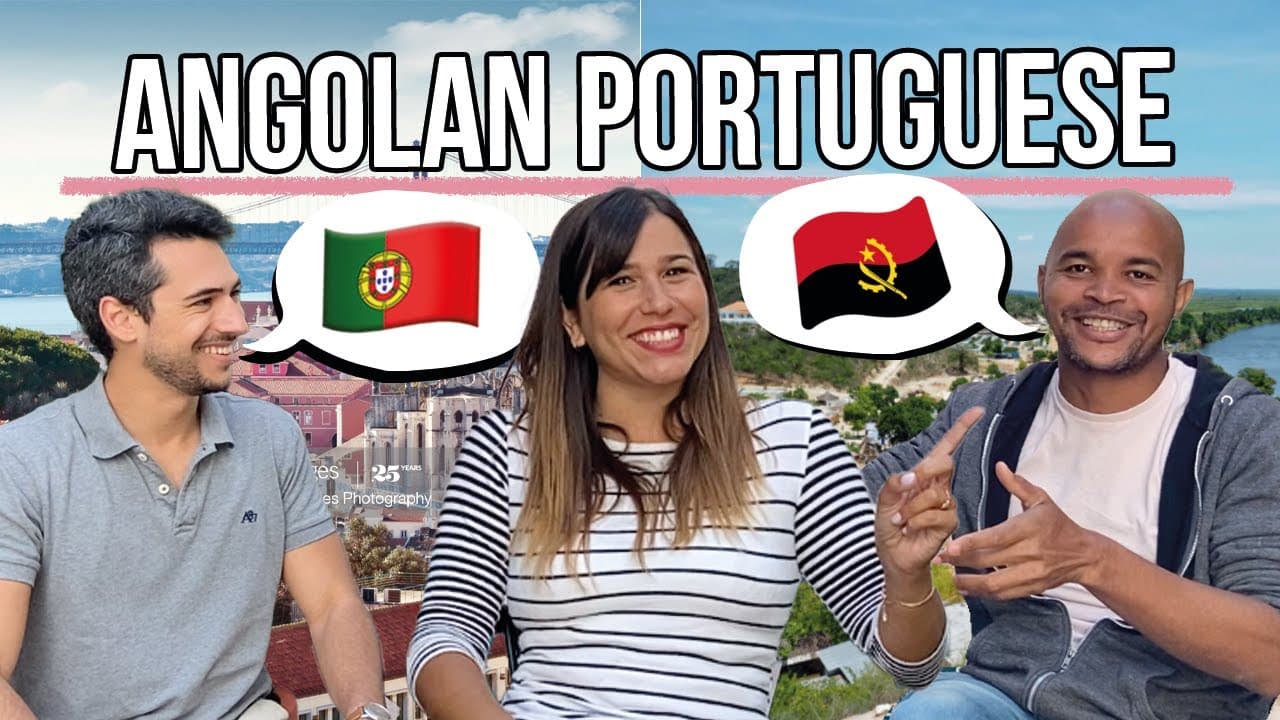
Exploring pronunciation, grammar, and vocabulary of Angolan Portuguese.
Transcript
What does Portuguese from Angola sound like? I've done a few videos now comparing the differences and similarities between Portuguese from Brazil and Portuguese from Portugal but of course, there are lots of other countries that speak Portuguese as well, as well as lots of different various regional accents so I'm going to be doing a lot more vide... Read More
Key Insights
- The video explores the unique characteristics of Angolan Portuguese, highlighting differences in pronunciation, grammar, and vocabulary compared to Portuguese from Portugal and Brazil.
- Angolan Portuguese has distinct pronunciation features, such as the rolling of Rs and the merging of B and V sounds, influenced by regional languages.
- Grammar differences include the use of 'Tu' and 'Você', with Angolans often using 'Tu' and the meaning of 'Você' depending on tone and context.
- Angolan Portuguese incorporates words from local languages, such as 'mata-bicho' for breakfast and 'cuiar' for gossip, reflecting cultural integration.
- The influence of national Angolan languages is significant, with direct translations affecting sentence structure, such as 'eu te gosto' instead of 'gosto de ti'.
- Angolan music genres like Kizomba and Kuduro have international recognition, with artists like Gerson Marta contributing to the cultural exchange.
- The video includes a musical performance by Gerson Marta, showcasing Angolan Portuguese in a cultural context.
- The content emphasizes the diversity within the Portuguese language, encouraging viewers to explore different dialects and regional influences.
Install to Summarize YouTube Videos and Get Transcripts
Explore YouTube Video Summarizer or Get YouTube Transcript Extractor
Questions & Answers
Q: What are some unique pronunciation features of Angolan Portuguese?
Angolan Portuguese features distinct pronunciation characteristics, such as rolling Rs and a blend of B and V sounds. These variations are influenced by regional languages, creating a unique sound profile compared to Portuguese from Portugal and Brazil.
Q: How does the use of 'Tu' and 'Você' differ in Angolan Portuguese?
In Angolan Portuguese, 'Tu' is commonly used, while 'Você' can be either informal or formal depending on tone and context. The expression and delivery of 'Você' determine its meaning, reflecting the language's adaptability and cultural nuances.
Q: What role do local languages play in Angolan Portuguese?
Local languages significantly influence Angolan Portuguese, affecting pronunciation, grammar, and vocabulary. Words like 'mata-bicho' (breakfast) and 'cuiar' (gossip) are examples of this integration, showcasing the cultural and linguistic blend unique to Angolan Portuguese.
Q: Can you give examples of vocabulary unique to Angolan Portuguese?
Unique vocabulary in Angolan Portuguese includes 'mata-bicho' for breakfast and 'cuiar' for gossip. These terms reflect the integration of local languages into Portuguese, adding cultural depth and distinctiveness to the dialect.
Q: What are some key cultural influences on Angolan Portuguese?
Cultural influences on Angolan Portuguese include local languages like Kimbundu and Kikongo, which impact pronunciation and sentence structure. Additionally, music genres like Kizomba and Kuduro highlight the cultural exchange and international recognition of Angolan contributions.
Q: How does Angolan Portuguese differ in sentence structure?
Angolan Portuguese sentence structure is influenced by local languages, with direct translations affecting phrasing. For instance, 'eu te gosto' is used instead of 'gosto de ti', reflecting a direct linguistic and cultural adaptation from native languages.
Q: What musical genres are associated with Angola?
Angola is known for musical genres like Kizomba and Kuduro, which have gained international popularity. These genres reflect the country's rich cultural heritage and influence, with artists like Gerson Marta contributing to the global music scene.
Q: What can viewers learn from this video about Portuguese dialects?
Viewers can learn about the diversity and richness of Portuguese dialects, particularly Angolan Portuguese. The video highlights pronunciation, grammar, and vocabulary differences, encouraging exploration of regional influences and cultural integration in the Portuguese-speaking world.
Summary & Key Takeaways
-
The video delves into the distinct features of Angolan Portuguese, focusing on pronunciation, grammar, and vocabulary. It highlights the influence of local languages on the dialect, with examples of unique words and expressions.
-
Gerson Marta, a musician from Angola, and Leo from Portuguese With Leo, join the discussion, offering insights into the linguistic and cultural nuances of Angolan Portuguese, including a musical performance.
-
The video encourages viewers to appreciate the diversity of the Portuguese language, showcasing how regional influences shape dialects, with a focus on the integration of Angolan culture and language.
Read in Other Languages (beta)
Share This Summary 📚
Summarize YouTube Videos and Get Video Transcripts with 1-Click
Try YouTube Summary with ChatGPT & Claude or YouTube Transcript Generator
Explore More Summaries from Talk the Streets 📚



Summarize YouTube Videos and Get Video Transcripts with 1-Click
Try YouTube Summary with ChatGPT & Claude or YouTube Transcript Generator