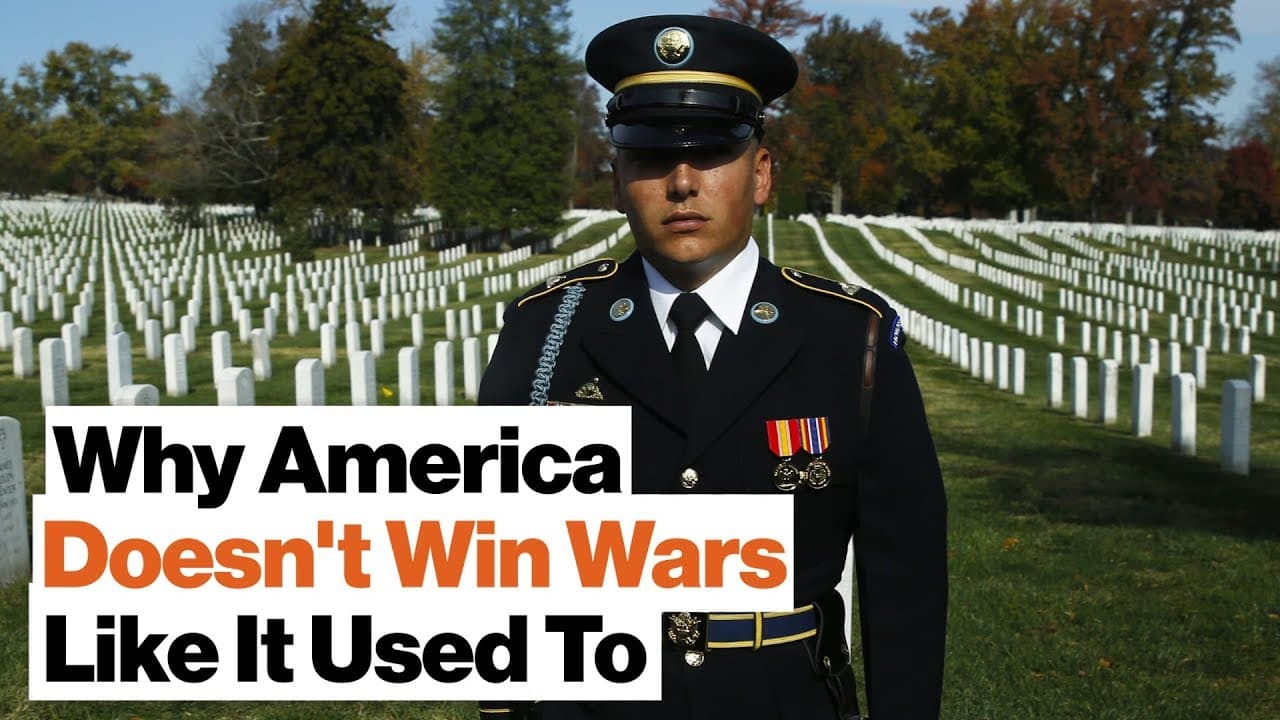
Why America Doesn't Win Wars Like It Used To | William Ruger | Big Think
TL;DR
A critical examination of US foreign policy's human costs and inefficacy, calling for realism and humility.
Transcript
As a realist, I’m not naïve about the world. It can be a dangerous place and that’s one of the reasons why we have to have a strong national defense. And it sometimes means we have to actually use our military power against other countries and other organizations that might threaten us or that have attacked us—that’s the reality of the world. But w... Read More
Key Insights
- 🫱 Human costs of military engagements must be carefully considered when evaluating the necessity of wars.
- ❓ Reassessing US foreign policy is crucial to maintain effectiveness and reduce unintended consequences.
- 💠 Realism, prudentialism, and humility are essential values in shaping foreign policy decisions.
- 🎖️ Engaging internationally through non-military means can still be impactful without excessive military presence.
- 👶 New voices and perspectives are needed to contribute to the conversation on US foreign policy.
- 🎖️ A shift towards a more strategic and thoughtful approach is necessary to rightsize the military for future challenges.
- ❓ Leaders should practice humility by acknowledging uncertainties and limitations in decision-making.
Install to Summarize YouTube Videos and Get Transcripts
Explore YouTube Video Summarizer or Get YouTube Transcript Extractor
Questions & Answers
Q: What are the key considerations when assessing the human costs of US foreign policy?
When evaluating human costs, distinguishing between necessary wars for safety and wars of choice is crucial. Understanding the impacts on soldiers, families, and communities helps in making informed decisions about military engagements.
Q: How does the speaker advocate for a reevaluation of US foreign policy?
The speaker highlights the ineffectiveness of current foreign policy strategies and calls for a reassessment of how diplomacy, economic levers, and military missions are used. New voices and a humble approach to decision-making are advocated for.
Q: Why is realism and prudentialism essential in shaping foreign policy?
Realism and prudentialism in foreign policy ensure a careful consideration of national interests while minimizing unintended consequences. It provides a more strategic and effective approach, avoiding unnecessary conflicts and human costs.
Q: How can the US remain engaged internationally without overextending its military presence?
By focusing on positive-sum outcomes through trade, diplomacy, and cultural engagement, the US can maintain global engagement without being overly militaristic. Balancing involvement while avoiding unnecessary conflicts is key.
Summary & Key Takeaways
-
Emphasizes the human costs of US military intervention focusing on necessary vs. unnecessary wars.
-
Urges leaders to consider the effectiveness and consequences of foreign engagements.
-
Calls for a reevaluation of US foreign policy, advocating for realism, prudentialism, and humility in decision-making.
Read in Other Languages (beta)
Share This Summary 📚
Summarize YouTube Videos and Get Video Transcripts with 1-Click
Try YouTube Summary with ChatGPT & Claude or YouTube Transcript Generator
Explore More Summaries from Big Think 📚




Summarize YouTube Videos and Get Video Transcripts with 1-Click
Try YouTube Summary with ChatGPT & Claude or YouTube Transcript Generator